


24/7 Remote Monitoring & Video Response
Cameras that only record to a box tell you what happened after the damage is done. Surveillance trailer monitoring services from Hawk Surveillance turn your trailers into live, eyes-on protection—backed by operators who can intervene in real time.
With 24/7 remote video monitoring, our monitoring and response layer helps you detect, verify, and act on threats at high-risk sites across Southern California, from construction jobsites and logistics yards to retail parking lots and municipal hotspots.
Why Monitoring Matters
An unmonitored camera system is essentially a forensic tool. It may help after theft, vandalism, or liability incidents—but it does little to stop them while they’re happening.
Adding surveillance trailer monitoring services changes that:
- Operators are watching key activity windows, either live or based on smart alerts.
- Potential intruders can be challenged in real time through voice-down warnings.
- Clear escalation paths ensure the right people are notified when something is wrong.
With 24/7 remote video monitoring, you get:
- Proactive voice-down / deterrence
– Operators can speak directly into the scene via loudspeakers where available, letting trespassers know they are being watched and recorded. - Faster incident response
– Verified alerts help you or your security partners respond to real events, not just generic motion triggers. - Tighter documentation and escalation
– Incidents can be logged and summarized, supporting investigations, claims, and internal reviews.
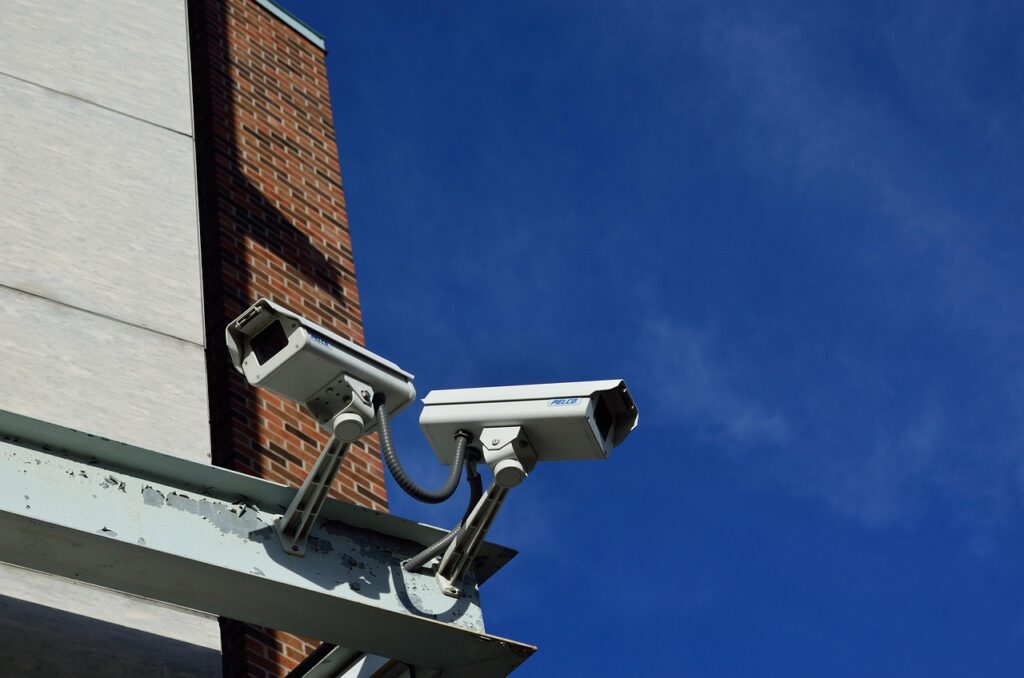
If your sites are high-risk, remote, or frequently targeted, remote surveillance trailer monitoring is often the difference between discovering a problem and actually preventing it.
What’s Included in Monitoring & Response
Monitoring Center & Services Overview
🎛️ Monitoring Center & Operators
Our monitoring services focus on reviewing events that matter — not passive screen watching.
Live or Event-Based Monitoring
- Continuous coverage or analytic-driven after-hours alerts.
Operator Workflows
- Review live & recorded video
- Confirm legitimate vs. suspicious activity
- Trigger voice-down, contact, or escalation
Documented Playbooks (SOPs)
- Responses follow your approved SOPs and escalation list.
🧠 Technology & Intelligent Triggers
Monitoring is powered by intelligent detection — not noisy false alerts.
Motion Detection & Analytics
- Custom trigger zones for gates, yards, and perimeters.
- Analytics filter out non-critical activity during quiet hours.
Camera, Siren & Light Integration
- Automated strobes & sirens for verified alerts.
- Full PTZ control and surrounding-view review.
🚨 Response Actions
Operators follow your structured escalation tree.
Live Voice-Down
- Direct deterrent warnings over loudspeaker.
Contacting Designated Personnel
- Supervisor, security team, or regional manager per your list.
Security or Law Enforcement
- Escalation based on your protocols and agreements.
Monitoring Packages
🛡️ Deterrence & Recording
- Event-based alerts during defined hours
- Operator review of specific triggers
- Voice-down where supported
- Ideal for low-risk sites requiring verification
📡 Standard 24/7 Monitoring
- 24/7 or extended after-hours coverage
- Operator review of alarms & suspicious activity
- Structured escalation steps
- Incident documentation
🔍 Enhanced Monitoring
- Everything in Standard, plus:
- Custom reporting
- Camera sweeps
- Stronger coordination with internal teams
During scoping, we'll match monitoring tiers to your exact risk profile and budget.
Who Should Choose Monitored vs Self-Monitored
Monitoring is not right for everyone—but for many high-risk sites, it’s essential.
Choose 24/7 remote monitoring if:
- You do not have an internal SOC or guard team to watch cameras in real time.
- You need consistent, after-hours oversight across multiple sites.
- Your sites are remote, high-value, or have a history of theft, vandalism, or liability incidents.
- You want clear procedures for voice-down, callouts, and escalation.
Choose self-monitored if:
- You already operate a security operations center or patrol team that monitors camera feeds.
- You are paying for your own monitoring platform and want trailers to plug into it.
- You prefer to keep all monitoring and dispatch in-house.
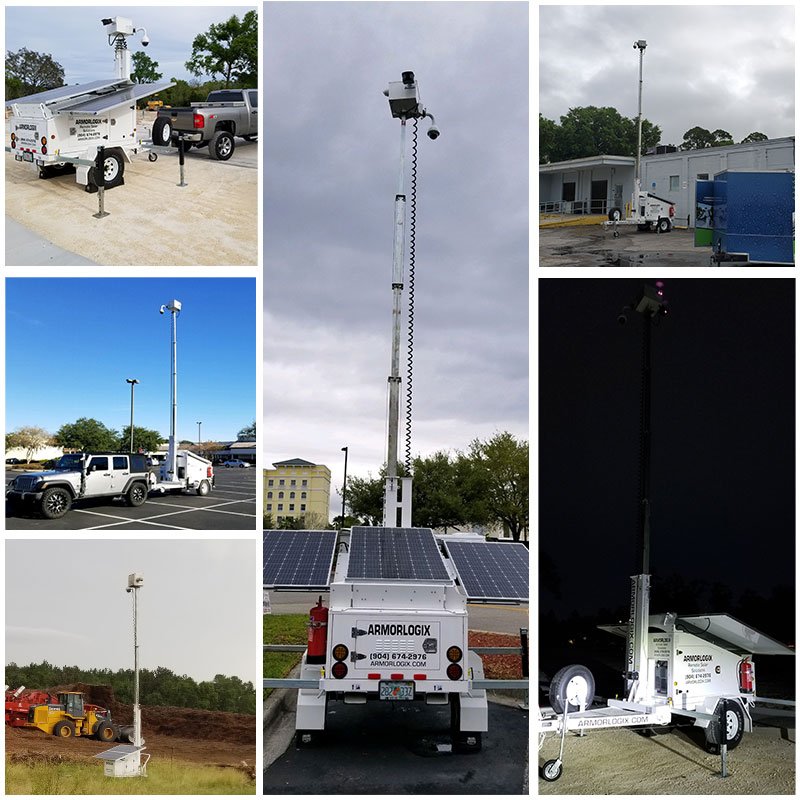
How Monitoring Fits with Rentals and Owned Fleets
Monitoring is a layer you can add to almost any deployment model.
- Rental trailers + monitoring
– Ideal for short-term construction projects, temporary hotspots, and events where you need maximum deterrence and incident response during a defined period. - Owned or lease-to-own fleets + monitoring
– Perfect for long-term programs where you own the trailers but still want outsourced remote video monitoring Southern California to watch them after hours.
– Some clients monitor their own trailers during business hours, then hand off to our monitoring services after closing.
Example combinations:
- Short-term construction rental + 24/7 monitoring for a high-theft corridor in Los Angeles.
- Owned municipal fleet with monitoring during events only, or during elevated risk periods in specific neighborhoods.
Monitoring Workflow: From Alert to Resolution
Every program is tailored, but the core flow is consistent and predictable.
- Trigger (motion/analytics)
– A camera or analytic rule detects activity in a protected zone during monitored hours. - Operator review
– The operator pulls up live and recent recorded video from the remote surveillance trailer monitoring system.
– They decide whether it is normal activity or a real concern based on your rules. - Live voice-down / lights / siren
– If suspicious, the operator can issue a live voice-down where equipped, and may activate deterrent lighting or audible alerts as configured. - Notify site contact / security / law enforcement
– If the situation meets your escalation criteria, your designated contact list is used—whether that is a site supervisor, on-call manager, guard service, or law enforcement. - Log and report
– The event is documented, and you receive summaries or reports according to your program: daily roll-ups, weekly reports, or incident-based notifications.
Each monitoring program includes clear SOPs customized to your sites and internal policies, so everyone understands “who does what” when an alert fires.
Industries & Sites That Rely on Monitoring
Monitoring is especially valuable where incidents are likely and after-hours visibility is limited.

Retail Parking & Malls
After hours, parking lots and shopping centers face theft, vandalism, and loitering. Monitoring helps protect vehicles, storefronts, and customers by intervening early.
Learn More →
Logistics Yards & Warehouses
Cargo, trailers, and equipment are high-value targets. Monitoring identifies breaches and yard movement in real time.
Learn More →
Remote Utility & Energy Assets
Infrastructure sites are often unstaffed. Monitoring helps detect intrusions and safety issues early.
Learn More →
Municipal Hot Spots & Events
Cities monitor parks, nightlife zones, public lots, and events. Remote monitoring boosts accountability.
Government Security →Event Security →
Monitoring FAQs
Do you monitor 24/7 or just after-hours?
Programs can be structured either way. Many sites choose full 24/7 remote video monitoring, while others focus on nights, weekends, or specific risk windows. During scoping, we define which hours matter most for your sites.
Who speaks over the loudspeaker during events?
When your trailers include audio talk-down capability, trained monitoring operators deliver live voice-down messages using your approved language and tone. If your policies require it, we can coordinate scripted messages with your security or legal teams in advance.
How quickly do operators respond to alarms?
Response time is measured in seconds, not minutes. When an alarm fires during monitored hours, an operator immediately reviews the alert and video. Actual times can vary by program and alert volume, but surveillance trailer monitoring services are designed around rapid verification and action, not slow batch review.
Can you follow our internal escalation procedures?
Yes. Your escalation tree is built into the program—from who to call, to preferred order of contact, to when law enforcement or internal leadership should be notified. Monitoring SOPs can be tuned for different sites or incident types.
Where is video stored and who can access it? Video is stored and managed according to the platform and ret
Video is stored and managed according to the platform and retention policies defined in your deployment. Access is restricted to authorized personnel, with options for secure sharing of clips when needed. For more detail on storage, access control, and privacy, see our Data Security & Privacy
Can we start self-monitored and add monitoring later?
Yes. Many clients begin with self-monitored surveillance trailers, then add our monitoring layer as risks and operations evolve. We can help you design a path that leverages what you already have while adding surveillance trailer monitoring services where they create the most value.
Talk to Us About 24/7 Monitoring & Response
If your cameras are only recording, they’re only half the solution. Adding 24/7 remote video monitoring turns your trailers into an active security layer that can deter incidents, trigger faster responses, and improve documentation. Tell us about your sites, operating hours, and risks, and we’ll design a monitoring program that fits your operations and budget.
Tell us about your project, your location, and your timeline. :contentReference[oaicite:0]{index=0} will recommend a practical configuration, explain your options clearly, and handle the heavy lifting from deployment through pickup.