

Safety, Security & Sustainability at Hawk Surveillance
Hawk Surveillance’s safety and sustainability program covers four areas for every mobile surveillance trailer we deploy across Northern California: operational safety and QHSE, data security and privacy, environmental responsibility, and certifications and compliance. Together they let trailers replace guards and fixed cameras while managing on-site risk, protecting video data, and reducing fuel, emissions, and noise.
At Hawk Surveillance, safety, security, and sustainability are not marketing buzzwords; they are the filters we use to design, deploy, and operate every mobile surveillance trailer in the field.
From how we position trailers on active jobsites, to how we protect video data, to how we use solar power to reduce fuel and noise, our goal is simple: provide effective security while managing risk and impact responsibly. Our approach to surveillance trailer safety and sustainability is built for real-world Northern California conditions, including fog, seismic activity, wet winter seasons, and extreme summer heat in the Central Valley and the regulatory expectations that come with them.
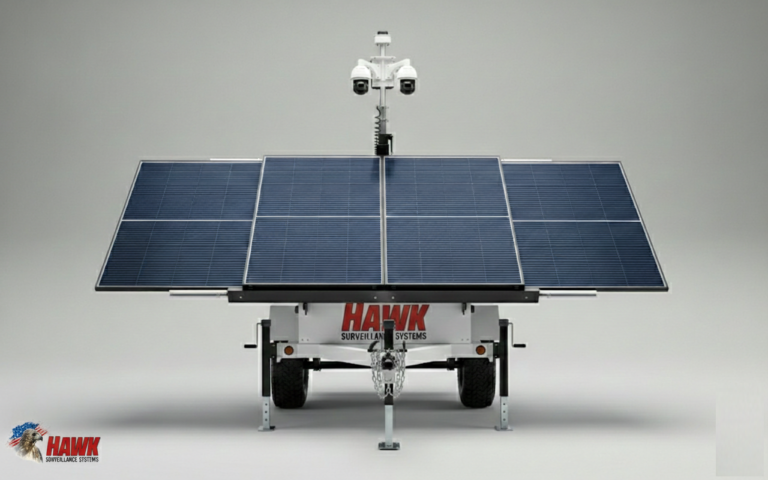
Why Safety & Sustainability Matter in Mobile Surveillance
A mobile surveillance trailer is not just another piece of equipment. It combines height, power, electronics, connectivity, and recorded video, all operating on active sites with people, vehicles, and critical assets moving around it.
If you ignore safety:
- A poorly placed trailer can create blind spots, sightline issues, or vehicle hazards.
- Inadequate stabilization or setup can lead to tipping risks, equipment damage, or injuries.
- Cables, power sources, and lighting can become trip hazards or interfere with site operations.
If you ignore data security:
- Unprotected systems can expose live video feeds, recorded footage, or network credentials.
- Weak access controls or retention practices can lead to unauthorized viewing or misuse of footage.
- Failing to address privacy expectations can create operational and reputational risk.

If you ignore environmental impact:
- Generators running unnecessarily increase fuel costs, emissions, and noise.
- Poor power planning can cause outages, leaving critical areas unmonitored.
- Missed opportunities to use solar surveillance trailer environmental benefits can keep long-term costs higher than necessary.
Hawk Surveillance takes a proactive stance on all three fronts. Our goal is to make mobile surveillance a responsible part of your risk management strategy, not a new source of risk.
Our Four Pillars
We organize our approach to surveillance trailer safety and sustainability around four pillars. Each pillar has a dedicated page where you can explore the details in depth.
Operational Safety Snapshot
QHSE, Quality, Health, Safety, and Environment, is the framework that guides how we plan, deploy, and operate every mobile surveillance trailer. Operational safety is the first lens we apply when planning any trailer deployment.
Operational safety is the first lens we apply when planning any trailer deployment.
Before a trailer arrives on-site, we look at:
- Site layout and traffic patterns
Where people and vehicles move, where heavy equipment operates, and how emergency access needs to be maintained. - Trailer placement and stabilization
Ensuring masts are deployed on stable ground with proper outriggers or support, clear of overhead obstructions and away from tight turning paths. - Access and visibility
Making sure the trailer is visible enough to act as a deterrent, but not positioned in a way that surprises drivers or creates new blind spots. - Signage and awareness
Coordinating with your team on appropriate signage, safety briefings, and integration into your existing site safety plans.
Our crews treat trailers like any other critical piece of site equipment: they must be installed correctly, inspected regularly, and pulled out or repositioned when conditions change.
“Learn more about our operational safety standards and QHSE practices.”
Data Security & Privacy Snapshot
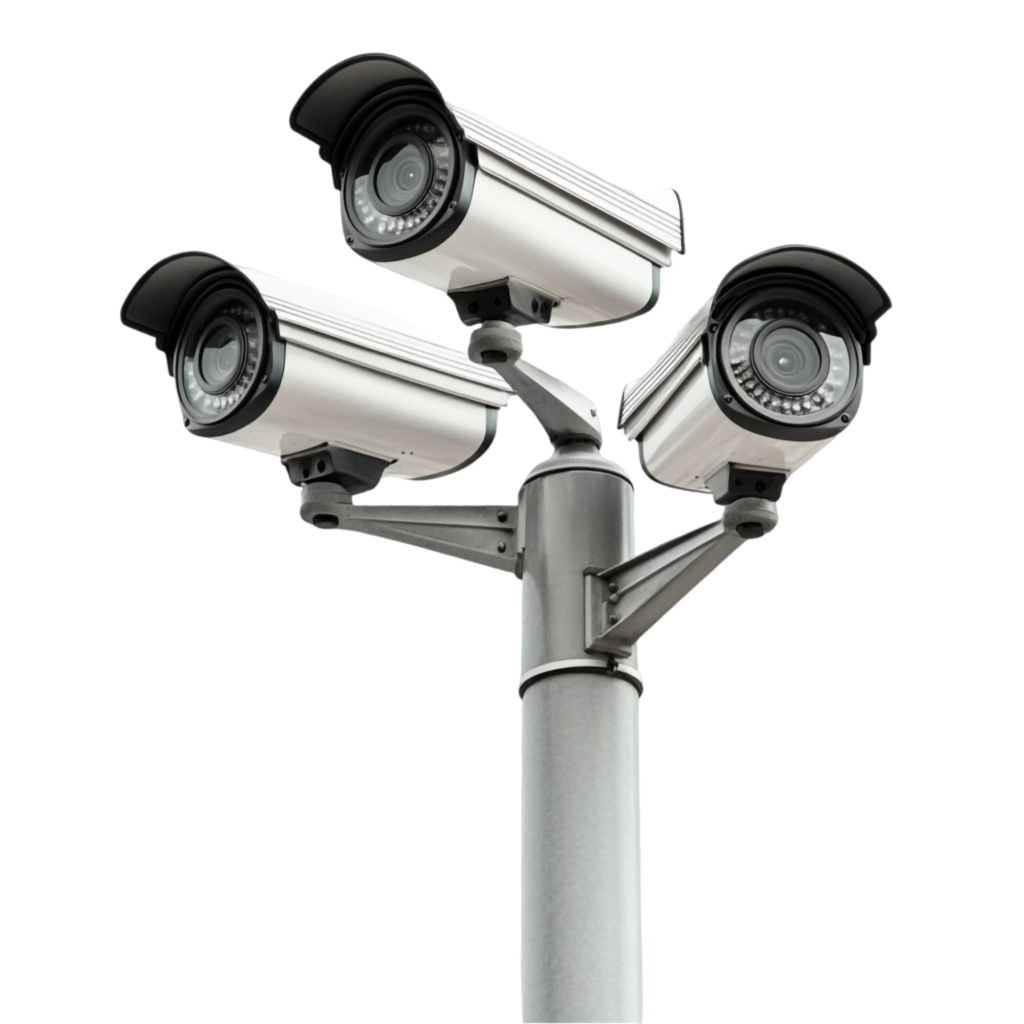
Security only works if your data is properly handled. Our approach to surveillance trailer data security focuses on three core areas:
- Controlled access to video and systems
Only authorized users should be able to view live feeds, review recorded footage, or change configurations. We structure logins and permissions to reflect your internal roles and escalation paths. - Clear retention and export practices
Footage should not live forever by default. Retention windows are set according to your policies, risk profile, and regulatory requirements. When incidents occur, clips are exported and shared through controlled channels for investigations, insurance, or law enforcement.
Respect for privacy and expectations
Especially in public-facing or mixed-use environments, we factor in privacy considerations around camera angles, signage, and local expectations. The goal is to provide effective coverage while supporting your obligations to employees, visitors, and the public.
See how we protect your video, data, and access in more detail.
Environmental Responsibility Snapshot
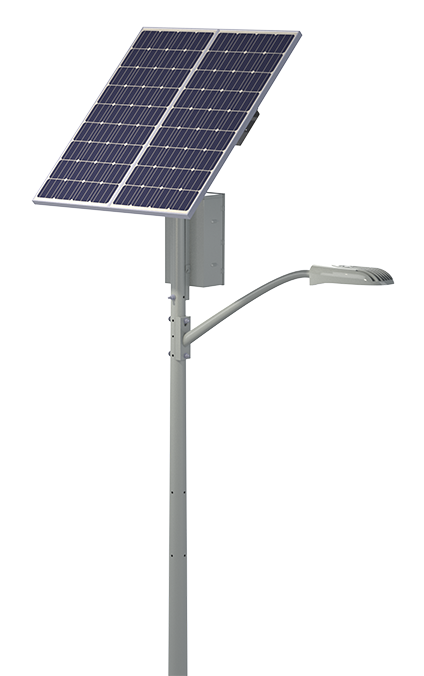
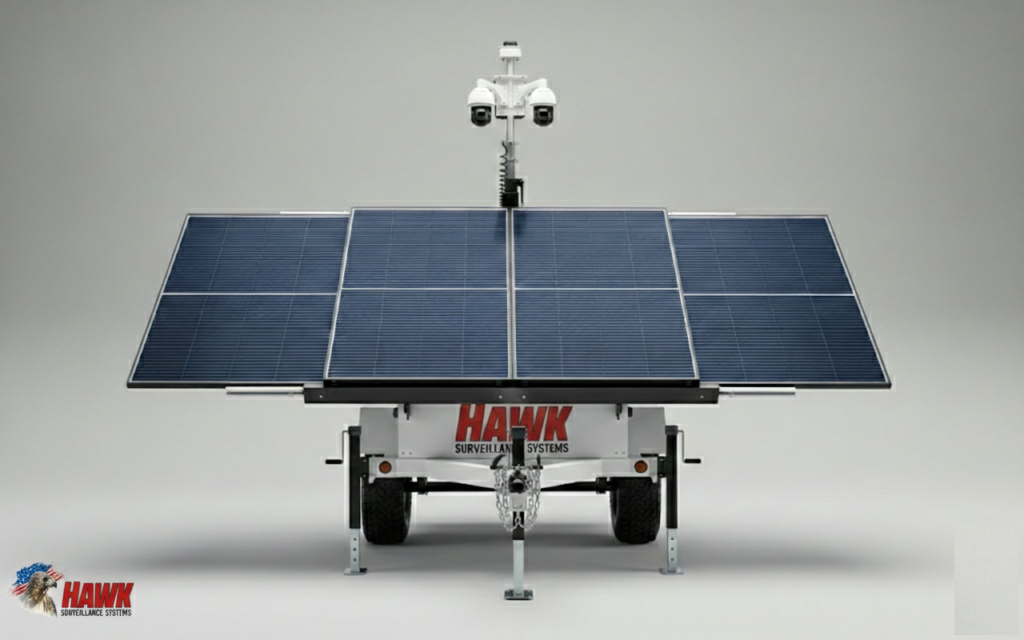
- Solar-first where it makes sense Our solar surveillance trailers are configured to maximize sunlight and battery capacity, especially on sites with good solar exposure and predictable power needs. This helps cut emissions, fuel costs, and noise, while keeping your cameras online.
- Smart generator and hybrid use Where generators are required or requested, they are sized and scheduled to support trailer power without running more than necessary. Hybrid setups can combine solar, battery, and generator use to match your site’s profile.
Certifications & Compliance Snapshot
Every organization has its own requirements around compliance, documentation, and standards. Our role is to help you put surveillance trailer safety standards and practices in place that can slot into what you already do.
We work with you to:
- Align with your internal policies
Many customers, especially in utilities, industrial operations, and public sector environments, have existing safety, IT, and privacy frameworks. We structure trailer deployments to fit into those frameworks instead of working around them. - Document how trailers are used and managed
From basic spec sheets to written procedures, we help you document how trailers are positioned, powered, monitored, and maintained so you can show your stakeholders how mobile surveillance fits into your overall security posture.
Support regulatory and contractual requirements
If you operate in regulated environments or under specific contracts, we can discuss how trailers, data handling, and monitoring practices align with your obligations.
View our certifications & compliance overview and how we integrate with your requirements
How Safety & Sustainability Show Up in Every Deployment
Safety and sustainability are not separate projects; they’re built directly into our day-to-day work, planning, and decision-making across every deployment.
Utilities, Energy & Infrastructure
- Strong focus on access control, grounding, and electrical clearances.
- Careful handling of surveillance data to support critical operations and compliance requirements.
- Learn more →
Municipal & Government Facilities
- Attention to public visibility and placement in shared environments.
- Privacy considerations and documentation aligned with public-sector stakeholders.
- Learn more →
Construction, Logistics & Industrial Sites
- Coordination with safety and operations teams during planning and deployment.
- Trailers are positioned to support, rather than conflict with, site safety plans and workflows.
Behind the scenes, our internal processes, training, and decision-making are aligned around these same principles.
- To understand how safety and sustainability tie into our overall engagement model, review Our Process .
- To learn more about the people and philosophy behind these commitments, visit About Us .
Tell us what standards you operate under, which stakeholders need to sign off, and how you already manage safety, IT, and privacy. Hawk Surveillance will work with your teams to design surveillance trailer safety and sustainability practices that fit your reality and support your long-term risk management.
Last updated: June 2026