


Industry-Specific Surveillance Trailer Solutions

Different sites face different risks. A construction jobsite doesn’t operate like a retail parking lot, and a logistics yard doesn’t behave like a municipal park. Hawk Surveillance builds and deploys industry-specific surveillance trailer solutions that account for how each environment actually works—layout, traffic patterns, hours of operation, and risk profile.

Whether you’re trying to stop overnight theft on a jobsite, reduce incidents in a busy shopping center, or add visibility around critical infrastructure, we design and deploy mobile surveillance trailers that fit your world, not a generic template.

Why Industry-Specific Matters

Security that ignores context tends to fail. A trailer parked anywhere, pointing everywhere, recording everything is rarely the best answer. What you need is targeted coverage driven by how your sites actually function.

  • On construction sites, risk moves as the project phases change. Early on, the concern might be materials and equipment in a dirt lot. Later, it shifts to locked structures, finished interiors, and installed systems. Surveillance trailers for construction sites must move with the project and adapt to new blind spots.
  • In retail and parking lots, the focus is on vehicles, pedestrians, entrances, and after-hours activity. Good coverage sees license plates and faces where they matter most, while respecting traffic flow and customer experience.
  • For industrial, utilities, and municipal environments, the stakes are higher. A single incident can impact safety, operations, or public trust. Trailers need to be positioned with clear lines of sight, redundancy, and integration into existing security workflows.
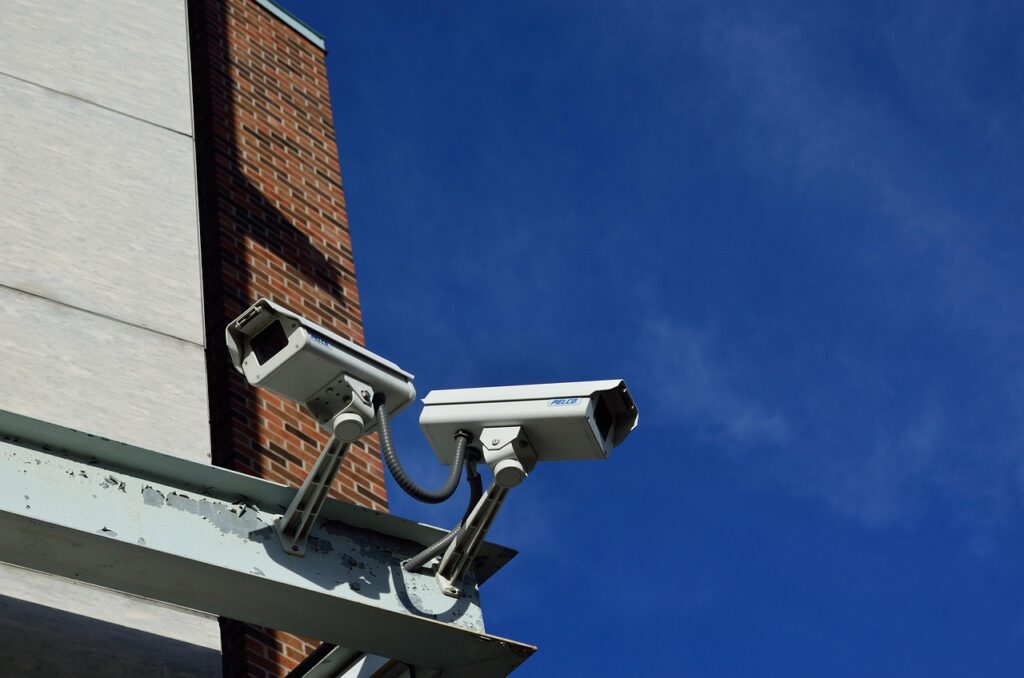
 

cctv, security, camera, security camera, privacy, surveillance, security systems, guard, secure, monitoring, surveillance camera, spy, jail, police, hacking, freedom, crime, government, blue police, blue camera, blue security, cctv, cctv, cctv, cctv, cctv, security camera

By treating each vertical as its own use case, Hawk Surveillance designs coverage plans, trailer configurations, and monitoring strategies that match your risk—not just the square footage of your site.

Industries We Serve
These mobile surveillance trailers are not theoretical—they are deployed on active sites across Southern California, supporting a range of verticals.
See how trailers are configured for your environment on the Industries Overview page.

Why Choose Trailers Over Guards or Fixed Cameras

Across industries, the basic question is the same: why use mobile trailers instead of just adding more guards or installing permanent cameras?

1
Deterrence
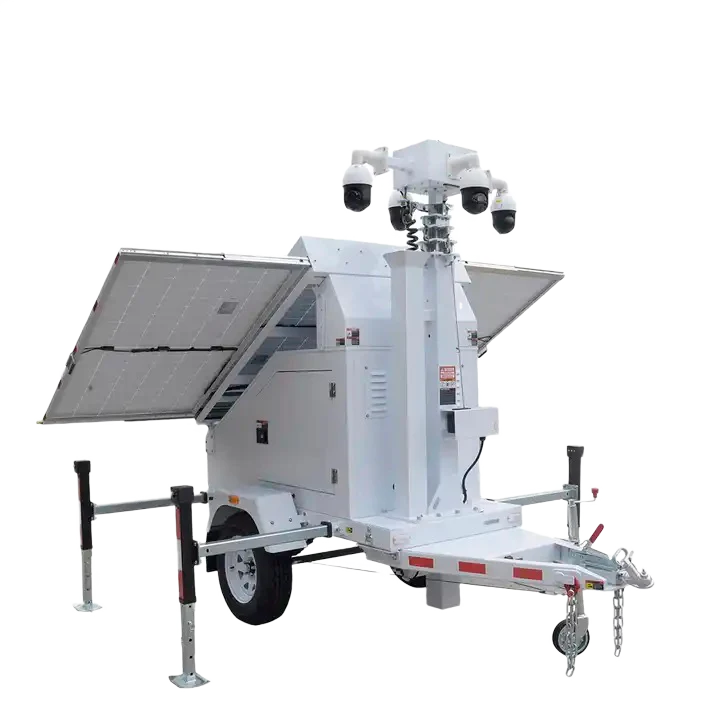
A visible trailer with a tall mast, lighting, and signage sends an immediate signal that the site is under active surveillance. It’s harder to ignore than a small camera dome tucked under an eave.
2
Coverage
Masts can see over vehicles, equipment, and temporary structures, giving a wider angle of view than ground-level cameras. As your layout changes, you reposition the trailer instead of redesigning the system.
3
Flexibility
Mobile trailers go where the risk is now—not where you poured concrete six months ago. As construction phases shift, events move, or operations expand, your coverage moves with them.
4
Cost control
Compared to adding multiple guard shifts or building permanent infrastructure for a temporary project, trailers provide predictable costs. You can rent, lease, or own, and redeploy as your portfolio changes.
For many construction sites, logistics yards, retail parking lots, industrial plants, and municipal facilities, mobile trailers are the fastest way to close security gaps without committing to permanent changes before they’re needed.

Learn more about our trailer lineup on the Products page.
View products

How We Approach New Industries & Sites

Even within the same industry, no two sites are identical. Hawk Surveillance follows a structured, practical process every time we engage with a new industry or location.
1
Understand your environment
We start with a conversation about your operations: what you do, where you do it, and what’s been happening on-site. A construction job in Los Angeles, a retail center in Orange County, and a municipal facility in San Bernardino each carry different risk profiles.
2
Map risk and movement
We look at how people and vehicles move through the site, where valuable assets live, and where incidents have occurred or are most likely to occur. That drives trailer placement, camera angles, and coverage zones.
3
Match trailers and solutions to your industry
We recommend specific trailer models and solution types based on your environment—rental vs. purchase, monitoring vs. self-monitored, or a mix across your portfolio.
4
Deploy, adjust, and support
Once deployed, coverage is refined as your site changes. We reposition trailers, update configurations, or adjust monitoring levels as projects move, layouts evolve, or seasons change.
6f82895f5964e6ccde34826c9989669f927afd0d

Proof from Real-World Deployments

A few quick examples that show how trailers are deployed across industries and cities—without going deep into full case studies.

1
Construction jobsite – Los Angeles
A general contractor in Los Angeles was dealing with repeated overnight theft of tools and materials. After deploying two surveillance trailers to cover the main entrance and a remote laydown area, overnight incidents dropped sharply, and recorded footage supported insurance claims and internal reviews.
2
Retail parking lot – Orange County
A regional shopping center in Orange County faced vehicle break-ins and loitering around the perimeter of its main parking lot. With security trailers covering entrances and high-risk parking rows, visible deterrence increased and the property team gained video evidence for trespass enforcement and police coordination.
3
Municipal facility – Inland Empire
A municipal operator needed temporary coverage around a civic facility and adjacent public spaces during a period of heightened activity. Deploying mobile trailers added camera coverage and audio deterrence without permanent site changes. After the risk period ended, trailers were repositioned to another city asset.
These are just a few examples—our industry pages go deeper into how trailers are configured for each type of site.
Select Your Industry
Every operation faces different risks. Start by selecting the industry that looks most like your world, then explore how Hawk Surveillance can secure your sites.
See how trailers are configured for your environment on the Industries Overview page.
Or talk to a security specialist if your environment doesn’t fit neatly into a single box.