
At a glance: Remote water and utility sites in California lose copper wire, equipment, and uptime to theft, vandalism, and trespassing that guards and fixed cameras rarely catch in time. A solar-powered mobile surveillance trailer gives 24/7 monitored coverage of pump stations, treatment plants, and yards, deploys in days, and costs a fraction of a guard patrol.
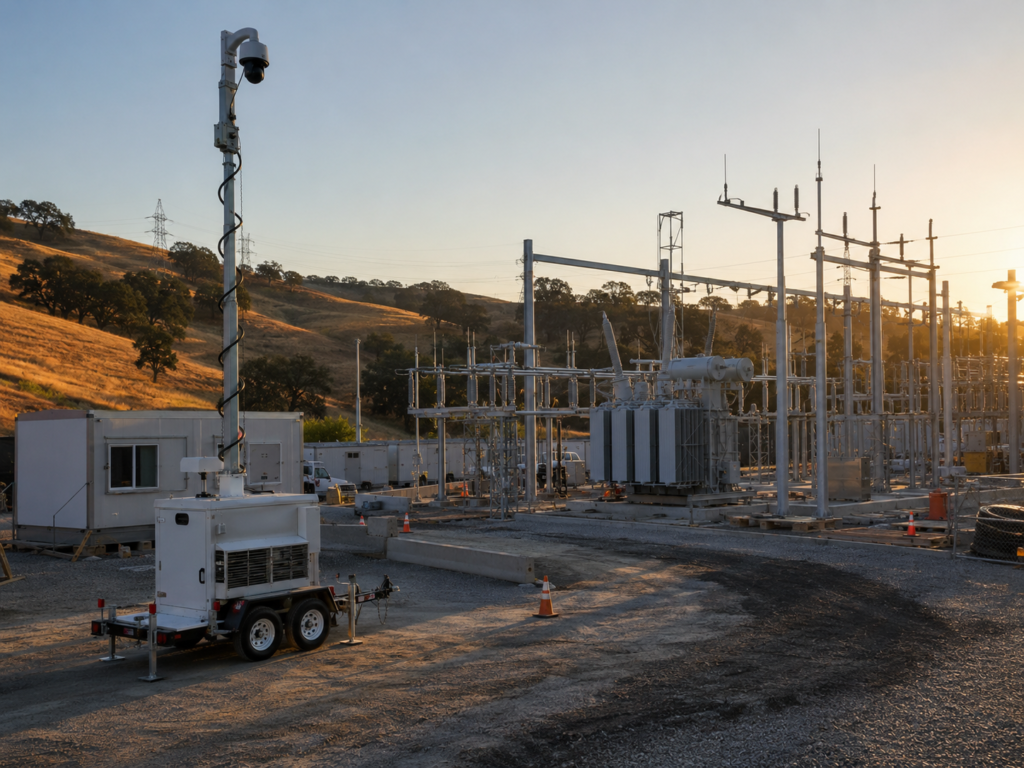
California water and utility operators protect remote treatment plants, pump stations, storage yards, reservoirs, substations, and other critical infrastructure by combining physical security, remote monitoring, and mobile surveillance. The biggest operational risks typically include copper and metal theft, vandalism, unauthorized entry, and equipment tampering. For many unmanned sites, a mobile surveillance trailer serves as the active outer layer of a concentric security strategy, providing elevated cameras, live monitoring, and real-time deterrence without permanent infrastructure. Hawk Surveillance Systems deploys solar-powered and industrial surveillance trailers across Northern California, with standard rentals typically running in 24 to 48 hours, helping utilities strengthen after-hours protection while complementing existing SCADA systems, fixed cameras, fencing, and access controls. If you’re evaluating options for your facility, Hawk can recommend the right deployment strategy based on your operational requirements.
What water and utility sites are actually losing
In brief: Remote water and utility facilities are most vulnerable to copper and metal theft, equipment damage, unauthorized access, vandalism, and operational disruption because many locations operate without full-time personnel or permanent surveillance.
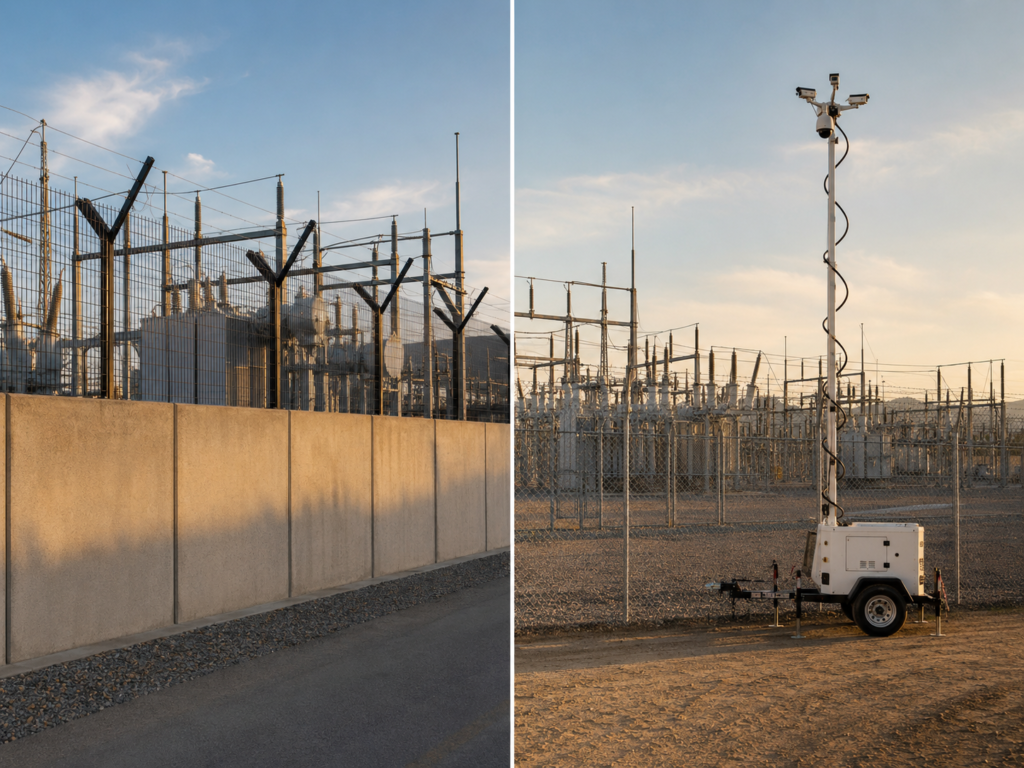
Water and utility infrastructure includes treatment plants, booster stations, reservoirs, lift stations, electrical yards, storage facilities, pipeline corridors, communications assets, and other critical facilities that support public services. These locations often span large geographic areas, remain unattended overnight, and contain valuable equipment that must remain operational around the clock.
Unlike customer-facing facilities, many utility assets are intentionally located in remote areas where visibility is limited. This creates operational security challenges rather than simply property protection concerns.
Common exposures include:
Copper wire and grounding conductor theft
Metal theft from utility yards
Vandalism of equipment and fencing
Unauthorized entry into restricted facilities
Tampering with valves, pumps, electrical equipment, or controls
Theft of generators, fuel tanks, batteries, and portable equipment
Liability associated with unsecured critical infrastructure
Copper theft continues to receive attention from California utilities and law enforcement because stolen conductors, grounding systems, and electrical components can interrupt operations while creating expensive repair work.
Utilities and law enforcement agencies across California have issued repeated warnings about sustained copper wire theft targeting electrical and water infrastructure, and the state has tightened metal theft laws in response.
Many water agencies have also increased investments in physical security following industry guidance encouraging stronger protection for critical infrastructure assets.
Industry guidance, including American Water Works Association security practices and the federal America’s Water Infrastructure Act requirement for utility risk and resilience assessments, continues to push water systems toward stronger physical security.
The operational impact usually extends well beyond replacing stolen materials. A damaged pump station, treatment yard, or electrical enclosure may require emergency repairs, contractor mobilization, inspections, and temporary operational changes before normal service resumes.
This is why many operators now evaluate security as a layered operational program instead of relying on fencing alone.
Facilities commonly requiring enhanced monitoring include:
Water treatment plants
Wastewater treatment facilities
Remote pump stations
Lift stations
Reservoir compounds
Communications sites
Electrical switchyards
Utility storage yards
Material staging areas
Maintenance depots
Rather than protecting only one entrance, operators increasingly focus on monitoring the entire property perimeter and identifying activity before someone reaches sensitive infrastructure.
For larger facilities, this complements broader utilities and infrastructure security programs while allowing protection to shift as projects, maintenance activities, or temporary assets move around a site.
Why guards and fixed cameras leave gaps at a utility site
In brief: Physical guards, fixed camera systems, and mobile surveillance trailers each solve different problems. Many California utility operators achieve the best results by combining them rather than relying on only one approach.
No single security solution fits every water or utility facility.
Permanent treatment plants with occupied control rooms often benefit from fixed camera networks integrated into access control systems.
Public-facing facilities may require security personnel who can interact with visitors, contractors, or vendors.
However, many remote utility locations operate under very different conditions.
Large outdoor sites frequently include:
Multiple vehicle entrances
Long fence lines
Blind corners
Equipment storage areas
Temporary construction zones
Seasonal maintenance work
A single guard cannot observe every section of a large facility simultaneously.
Likewise, permanent cameras generally monitor only the areas where infrastructure already exists. Expanding coverage often requires trenching, poles, cabling, electrical work, permits, and network integration.
When utilities need temporary protection during maintenance projects, emergency repairs, seasonal work, or construction, permanent installations may not make operational or financial sense.
This is where mobile surveillance trailers fill an important gap.
Instead of replacing guards or fixed cameras, they become the mobile outer security layer within Hawk’s concentric security strategy.
A typical deployment provides:
Elevated PTZ and fixed cameras
Wide-area perimeter visibility
Solar operation for remote locations
Live professional monitoring
Two-way speaker capability
High-visibility LED deterrence
Flexible relocation as operational needs change
The strongest utility security strategy is layered: permanent systems secure core infrastructure, trained personnel manage public interaction, and mobile surveillance extends visibility wherever the operational risk moves. That flexibility is especially valuable for remote California utility sites.
Compared with national surveillance providers such as WCCTV, LVT, SentraCam, or Joint Power Security, Hawk’s focus is Northern California deployment, local operational support, and flexible surveillance trailer rentals tailored to changing utility environments rather than one standardized national deployment model.
There are also situations where traditional approaches remain the better choice.
Fixed cameras work best when:
Infrastructure is permanent
Power and networking already exist
Indoor monitoring is required
Long-term installation is planned
Security guards work best when:
Visitor interaction is necessary
Access control is active throughout the day
Vehicle inspections are required
Customer service or contractor management is part of the role
For many remote treatment facilities, however, neither solution alone fully addresses after-hours perimeter coverage across a large outdoor property.
Mobile surveillance trailers bridge that gap by providing flexible monitoring without permanent installation, allowing utilities to strengthen security wherever operational priorities change.
How a mobile surveillance trailer protects a utility site
In brief: A mobile surveillance trailer extends security beyond fixed infrastructure by delivering elevated cameras, live monitoring, visible deterrence, and flexible deployment without permanent installation, making it particularly effective for remote California utility facilities.
Unlike permanent camera poles that remain fixed for years, a mobile surveillance trailer can move wherever operational priorities shift. Water utilities frequently relocate equipment, stage maintenance projects, expand storage yards, or perform emergency repairs. Security needs often move with those operations.
A surveillance trailer functions as the active outer layer within Hawk Surveillance Systems’ concentric security approach. Existing fencing, gates, SCADA controls, lighting, access control, and permanent cameras continue protecting core infrastructure, while the trailer fills temporary coverage gaps across the property.
For many California operators, this layered strategy provides broader visibility without replacing investments already made in permanent security systems.
Key capabilities include:
Elevated PTZ cameras providing long-range visibility
Fixed overview cameras covering multiple directions
Infrared imaging for nighttime monitoring
Solar-powered operation suitable for remote locations
Battery backup for continuous operation
Live professional monitoring
Two-way audio communication
LED warning strobes
Remote health monitoring
Rapid relocation between projects or facilities
Unlike traditional CCTV systems that may simply record events, monitored surveillance trailers allow trained operators to evaluate activity as it develops.
If an unauthorized vehicle enters after hours, monitoring personnel can determine whether the activity appears legitimate before escalating the response.
Depending on the situation, operators may:
Continue monitoring
Issue a live voice warning through onboard speakers
Activate visible deterrence lighting
Contact site personnel
Notify law enforcement when appropriate
This layered escalation helps reduce unnecessary dispatches while providing a measured operational response.
Another significant advantage is off-grid deployment.
Many pump stations, reservoirs, and utility yards lack convenient electrical infrastructure where additional cameras would normally require trenching, conduit installation, or temporary generators.
Solar-powered surveillance trailers eliminate much of that preparation.
Instead of waiting for permanent construction, utilities can position security where operational risk exists today.
For maintenance shutdowns, emergency infrastructure work, seasonal projects, or temporary storage compounds, that flexibility becomes especially valuable.
Mobile surveillance also complements existing technology rather than replacing it.
A typical utility security ecosystem may already include:
SCADA monitoring
Access control
Perimeter fencing
Locked equipment enclosures
Permanent CCTV
Alarm systems
Lighting
Security policies
The trailer simply adds another visible, mobile detection layer that strengthens overall site awareness.
This approach aligns well with operational security planning because protection can move as the site changes.
Whether monitoring construction materials one month or protecting a temporary generator staging area the next, the same trailer can be repositioned without new construction.
For organizations seeking additional guidance on layered utility protection, Hawk’s 24/7 remote monitoring solution works alongside mobile deployments to provide continuous oversight for critical infrastructure.
Which Hawk trailer fits?
In brief: The right surveillance trailer depends primarily on site conditions. Remote off-grid facilities generally benefit from Hawk’s Solar Surveillance Trailer, while larger industrial utility environments often require the Heavy-Duty Industrial Surveillance Trailer.
Not every utility site has identical requirements.
A remote reservoir located several miles from the nearest power connection presents different challenges than an active municipal treatment plant or electrical maintenance yard.
Hawk offers equipment designed for both environments.
Solar Surveillance Trailer
The solar surveillance trailer is designed for locations where electrical service may be unavailable or impractical.
Typical applications include:
Remote pump stations
Reservoir facilities
Pipeline maintenance projects
Water storage compounds
Rural utility yards
Temporary construction sites
Emergency infrastructure repairs
Primary advantages include:
Solar-powered operation
No permanent electrical installation
Elevated camera mast
Remote accessibility
Flexible relocation
Fast setup
Because these trailers operate independently, they can begin protecting remote facilities without waiting for permanent utility connections or infrastructure upgrades.
Heavy-Duty Industrial Surveillance Trailer
The heavy-duty industrial surveillance trailer is intended for larger, higher-demand environments requiring extended operation under challenging conditions.
Typical deployments include:
Major treatment plants
Electrical switchyards
Utility construction projects
Long-duration maintenance operations
Industrial infrastructure campuses
Municipal operations centers
Advantages include:
Rugged industrial platform
Larger monitoring footprint
High-mounted camera system
Continuous remote monitoring compatibility
Suitable for extended deployments
Facilities experiencing frequent operational changes often appreciate the ability to relocate equipment instead of installing new fixed systems every time site priorities change.
Many California utilities also combine trailer deployments with existing permanent cameras to create layered coverage throughout large campuses.
For broader planning guidance, Hawk’s utilities and infrastructure security solutions explain how mobile surveillance integrates into comprehensive infrastructure protection programs across Northern California.
Trailer vs guard vs fixed cameras: cost and coverage
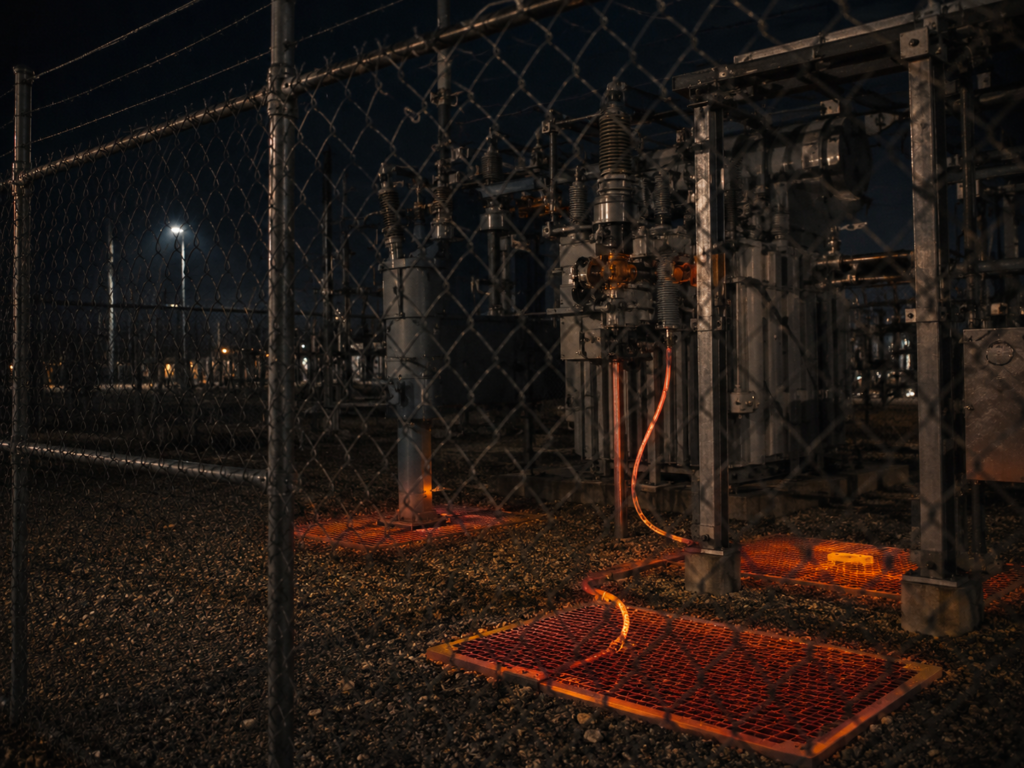
In brief: Mobile surveillance trailers occupy the middle ground between security guards and permanent cameras by delivering active deterrence with broad site coverage while avoiding permanent installation costs. Headline comparison: Security guards generally provide the highest monthly operating cost, permanent cameras provide the strongest long-term infrastructure solution, and mobile surveillance trailers balance coverage, flexibility, and deployment speed for remote utility sites.
| Feature | Mobile Surveillance Trailer | Security Guard | Fixed Camera System |
|---|---|---|---|
| Coverage | Wide-area elevated monitoring | Limited to visible patrol area | Fixed viewing angles |
| Deterrence | Live monitoring, speaker, strobes, visible presence | Strong personal presence | Mostly passive unless integrated with monitoring |
| Deployment Speed | Sets up in hours | Immediate scheduling if staff available | Installation may require engineering, trenching, permits, and cabling |
| Permanent Infrastructure | No | No | Yes |
| Remote Locations | Excellent | Depends on staffing | Often requires power and communications |
| After-hours Protection | Continuous monitored coverage | Shift dependent | Continuous recording |
| Operational Flexibility | Easily relocated | Patrol route changes only | Cameras remain fixed |
| Best Use Case | Remote infrastructure, temporary projects, evolving security needs | Visitor interaction, access control, occupied facilities | Long-term permanent sites |
| Relative Cost | Mid-range: short-term rental, no construction | Highest ongoing cost: staffed shifts around the clock | Higher upfront installation, lower ongoing after build-out |
No single option is universally better. Permanent cameras remain the preferred choice for facilities with established infrastructure and long-term monitoring requirements. Security guards continue to provide value wherever customer interaction, contractor management, or controlled access is necessary. For many Northern California water and utility operators, however, a mobile surveillance trailer offers a practical middle path by combining broad visual coverage, professional monitoring, and active deterrence without requiring permanent construction. This balanced approach is one reason many organizations evaluate trailers alongside traditional security investments instead of viewing them as replacements.
Deployment and monitoring
In brief: Successful utility site security depends as much on trailer placement and monitoring procedures as the equipment itself. The goal is to maximize visibility, reduce blind spots, and provide a measured response that complements existing utility operations. The effectiveness of a mobile surveillance trailer starts before it arrives on site. Rather than placing equipment wherever space is available, Hawk works with customers to identify operational priorities, traffic patterns, vulnerable assets, and likely access routes. This allows the trailer to become part of a broader physical security strategy rather than simply another camera platform. A typical deployment process includes:
- Site assessment
- Review of existing security measures
- Identification of perimeter gaps
- Selection of elevated camera position
- System setup and testing
- Live monitoring activation
Unlike permanent installations that remain fixed for years, a trailer can be repositioned whenever work zones or operational priorities change. Examples include:
- Utility construction projects
- Pipeline maintenance
- Reservoir improvements
- Emergency repairs
- Temporary equipment storage
- Seasonal infrastructure upgrades
Because the system is mobile, operators can protect whichever portion of the property currently presents the greatest operational risk.
Strategic placement matters
Placement is one of the most important decisions during deployment. Depending on site conditions, trailers may monitor:
- Primary vehicle entrances
- Secondary access roads
- Long fence lines
- Equipment yards
- Material storage compounds
- Temporary contractor staging areas
- Generator locations
- Pump station approaches
Elevated cameras improve visibility across larger outdoor environments while reducing blind spots that may exist with ground-mounted equipment. Instead of focusing on a single gate, the trailer provides awareness across broader sections of the property.
Professional monitoring
Technology alone does not secure a facility. The monitoring component determines how quickly suspicious activity is evaluated and how consistently procedures are followed. With Hawk’s 24/7 remote monitoring, trained monitoring professionals observe alerts and determine the appropriate response based on the situation. A typical escalation sequence includes:
- Detection of unusual activity
- Live video verification
- Voice communication through onboard speakers when appropriate
- Activation of visible deterrence features
- Notification of designated site contacts
- Law enforcement dispatch if required
This process helps reduce unnecessary dispatches while ensuring genuine incidents receive prompt attention. Because every site operates differently, escalation procedures can be customized to match customer requirements. For example, maintenance crews working overnight may trigger expected activity, while unauthorized vehicle movement after scheduled work hours may require immediate investigation.
Supporting, not replacing, existing security
One of the strengths of mobile surveillance is that it integrates with existing security investments. Rather than replacing permanent infrastructure, a trailer expands coverage into areas where fixed systems may not reach. For many California utility operators, a layered security program includes:
- Perimeter fencing
- Controlled access gates
- SCADA monitoring
- Fixed CCTV
- Lighting
- Employee access policies
- Mobile surveillance trailer
- Professional remote monitoring
Each layer serves a different purpose. Together, they improve situational awareness while providing flexibility as facilities evolve. For operators managing multiple locations across Northern California, trailers can also be relocated between sites as projects begin and end, providing a practical alternative to installing permanent systems at every temporary work area.
Frequently asked questions
How do water and utility sites stop copper and metal theft, vandalism, trespassing, and tampering at remote, unmanned utility sites in California?
A mobile surveillance trailer combined with 24/7 professional remote monitoring provides continuous visibility across remote utility facilities while complementing fencing, lighting, access controls, and permanent security systems. Because many treatment plants, pump stations, reservoirs, and utility yards operate without full-time personnel, mobile surveillance adds an active detection and deterrence layer that can identify activity, issue live audio warnings when appropriate, and notify site personnel or law enforcement according to established response procedures.
Is a surveillance trailer cheaper than hiring security guards for a utility site?
In many situations, a surveillance trailer can provide broader after-hours coverage at a lower long-term operating cost than maintaining on-site guard coverage, although actual costs vary by location, staffing requirements, monitoring level, and deployment duration. Utilities typically weigh one monitored trailer against multiple guard shifts, and the trailer is often the lower cost option for continuous overnight coverage. Guards remain the preferred solution whenever visitor management, access control, or continuous human interaction is required.
Can one mobile trailer cover a utility site?
One trailer can often monitor a substantial portion of a utility property because elevated cameras provide wide visibility across entrances, perimeter fencing, and outdoor equipment areas. The exact coverage depends on site size, terrain, structures, vegetation, and operational priorities. Larger campuses may benefit from multiple trailers working together with existing fixed camera systems to eliminate blind spots.
Do surveillance trailers actually deter copper and metal theft?
Visible surveillance equipment, elevated camera masts, professional monitoring, two-way speakers, and warning strobes can discourage unauthorized activity before property damage occurs. While no security solution can eliminate every incident, mobile surveillance trailers add an active deterrence layer that goes beyond passive video recording by allowing monitoring personnel to assess activity in real time and respond according to site procedures.
How fast can Hawk deploy a trailer in California?
Trailer or fixed cameras for a utility site: which is better?
Get utility site security pricing
In brief: The right security solution depends on your site’s size, operating environment, existing infrastructure, and monitoring requirements. Hawk helps California utility operators choose the appropriate level of protection without paying for unnecessary permanent installations.
Every utility site presents different operational challenges.
A remote pump station has different security requirements than a municipal treatment plant. Likewise, a temporary construction project protecting replacement equipment has different priorities than a permanent maintenance yard.
Rather than offering a one-size-fits-all package, Hawk evaluates:
Site size and layout
Existing security infrastructure
Utility operations
Hours of activity
Remote monitoring requirements
Temporary versus long-term deployment
Access points and perimeter gaps
Environmental conditions
From there, the appropriate surveillance trailer configuration and monitoring plan can be recommended.
For organizations managing multiple facilities, mobile surveillance trailers also provide flexibility that permanent systems cannot. Equipment can be relocated between pump stations, reservoirs, treatment facilities, maintenance projects, or emergency response sites as operational priorities change.
Combined with mobile surveillance trailer rental, professional monitoring, and Hawk’s California deployment team, utilities gain a security solution designed specifically for changing field operations rather than static infrastructure.
Whether you operate a municipal water system, wastewater treatment facility, utility contractor, electrical maintenance yard, or regional infrastructure project, Hawk can recommend a deployment strategy that complements your existing security investments.
Talk to a Security Specialist
If you’re evaluating security improvements for a water treatment plant, pump station, reservoir, utility yard, or critical infrastructure project in Northern California, Hawk Surveillance Systems can help determine the right combination of mobile surveillance, remote monitoring, and layered perimeter protection.
Request California rental pricing today to discuss your site requirements, deployment timeline, and monitoring options.