

Last updated: July 2026
TL;DR: California retail parking lots lose money to catalytic converter theft, smash and grab raids, vehicle break-ins, and after-hours loitering, and no single tool fixes all of it. Fixed cameras record but rarely deter on their own, and a guard covers one point at a time at one of the highest recurring monthly costs in the security budget. A mobile surveillance trailer gives a shopping center visible, elevated, monitored deterrence that sets up in hours, moves as risk shifts across the lot, and pairs with 24/7 remote monitoring so incidents get a live response instead of next-day footage review. For most Northern California retail properties, the practical mix is fixed cameras at entrances, a trailer covering the open lot, and monitoring that ties it together.
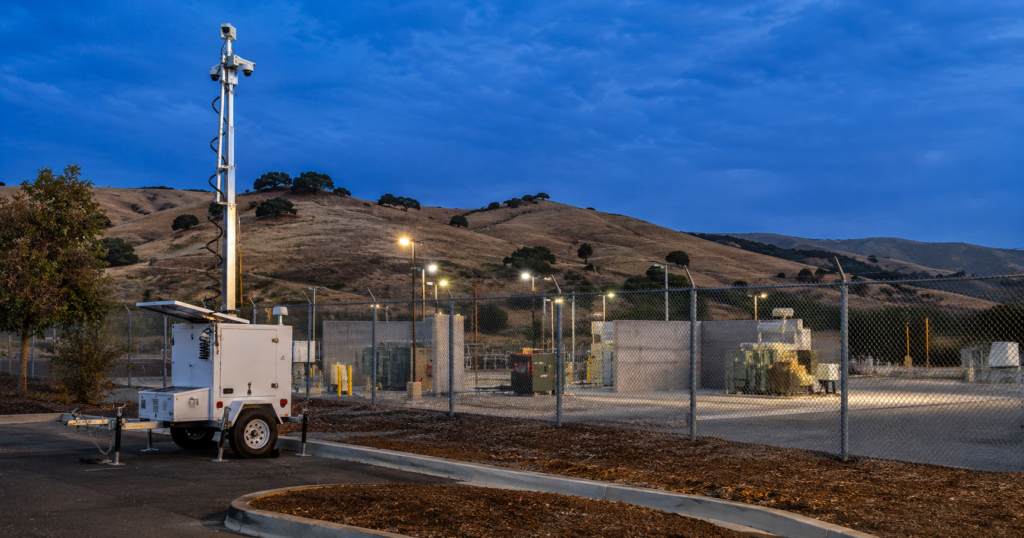
Retail parking lots across California face recurring operational security challenges that include catalytic-converter theft, vehicle break-ins, smash-and-grab incidents, shopping cart theft, after-hours loitering, and customer safety concerns. The most effective approach is rarely a single security measure. Instead, successful retail operators combine permanent security infrastructure with mobile surveillance, remote monitoring, and site-specific deployment strategies. Mobile surveillance trailers provide an active outer security layer that complements fixed cameras and on-site staff while covering large outdoor areas that building-mounted cameras often cannot. Hawk Surveillance Systems deploys compact and solar-powered surveillance trailers throughout California, typically setting up in hours without requiring permanent infrastructure. If your retail property needs flexible protection for changing risk areas, a mobile surveillance trailer rental can provide immediate coverage while avoiding permanent installation delays.
What retail and shopping-center lots are actually losing
In brief: Retail parking lots lose more than merchandise. Vehicle-related crimes, property damage, operational disruption, liability exposure, and customer confidence all affect long-term profitability. Outdoor parking areas remain one of the least controlled portions of many retail properties, making layered security especially important.
Retail parking lot security refers to the systems, personnel, and operational procedures used to monitor and protect parking facilities serving shopping centers, malls, grocery stores, big-box retailers, lifestyle centers, and mixed-use commercial developments. Unlike interior retail security, parking lot security must address large open spaces, multiple vehicle access points, varying lighting conditions, and activity occurring around the clock.
While every shopping center is different, several risks consistently appear across California retail properties.
Catalytic-converter theft
Catalytic converters remain attractive targets because they contain valuable precious metals. Organized theft crews often work quickly, targeting vehicles parked for extended periods during business hours or overnight.
The National Insurance Crime Bureau has identified California as a national hotspot for catalytic converter theft (see NICB regional reporting).
For shopping center owners, the impact extends beyond individual vehicle owners. Incidents create customer dissatisfaction, increase insurance claims, and can damage the property’s reputation.
Vehicle break-ins and smash-and-grab incidents
Parking lots frequently experience vehicle burglaries involving visible electronics, luggage, shopping bags, and personal belongings.
Smash-and-grab activity may also involve coordinated retail theft operations where suspects use parking lots as staging areas before leaving quickly after entering stores.
Statewide property-crime trends, including vehicle burglary, are tracked in the California Attorney General’s annual criminal justice statistical reports.
Shopping cart and property theft
Retail operators also absorb costs associated with shopping cart theft, abandoned carts, damaged parking equipment, and vandalized lighting or signage.
Although these incidents may appear less severe individually, recurring losses increase maintenance costs over time.
After-hours loitering
Many shopping centers remain largely empty overnight while retaining significant infrastructure value.
Empty parking areas can attract unauthorized gatherings, illegal dumping, vandalism, or trespassing when no active monitoring exists.
Customer safety concerns
Customers expect parking areas to feel well maintained, visible, and professionally monitored.
Security measures that improve visibility and create a visible deterrent often support both customer confidence and employee safety during early morning or evening operating hours.
A layered security approach helps address each of these concerns rather than relying on a single technology or staffing solution.
Why guards and fixed cameras leave gaps at a retail parking lot
In brief: Physical guards, fixed cameras, and mobile surveillance trailers each solve different problems. The strongest retail security strategy uses each where it performs best instead of expecting one solution to cover every operational need.
Many retail operators begin by considering security guards or additional fixed cameras.
Both remain valuable tools.
Neither completely addresses large outdoor parking lots by itself.
Physical security guards
Security guards provide visible presence and can interact directly with customers, employees, contractors, and emergency responders.
They are especially useful for:
Customer assistance
Access control
Incident documentation
Event security
Active response
However, one guard cannot observe every portion of a large shopping center parking lot simultaneously.
Coverage naturally shifts wherever the guard is currently located.
Guarding also represents one of the highest recurring monthly security expenses.
Fixed security cameras
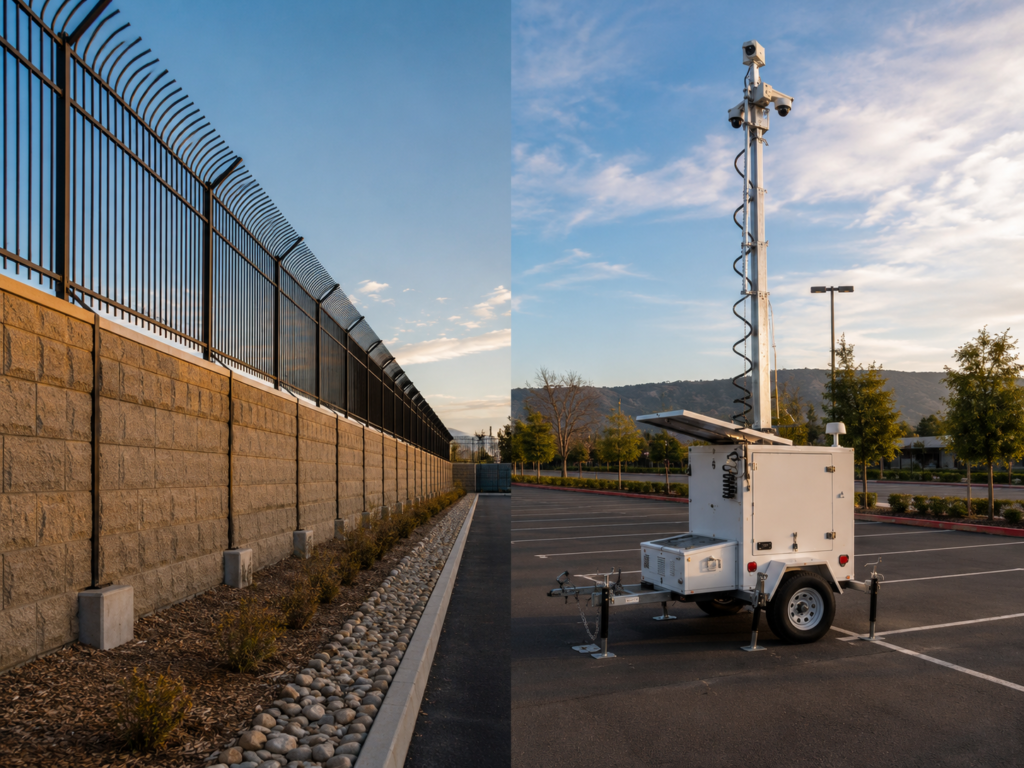
Permanent camera systems remain an excellent long-term investment for buildings.
They work particularly well for:
Building entrances
Interior retail spaces
Loading docks
Cash handling areas
Permanent access points
Their limitations appear outdoors.
Expanding coverage usually requires trenching, power installation, network cabling, permits, and permanent infrastructure.
If security priorities change, relocating fixed cameras becomes expensive.
Mobile surveillance trailers
A mobile surveillance trailer fills the coverage gap between permanent infrastructure and staffed security.
Instead of replacing guards or fixed cameras, it becomes the active outer security layer protecting parking areas, perimeter edges, overflow parking, temporary risk zones, and changing operational priorities.
As compared with many national surveillance providers such as WCCTV, Pelco, SentraCam, or LVT, Hawk focuses specifically on Northern California deployments, flexible trailer placement, concierge-level remote monitoring, and site-specific operational support rather than one standardized national deployment model.
How a mobile surveillance trailer protects a retail parking lot
In brief: A mobile surveillance trailer extends security coverage into the open areas where permanent cameras often have limited visibility. Elevated cameras, live monitoring, real-time deterrence, and flexible placement create an active security layer that can move wherever risk changes across the property.
Unlike building-mounted cameras, a mobile surveillance trailer is designed specifically for outdoor environments. It protects large parking areas without requiring permanent construction, trenching, or utility work.
For retail operators, that flexibility matters. Parking lots change throughout the year. Seasonal shopping periods, construction projects, special events, temporary tenant improvements, and holiday traffic all shift where security attention is needed.
Rather than installing additional permanent infrastructure each time conditions change, a surveillance trailer can simply be relocated to the current priority area.
Elevated camera coverage
One of the biggest advantages of a mobile surveillance trailer is camera height.
The telescoping mast places cameras well above vehicle level, allowing them to observe:
Multiple parking rows
Pedestrian walkways
Entrance and exit lanes
Cart return areas
Loading zones
Property edges
Overflow parking
That elevated perspective reduces blind spots commonly found with low-mounted building cameras.
Instead of focusing on only one entrance, the trailer observes activity across much larger portions of the property.
Solar-powered operation
Retail properties often need temporary security in locations without nearby electrical infrastructure.
Solar-powered surveillance trailers operate independently from permanent building power, allowing placement where coverage is needed instead of where utilities already exist.
Benefits include:
No trenching
No underground conduit
No temporary generators
Reduced installation disruption
Flexible positioning throughout the property
For shopping centers with expansive parking fields, this creates significantly more deployment options.
Live remote monitoring
Recording video is useful after an incident.
Live monitoring helps reduce the likelihood that incidents continue unnoticed.
Through 24/7 remote monitoring, trained operators review alerts, verify activity, and determine whether escalation is appropriate.
This approach helps distinguish between:
Customers leaving late
Store employees closing operations
Delivery vehicles
Maintenance crews
Suspicious after-hours activity
Rather than responding to every motion event equally, monitored systems prioritize verified events requiring attention.
Real-time deterrence
Visible deterrence is often more valuable than evidence collected afterward.
Modern surveillance trailers may include:
High-output LED lighting
Audible speaker systems
Remote voice communication
PTZ cameras
Thermal or infrared imaging
Video analytics
When appropriate, monitoring personnel can activate lighting or communicate through speakers to discourage unauthorized activity before property damage occurs.
This proactive capability distinguishes mobile surveillance from passive recording systems.
Flexible deployment
Retail properties rarely experience identical security concerns every month of the year.
Examples include:
Holiday shopping seasons
New tenant openings
Temporary construction
Parking lot resurfacing
Seasonal overflow parking
Vacant storefront renovations
Outdoor promotional events
Instead of leaving equipment permanently fixed in one location, the trailer relocates as operational priorities evolve.
That flexibility supports Hawk’s concentric approach to mobile security, placing active protection where risk is highest today rather than where infrastructure happened to be installed years ago.
Which Hawk trailer fits
In brief: Different retail environments require different equipment. Smaller urban shopping centers benefit from compact trailers that fit into tighter parking layouts, while larger malls and big-box centers often benefit from solar-powered platforms built for expansive outdoor coverage.
Selecting the correct surveillance trailer depends on parking lot size, traffic patterns, available space, and operational goals.
Compact Urban Surveillance Trailer
The compact urban surveillance trailer is designed for retail environments where space is limited but visibility remains essential.
It works particularly well for:
Neighborhood shopping centers
Grocery stores
Pharmacy parking lots
Mixed-use developments
Downtown commercial districts
Street-facing retail
Its smaller footprint allows deployment without occupying excessive parking capacity while still providing elevated surveillance.
Ideal applications include:
Front customer parking
Side parking rows
Alley access
Shared commercial lots
Temporary construction adjacent to occupied retail
Solar Surveillance Trailer
Larger commercial properties generally require broader visibility across expansive parking areas.
The solar surveillance trailer supports:
Regional shopping malls
Big-box retail
Lifestyle centers
Outlet centers
Warehouse clubs
Multi-building retail campuses
Because it operates independently from permanent power, it can be positioned throughout large parking fields while maintaining continuous surveillance coverage.
Retail owners frequently use solar trailers to monitor:
Main vehicle entrances
Overflow parking
Employee parking
Garden centers
Seasonal merchandise areas
Loading docks
Property perimeter edges
The ability to reposition coverage as shopping patterns change provides an operational advantage over permanently mounted systems.
Supporting permanent security
Neither trailer is intended to replace every existing security investment.
Instead, Hawk’s approach complements:
Interior camera systems
Building access control
Alarm systems
Security lighting
On-site personnel
Retail management teams
The result is a layered security strategy that extends protection into outdoor areas where permanent infrastructure often provides limited visibility.
Retail operators evaluating national providers such as WCCTV or LVT should also consider deployment responsiveness, ongoing monitoring services, local support, and the ability to adapt equipment placement as operational needs evolve. Hawk’s Northern California focus allows security planning that reflects local commercial environments rather than a standardized nationwide deployment model.
Trailer vs. Guard vs. Fixed Cameras: Cost and Coverage
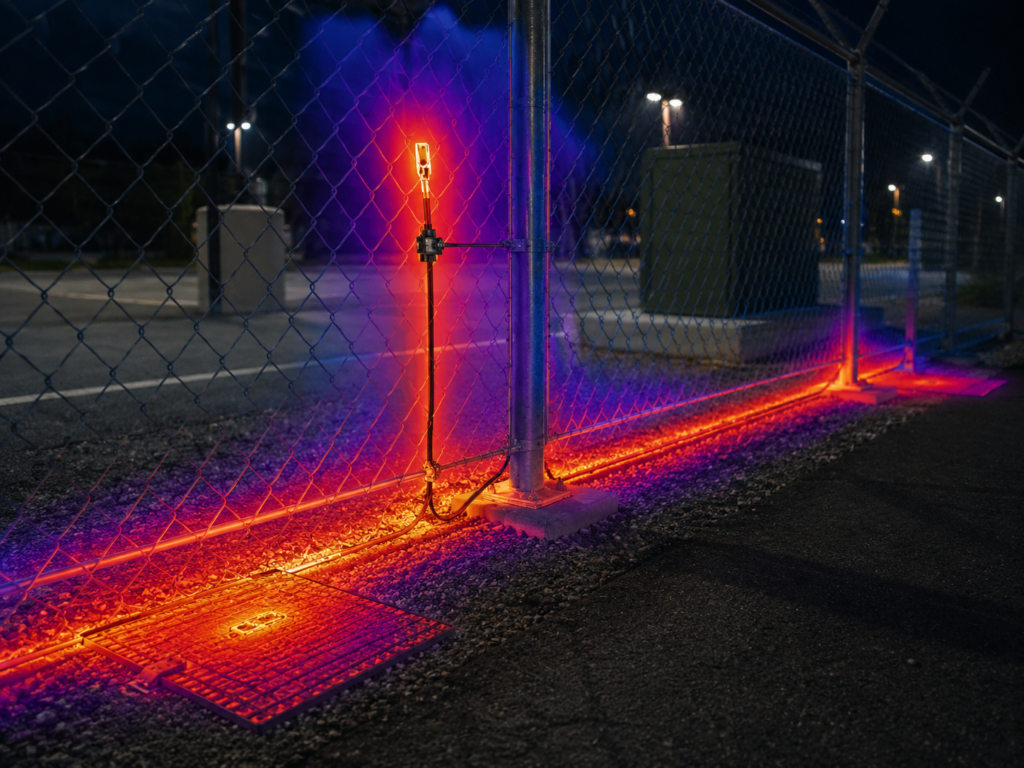
In brief: Mobile surveillance trailers occupy the middle ground between permanent camera systems and on-site security guards. They provide active deterrence across large outdoor parking areas while avoiding the infrastructure costs of permanent installations and the ongoing staffing costs associated with dedicated guard coverage.
Headline figure: Security guard services typically represent the highest recurring operating expense, while fixed cameras generally require the largest upfront infrastructure investment. Mobile surveillance trailers balance deployment speed, site coverage, and operating costs.
No single security solution is ideal for every retail property. Shopping centers often achieve the best results by combining multiple technologies, with each covering the limitations of the others.
Evaluation Area | Mobile Surveillance Trailer | Security Guards | Fixed Cameras |
|---|---|---|---|
Coverage Area | Large outdoor parking lots and perimeter | Limited to guard patrol location | Permanent camera locations |
Deployment Speed | Sets up in hours | Depends on staffing availability | Requires permanent installation |
Infrastructure | No permanent construction | None | Power, network, trenching often required |
Deterrence | High visibility, lighting, speakers, monitored response | High human presence | Primarily passive recording |
Mobility | Easily relocated | Patrol routes can change | Fixed after installation |
After-hours Monitoring | Continuous with remote monitoring | Additional staffing required | Continuous recording only unless professionally monitored |
Best For | Large lots, temporary risks, changing layouts | Customer interaction, access control, events | Permanent entrances and building coverage |
Cost Profile | Moderate operating cost | Highest recurring labor cost | Highest upfront infrastructure cost |
The comparison illustrates why many retail operators deploy more than one layer of protection rather than replacing one system with another.
A typical shopping center may combine:
Permanent building cameras covering entrances and storefronts
Mobile surveillance trailers monitoring parking fields and perimeter gaps
Security personnel during business hours or special events
Remote monitoring after stores close
This layered approach aligns with Hawk’s concentric security philosophy, placing each security resource where it performs most effectively.
Unlike purely national surveillance providers that often standardize deployments across many industries, Hawk focuses on Northern California commercial properties where parking layouts, customer traffic, and seasonal operational demands frequently change throughout the year.
Deployment and monitoring
In brief: Effective parking lot security depends as much on trailer placement and monitoring strategy as it does on the equipment itself. Planning where coverage begins, how alerts are verified, and how incidents are escalated determines the overall effectiveness of the system.
Installing equipment is only one part of protecting a retail property.
The deployment process begins with understanding how customers, employees, vendors, and delivery vehicles move through the parking lot during both operating and after-hours periods.
Site assessment
Before deployment, Hawk evaluates:
Parking lot size
Vehicle entrances
Pedestrian routes
Loading areas
Existing camera coverage
Lighting conditions
High-value inventory locations
Historical incident locations
Temporary construction or maintenance activities
This assessment helps determine where a surveillance trailer provides the greatest operational value.
Strategic placement
Rather than positioning equipment in the middle of a parking lot without a plan, trailers are typically placed where they maximize visibility.
Common deployment locations include:
Main entrances
Property perimeter corners
Overflow parking
Employee parking
Service roads
Loading docks
Temporary construction fencing
Areas with recurring vehicle incidents
If priorities change, the trailer can simply be repositioned without requiring new construction.
Concierge-level remote monitoring
Technology alone does not replace human decision making.
With concierge-level monitoring, trained operators evaluate alerts before determining whether escalation is appropriate.
Depending on the situation, operators may:
Verify activity using live video
Activate visible lighting
Broadcast voice announcements
Continue observation
Contact designated property representatives
Coordinate with emergency services when appropriate
This verification process helps reduce unnecessary responses while ensuring genuine incidents receive attention.
Supporting daily retail operations
Retail parking lots rarely remain static.
Throughout the year, operators may experience:
Holiday shopping traffic
Seasonal promotions
Temporary outdoor displays
Store remodels
New tenant openings
Parking lot resurfacing
Utility work
Landscaping projects
Because surveillance trailers can be relocated quickly, security coverage adapts alongside daily operations.
That flexibility is one of the primary operational advantages over permanently installed infrastructure.
Get retail parking lot security pricing
In brief: Every shopping center has different parking layouts, operating hours, customer volumes, and security priorities. A site assessment helps determine the most effective combination of mobile surveillance, remote monitoring, and existing security infrastructure.
Whether you manage a neighborhood shopping center, regional mall, grocery store, lifestyle center, or big-box retail property, parking lot security should extend beyond the building itself.
A mobile surveillance trailer rental provides flexible outdoor coverage without requiring permanent installation, making it well suited for evolving operational needs.
For properties requiring continuous observation, combining mobile surveillance with 24/7 remote monitoring creates an active security layer that complements existing cameras, lighting, alarms, and on-site personnel.
Hawk Surveillance Systems supports retail and parking lot security projects throughout Northern California, including Sacramento and San Francisco with both compact and solar-powered surveillance trailers, with standard rentals typically running in 24 to 48 hours.
If you’re evaluating options for a retail property, shopping center, or commercial parking facility, talk with a Hawk Security Specialist to discuss site requirements, deployment options, and California rental pricing tailored to your location and operational needs.
The following section contains answers to the most common questions retail property owners and managers ask when evaluating mobile surveillance trailers for parking lot security.
Frequently asked questions
How do retail and shopping-center parking lots stop catalytic-converter theft, smash-and-grab, cart and vehicle break-ins, and after-hours loitering in California?
The most effective approach combines mobile surveillance trailers, professional remote monitoring, permanent cameras, lighting, and clearly defined security procedures to provide continuous coverage across the entire parking lot instead of relying on a single security measure. A surveillance trailer extends visibility into open parking areas, while trained monitoring personnel can verify activity, issue live voice warnings when appropriate, and coordinate responses if an incident requires escalation. This layered strategy provides broader outdoor coverage than fixed cameras alone and complements existing on-site security resources.
Is a surveillance trailer cheaper than hiring security guards for a retail parking lot?
In many situations, a mobile surveillance trailer provides a lower long-term operating cost than maintaining dedicated security guard coverage twenty-four hours a day, although actual pricing depends on site size, monitoring requirements, deployment duration, and operational goals. Guards remain the preferred option when customer interaction, visitor assistance, or controlled access is required, while surveillance trailers excel at continuously monitoring large outdoor areas.
Can one mobile trailer cover a retail parking lot?
Do surveillance trailers actually deter catalytic-converter theft?
Visible surveillance equipment, elevated cameras, remote monitoring, LED lighting, and live speaker capability can discourage opportunistic criminal activity by increasing the likelihood that suspicious behavior will be detected before an incident develops. No security system can guarantee theft prevention, but combining active monitoring with visible deterrence generally provides greater protection than passive recording systems alone. Mobile trailers also allow property managers to relocate security resources if theft patterns shift to another area of the parking lot.
How fast can Hawk deploy a trailer in California?
Hawk Surveillance Systems can typically deploy mobile surveillance trailers in hours, allowing retail operators to respond quickly to changing operational needs without waiting for permanent construction or electrical infrastructure. Exact deployment timelines depend on trailer availability, delivery distance, site access, and project scheduling. Because the trailers require no permanent installation, they can begin protecting outdoor parking areas far sooner than many fixed camera expansions.
Trailer or fixed cameras for a retail parking lot: which is better?
Neither solution replaces the other because each serves a different operational purpose. Fixed cameras provide excellent long-term coverage for storefronts, entrances, loading docks, and interior spaces where permanent infrastructure is appropriate. Mobile surveillance trailers are better suited for open parking lots, temporary risk areas, construction zones, overflow parking, and locations where security priorities change over time. Many California retailers achieve the strongest results by combining both systems into a layered security strategy that maximizes visibility across the entire property.
Get Retail Parking Lot Security Pricing
Retail parking lots are constantly changing environments. Customer traffic, seasonal shopping, construction projects, tenant improvements, and evolving operational priorities all influence where security resources are needed most.
Rather than relying exclusively on security guards or expanding permanent camera infrastructure every time conditions change, many California retailers choose flexible mobile surveillance that can move alongside operational demands.
Hawk Surveillance Systems provides mobile surveillance solutions designed specifically for Northern California commercial properties. Whether you manage a neighborhood shopping center, grocery store, lifestyle center, outlet center, or regional mall, a properly deployed surveillance trailer can become the active outer layer within a comprehensive security strategy.
Our approach emphasizes:
Flexible deployment without permanent installations
Elevated camera visibility across large parking areas
Solar-powered operation for off-grid locations
Concierge-level 24/7 remote monitoring
Real-time deterrence using lighting and speaker systems
Equipment that relocates as operational priorities change
Unlike one-size-fits-all national deployments, Hawk works directly with Northern California businesses to recommend equipment that fits each property’s layout, risk profile, and day-to-day operations.
Whether your property requires coverage for after-hours parking, temporary construction, seasonal retail traffic, or ongoing perimeter monitoring, our team can recommend the appropriate combination of surveillance technology and monitoring services.
Contact Hawk Surveillance Systems today to discuss your retail parking lot security requirements and request California rental pricing for a surveillance trailer deployment tailored to your property.