

Last updated: September 2026
For buyers, “NDAA compliant cameras” describes a claim that equipment meets applicable Section 889 restrictions; a label alone does not establish compliance for a complete system or contractor. Subject to applicable exceptions and waivers, Section 889 bars federal procurement of systems using covered Hikvision, Dahua or Hytera surveillance equipment for specified security purposes as substantial or essential components or critical technology, while 2 CFR 200.216 bars federal grant and loan recipients and subrecipients from spending those funds on covered equipment or systems. These rules establish prohibitions, rather than an official camera certification program. Check manufacturers, components, services and the funding requirements before ordering. At Hawk, we can work through equipment documentation with you during the site survey.
What “NDAA compliant” actually means
Subject to applicable exceptions and waivers, Section 889 bars federal procurement of systems using covered Hikvision, Dahua or Hytera surveillance equipment for specified security purposes as substantial or essential components or critical technology, while 2 CFR 200.216 bars federal grant and loan recipients and subrecipients from spending those funds on covered equipment or systems.
Section 889 belongs to the National Defense Authorization Act for Fiscal Year 2019. Its purchasing and contracting restrictions are implemented in FAR 52.204-25. The funding rule is 2 CFR 200.216.
Treat the phrase on a spec sheet as the seller’s claim to substantiate. The cited rules do not create an official “NDAA compliant” product certificate. They do require offeror representations and, for grant recipients, certification of compliance upon accepting an award. Those obligations concern the transaction and organization as well as the equipment.
Which manufacturers Section 889 names
Section 889’s covered-equipment definition names Huawei and ZTE for telecommunications equipment, and Hikvision, Dahua and Hytera for video surveillance and telecommunications equipment used for specified security purposes. Subsidiaries and affiliates are included. Checking the company printed on a camera is therefore only the beginning of the review.
| Company | What is covered | When it applies |
|---|---|---|
| Huawei Technologies Company and ZTE Corporation | Telecommunications equipment | Within the applicable procurement, contractor-use or funding prohibition |
| Hangzhou Hikvision Digital Technology Company, Dahua Technology Company and Hytera Communications Corporation | Video surveillance and telecommunications equipment | For public safety, government facility security, physical security surveillance of critical infrastructure, and other national security purposes |
| Subsidiaries and affiliates of each named company | The corresponding equipment categories above | The same applicable purpose and prohibition tests |
Source: FAR 52.204-25(a).
The definition also covers services provided by these entities or using their equipment, and equipment or services from entities identified through the specified Secretary of Defense determination. The named companies are not the entire definition.
A “substantial or essential component” is one necessary for proper function or performance; the prohibition also reaches covered equipment or services used as critical technology within a system.
Who has to comply
Federal executive agencies face separate restrictions on what they acquire and which equipment-using entities they contract with. Federal grant and loan recipients face restrictions on spending those funds. The FCC’s equipment authorization rules operate separately, so identify the buyer, funding source and proposed equipment before deciding which requirements govern.
| Buyer | Rule | In force since |
|---|---|---|
| Federal executive agencies acquiring equipment, systems or services | Section 889(a)(1)(A): covered procurement prohibition | August 13, 2019 |
| Federal executive agencies contracting with entities that use covered equipment or services | Section 889(a)(1)(B): contractor-use prohibition | August 13, 2020 |
| State and local governments, utilities and other recipients or subrecipients spending federal grant or loan funds | 2 CFR 200.216: prohibited use of those funds | August 13, 2020 |
| Separate FCC layer: equipment authorization applicants, rather than a buyer category | Authorization ban for covered equipment | 2022 order, released November 25, 2022; consult current FCC requirements |
Sources: FAR 52.204-25(b); 2 CFR 200.216; DOE effective-date notice; FCC’s 2022 order.
Section 889(a)(1)(B) reaches an entity’s use of covered equipment even when that use is unrelated to federal contract performance. FAR exceptions address services connecting to third-party facilities, such as backhaul or roaming, and telecommunications equipment meeting the clause’s traffic-routing and data-visibility test. Applicable waivers require separate review.
The FCC rule bars new authorizations for covered equipment through its equipment authorization program. The FCC’s current Covered List also addresses conditional approvals and later importation and marketing restrictions. Do not treat the 2022 order as the complete current FCC rulebook.
Why it matters for municipal, utility and critical-infrastructure sites
A municipal or utility project can fall within the funding prohibition when it spends federal grant or loan money. Public safety, government facility security and physical security surveillance of critical infrastructure are expressly named purposes. Establish both the source of funds and the intended surveillance use before approving a system.
For a city yard or utility facility, begin with the award documents. A locally managed project may still involve federal funds passed through another organization. Conversely, the funding rule does not make every purchase by a city or utility federally funded.
Translate the applicable requirements into the equipment schedule and purchase or rental specifications. The risk is concrete: covered procurement cannot be funded with the prohibited federal funds, and the FAR bars contracts within its scope. Do not assume an exception without review.
For site planning, see security for municipal and government sites and utility and infrastructure security.
How to check a camera system before you buy or rent
Check the proposed system component by component, then obtain the seller’s written explanation of how it meets your procurement requirements. Include cameras, recording equipment, communications hardware and associated services. Match the documentation to the actual configuration and have your contracting officer or grant administrator resolve questions before commitment.
- Identify every camera manufacturer. Record the original manufacturer and exact model, rather than relying only on a product-family name or marketing label.
- Identify the recorder or NVR. Request its manufacturer and model and include it in the system review, even when the cameras carry a separate label.
- Identify the cellular router or modem. Include communications equipment in the inventory; the covered categories extend beyond video cameras.
- Ask about rebadged components. Request the original equipment manufacturer behind a reseller’s brand, and ask whether subsidiaries or affiliates are involved.
- Request a written representation. For federal offers, FAR 52.204-24 addresses proposed supply and entity use; 52.204-26 addresses supply and use in the annual SAM representation framework. Follow the solicitation’s instructions.
- Keep the supporting documents. File the equipment schedule, model information, seller responses and service descriptions with the procurement records. Recheck any proposed substitution.
- Confirm the final configuration. Ask your contracting officer or grant administrator to resolve applicability, exceptions and documentation requirements before you buy, rent, extend or renew.
Under FAR 52.204-8, applicable SAM representations must be current for the offer. Existing negative representations can remove corresponding responses under 52.204-24; affirmative answers require additional disclosures. The reasonable inquiry behind the use representation does not need to include an internal or third-party audit. This checklist supports that review without replacing the applicable forms.
Mobile surveillance on grant-funded and government projects
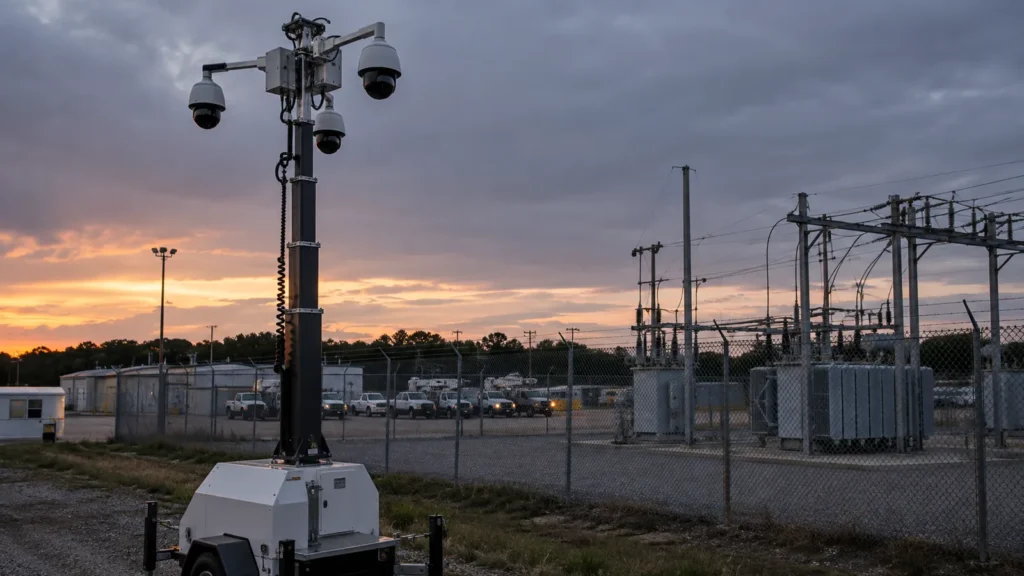
A mobile surveillance rental deserves the same review of covered equipment, services and funding requirements as a purchased system. Review the actual proposed configuration before the agreement is signed, including any recording or connectivity equipment. A temporary deployment should still have documentation that matches what the buyer will receive.
Bring your procurement requirements to the site survey and we will work through the equipment documentation with you. We offer standard rentals from our Northern California fleet and sell trailers across the Western US. Monitoring is provided through our monitoring partner. Explore mobile surveillance trailer rental in Northern California or review our surveillance trailers as you prepare the site requirements.
Frequently asked questions
The key questions are which rule applies, what equipment and services the system includes, and what the seller can document. The answers below distinguish federal procurement restrictions from federal funding restrictions and separate FCC requirements. Apply them to the actual purchase, rental or contract under review.
What does NDAA compliant mean for security cameras?
It means the seller is claiming that the cameras meet applicable Section 889 restrictions. Verify that claim against the manufacturer, system components, associated services and intended use. FAR 52.204-25 addresses covered equipment used as a substantial or essential component or critical technology. A camera label alone does not resolve the complete system’s status or the separate restriction on an entity’s use of covered equipment.
Which camera brands are banned under NDAA Section 889?
Hikvision, Dahua and Hytera are named for video surveillance and telecommunications equipment used for the specified security purposes. Those purposes include public safety, government facility security, physical security surveillance of critical infrastructure and other national security purposes. Subsidiaries and affiliates are included. Huawei and ZTE are named for telecommunications equipment. The definition also covers specified services, so a camera-brand check alone is incomplete.
Does NDAA Section 889 apply to state and local governments?
State and local recipients and subrecipients spending federal grant or loan funds must follow 2 CFR 200.216. That includes a city, county, school district or utility when it is spending those funds on surveillance equipment or services. Identify the award and funding source first. The funding prohibition does not, by itself, make every locally funded camera purchase subject to the same restriction.
Is there an official NDAA compliance certification?
The Section 889 rules discussed here do not establish an official product certificate called “NDAA compliant.” They establish prohibitions and require representations about supply and use. Under 2 CFR 200.216, accepting a loan or grant certifies compliance with the funding prohibition. These are meaningful obligations, but they do not turn a seller’s camera label into government approval. Ask for the supporting documentation and applicable representations.
Can a private business use Hikvision or Dahua cameras?
Section 889 is not a general prohibition on every private business’s camera use. However, its contractor-use restriction can affect federal contracting even when the entity uses covered equipment outside federal work. Federal grant or loan spending has separate restrictions under 2 CFR 200.216. FCC authorization, importation and marketing rules are also separate. These distinctions do not establish permission under every other applicable law or contract.
How do I check whether a camera system contains covered equipment?
Request the original manufacturers and model numbers for the cameras, recorder, router or modem, plus descriptions of associated services. Ask about rebadged equipment and subsidiaries or affiliates, then obtain the seller’s written representation for your procurement. Keep those records with the actual configuration and review substitutions. Your contracting officer or grant administrator should resolve the applicable requirements before the purchase or rental is committed.
Planning surveillance for a government or utility site?
Bring the site’s funding conditions, equipment specifications and documentation requirements to the planning conversation. We can work through the proposed equipment documentation with you at survey. For standard rentals in Northern California or trailer sales across the Western US, call (530) 593-4295, email sales@hawksurveillancesystem.com or contact Hawk.
This article is general information, not legal advice. Confirm requirements with your contracting officer, grant administrator or counsel.