

Why dumpers pick certain commercial lots
An easy entrance, a concealed unloading spot and little visible oversight create opportunities for dumping. Existing debris can make a neglected corner look like an accepted disposal area. Assess the property from the street and after closing, paying particular attention to places where a vehicle can stop without being noticed.
CalRecycle’s prevention guidance connects dumping behavior with access and time of day, and recommends barriers, lighting, maintained sites and cameras. Apply that guidance to your actual operating hours rather than treating every edge of the property alike.
- Walk each vehicle entrance. Which gates stay open after deliveries finish?
- Check the rear lot after dark. Are lights working, and is the unloading area visible?
- Look behind containers and stored materials. Would a parked truck hide someone unloading?
- Assign responsibility for inspecting empty pads and removing new debris.
For an unoccupied site, include these checks in your vacant property security plan. At an active shopping center, coordinate them with retail parking lot security, delivery access and tenant closing routines.
What California law says about illegal dumping
California Penal Code section 374.3 prohibits dumping waste on specified public and private roads and properties, including private property without the owner’s consent. Penalties increase for repeat offenses, and commercial-quantity dumping carries more serious penalties. The facts of an incident determine which provisions apply; a property manager should document rather than diagnose the offense.
The California Senate’s official explanation of existing illegal-dumping law distinguishes ordinary violations from commercial-quantity dumping. It also discusses rocks, concrete, asphalt and dirt, so a pile of construction material should not be dismissed as harmless fill.
Keep the location, discovery date and observable facts in your incident notes. Avoid labeling a vehicle owner as the dumper simply because a vehicle appears nearby. Give the relevant agency the evidence and let it evaluate responsibility.
Who pays for cleanup on private property
Property owners generally face cleanup responsibility when waste is dumped on their land, even when they did not leave it there. CalRecycle describes this as the general position unless the responsible party can be identified. Confirm the local process before assuming a report will produce public cleanup or reimbursement.
CalRecycle’s abatement guidance distinguishes making a responsible party clean up from other cleanup arrangements. For your site, ask the local agency and authorized waste provider who can remove the material, what documentation is needed and whether assistance applies. Do not assume a residential bulky-item program accepts commercial-property waste.
Photograph the pile from a safe position before removal, note whether it blocks access, and keep disposal records with the incident report. If the contents are unknown or appear hazardous, keep people clear and seek appropriate handling guidance instead of having staff open bags or containers. Cleanup and prevention should be planned together.
A prevention plan for dumping hot spots
Illegal dumping concentrates where a lot is dark, unwatched and easy to drive into, so the most reliable prevention combines access control, lighting and visible, monitored cameras that make the site a poor target. Use the following plan to prioritize changes without interfering with legitimate access.
| Problem spot | Why dumpers use it | The fix | Where a camera trailer helps |
|---|---|---|---|
| Open driveway or curb cut | A vehicle can enter, unload and leave with few obstacles. | Review after-hours gate closure and suitable barriers while preserving required access. | Position coverage toward the approach and unloading area; test the view with a vehicle present. |
| Dark rear lot | Low visibility makes activity harder to notice. | Repair or improve lighting and clear obstructions to sightlines. | Add a visible elevated camera position and review nighttime coverage before accepting placement. |
| Vacant parcel or pad | No daily activity may make the space appear unattended. | Maintain the parcel, close unnecessary entrances and assign regular inspections. | Provide a temporary camera location where the current layout needs coverage. |
| Dumpster enclosure | An accessible waste area offers a convenient place to leave unrelated material. | Coordinate secure enclosure access and collection routines with tenants and the hauler. | Aim at the approach rather than assuming cameras can see through enclosure walls. |
| Construction perimeter | Changing gates and material stacks can leave unnoticed access points. | Include gate checks and debris inspection in the closing routine. | Review placement as the job changes; identify when a new obstruction requires adjustment. |
Hawk Surveillance site practice. General guidance, not a guarantee.
Give each selected fix an owner and a completion date. Start with the opening used in the latest incident, then check whether the change simply leaves another nearby entrance exposed. Keep delivery and emergency access requirements in the placement discussion.
How camera trailers deter and document dumping
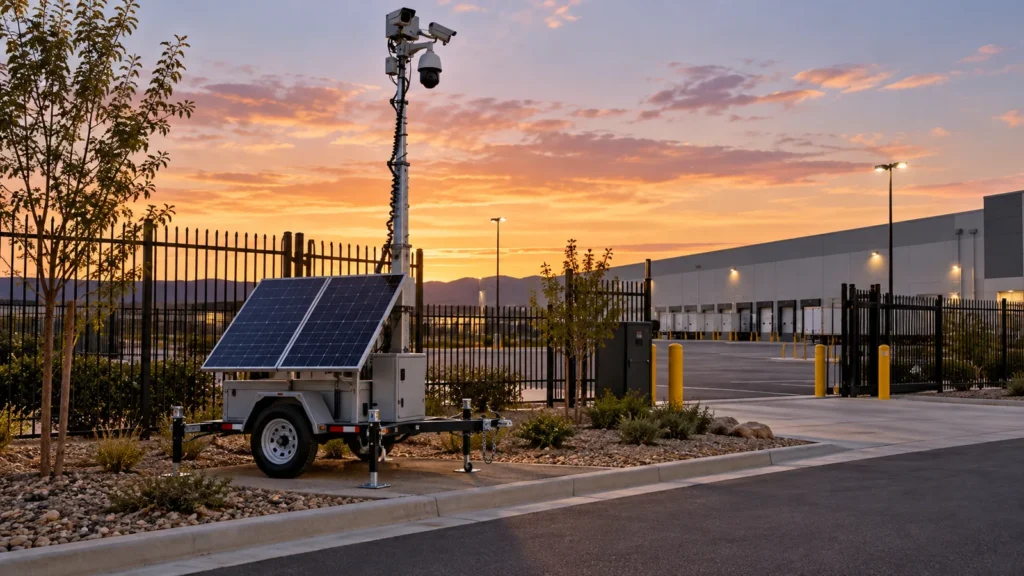
Camera trailers can make oversight visible and provide recorded views of activity at a dumping hot spot. Elevated cameras, lighting and audio talk-down, where available, contribute different functions. A useful plan connects those features to a monitored response and a usable record, without promising identification, prevention of every incident or prosecution.
With 24/7 remote video monitoring, coverage is monitored through our monitoring partner. Agree on monitoring hours, what activity needs review and whom to contact. Confirm whether the selected setup includes speaker warnings, and how those warnings fit the site’s response instructions.
If vehicle information matters, discuss license plate recognition cameras separately from a wide overview camera. Viewing angle, vehicle speed and lighting affect what can be captured. A camera overlooking a large lot is not automatically a reliable plate-reading installation.
Ask to review the actual views and export process. Check nighttime visibility, obstructions and the relevant time setting. Keep original incident files, record when they were exported and ask the receiving agency how it wants them delivered. Review privacy, notice and any audio-recording questions with counsel; a loudspeaker warning is different from recording conversations.
Reporting illegal dumping in the Bay Area
Use the reporting channel for the city and the location of the waste. San Jose and Oakland provide services for dumping in public spaces or streets, but those channels should not be treated as a promise to clear a private lot. State clearly where the material is and whether activity is ongoing.
- San Jose: The city’s illegal-dumping page directs public-space reports to San Jose 311 online or in its app, or (408) 535-3500. It lists (408) 277-8900 for dumping in progress.
- Oakland: The city’s dumping-report instructions direct street-dumping reports to OAK 311, its app, or (510) 615-5566. Safely documented dumping activity can be emailed to stopdumping@oaklandca.gov with footage, location, vehicle details and a description.
Save the reference number with your own incident log. Describe the property boundary clearly and ask about the appropriate private-property process. Stay at a safe distance; getting a closer photograph is not worth a confrontation.
How we help
We start with the dumping pattern and the site’s operating needs, then plan placement, camera views and monitoring instructions around them. The site review should identify access points, potential obstructions, available space and the people authorized to respond. Delivery timing depends on the agreed scope, site readiness and fleet availability.
Hawk Surveillance offers mobile surveillance trailer rental in Northern California. We use the site walk to discuss the problem area, position the trailer and coordinate monitoring through our monitoring partner. Units configured or built to a site’s requirements are scheduled at survey. Bring incident locations, approximate times and a site plan so the discussion starts with the places that need attention.
Frequently asked questions
How do you stop people from dumping on your property?
Make unauthorized access harder, improve visibility and assign someone to check the site regularly. Start with the entrance and location used in previous incidents, then coordinate barriers, lighting and visible cameras with normal deliveries and emergency access. Arrange proper removal of existing debris and keep an incident log. These steps form a prevention plan, but no individual measure or combination can promise that dumping will never recur.
Is illegal dumping a crime in California?
Yes. California Penal Code section 374.3 prohibits illegal dumping on specified roads and properties, including private property without the owner’s consent. The official legislative explanation distinguishes ordinary violations from more serious commercial-quantity dumping and describes escalating penalties for repeat offenses. The applicable charge depends on the facts. Record what happened and provide it to the relevant agency rather than deciding the legal classification yourself. This is general information, not legal advice.
Who is responsible for cleaning up illegal dumping on private property?
Property owners generally face responsibility for cleanup on their land, according to CalRecycle’s abatement guidance, unless the responsible party can be identified. The local process and circumstances still matter. Ask the responsible city or county office about your situation and arrange appropriate waste handling. Reporting an incident does not automatically transfer cleanup duties to the city. Keep photographs, report numbers and disposal records, and do not assume reimbursement is available.
Do security cameras stop illegal dumping?
Security cameras can help deter dumping and document incidents, but they cannot ensure that every incident is prevented. Their usefulness depends on placement, visibility, working coverage and the response process. Pair cameras with access control, lighting and site upkeep. If monitoring is included, confirm its hours and escalation instructions. Ask whether speaker warnings are available in the selected configuration and test the actual views rather than relying on equipment descriptions alone.
How do I report illegal dumping in San Jose or Oakland?
For public-space dumping in San Jose, use San Jose 311 online or in the app, or call (408) 535-3500. For dumped material in Oakland streets, use OAK 311 or call (510) 615-5566. Give a precise location and explain whether the waste is on public or private property. The cities distinguish these reporting services from other situations, so ask about the correct private-property process rather than assuming the report includes cleanup.
Can footage from a camera trailer be used in a police report?
Footage can be offered to the investigating agency as supporting information for a dumping report. Ask how the agency wants to receive it, preserve the original file and provide the location, relevant time range and a factual description. Oakland specifically accepts photos or video of safely documented dumping activity through its enforcement reporting channel. Recorded images do not guarantee a readable plate, identification of a responsible person, an arrest or prosecution.
Dealing with dumping on your property?
Start with a site-specific plan for the entrance, unloading spot and after-hours response. Tell us where dumping occurs, when it is discovered and which access routes must remain open. We can discuss suitable trailer placement and monitoring options, then confirm the scope before scheduling a Northern California rental deployment.
Call Hawk Surveillance at (530) 593-4295, email sales@hawksurveillancesystem.com, or contact Hawk to discuss your property.
This article provides general information, not legal advice.