

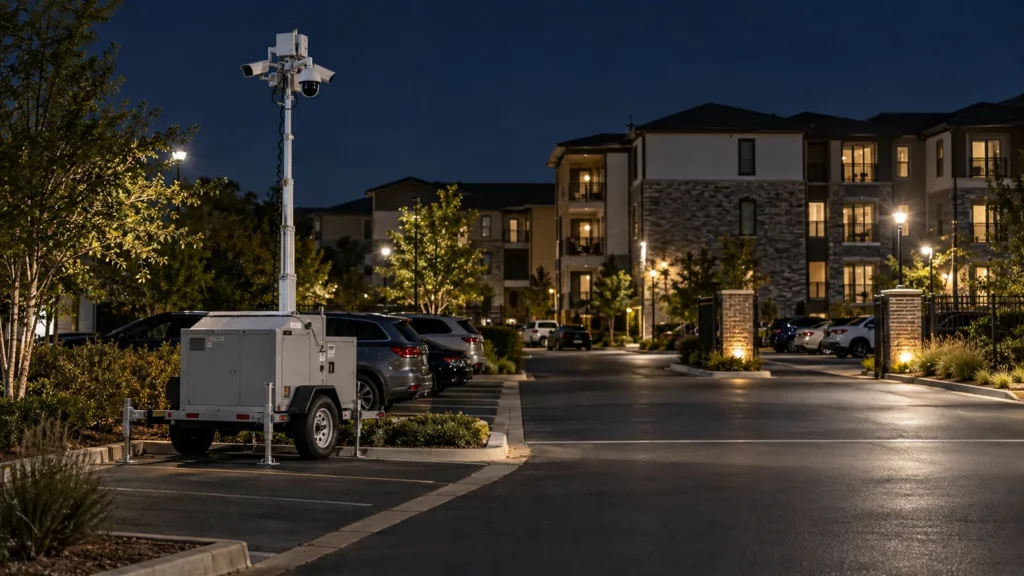
Where apartment properties get hit
In brief: Start your multifamily security review with the places your incident log identifies: parking rows, entrance drives, mail and package areas, trash enclosures, vacant units and active work zones. Treat these as inspection priorities, not a ranking of crime rates. The right camera position depends on the actual problem and sightlines.
A report of a vehicle break-in calls for a different view than a missing delivery. Ask where the vehicle was parked, when it was last checked and which approach a person could have used. Include catalytic-converter theft in the parking review if residents have reported it. Do not assume the gate camera sees activity between parked vehicles.
For packages, inspect the handoff point and the approach to the mail area. For trash enclosures, look at access and any reported dumping or damage. During renovation or lease-up, map vacant-building approaches, material storage and temporary contractor entrances. We recommend separating confirmed incidents from concerns that still need investigation.
When a camera trailer makes more sense than fixed cameras
In brief: Consider a trailer when you need temporary exterior coverage, the area of concern will move, or permanent power and network wiring are not available. Consider fixed cameras for stable locations with suitable infrastructure. A property can use both, with a trailer filling a specific gap during renovation, lease-up or incident review.
For example, a temporary material staging area may disappear when a renovation phase ends. A rental avoids designing a permanent camera position around that short-lived layout. A recurring package-room problem, by contrast, calls for a close look at permanent entry control and a fixed view of the delivery area.
Power and connectivity still need checking. A solar-and-battery configuration needs an appropriate location and operating plan; cellular service needs testing at the proposed position. Covered garages deserve particular care: inspect overhead clearance, columns, vehicle routes and available views before considering equipment placement. Do not assume an outdoor trailer can cover every level or see around structural obstructions.
Our comparison of mobile trailer vs fixed cameras explains the broader choice. For an apartment property, start with the location and duration of the gap.
A coverage plan for a multifamily property
For apartment and multifamily properties, a camera trailer is most useful where the risk is temporary or the property has no power or wiring in place: parking lots during a theft spike, renovation phases, and buildings in lease-up. Use the table as a starting point for a site walk.
| Area | The risk | What to cover | Trailer or fixed camera |
|---|---|---|---|
| Parking lot | Reported vehicle break-ins, converter theft or damage | Affected rows and their approaches; test views with vehicles parked | Trailer for a temporary hotspot or an unwired area; fixed for an enduring coverage need |
| Entry drive and gate | Unauthorized entry, gate damage or disputed access | Vehicle approach, gate operation and exit lane without aiming into homes | Fixed where infrastructure is ready; trailer for temporary entry arrangements |
| Package and mail area | Missing deliveries or reported tampering | Delivery point and access route, excluding nearby private interiors | Fixed for an enclosed room or permanent kiosk; trailer only where an exterior view works |
| Trash enclosure | Reported dumping, damage or unauthorized access | Enclosure entrance and approach, with collection access kept clear | Fixed for a stable location; trailer for a temporary problem with suitable sightlines |
| Units under renovation | Unauthorized access to work areas or loss of staged materials | Exterior work-zone approaches and material storage, not residential interiors | Trailer for changing phases; reassess as units become occupied |
Source: Hawk Surveillance site practice. General guidance.
Give each proposed view a specific job. “Show entry to this work zone” is testable; “cover the property” is not a useful acceptance check. Mark what remains outside the frame. A broad overview should not be treated as proof that faces, plates or small actions will be identifiable.
Before accepting the layout, check daytime and nighttime images with normal parking and lighting in place. Keep the trailer and its supports away from required access routes, gate movement and waste collection paths. Review the plan when fencing moves, contractor access changes or residents move into a completed building.
Privacy rules property managers must respect
In brief: Plan cameras around the common-area security purpose and keep unit interiors and other private spaces out of view. Treat audio as a separate legal question, not a default camera feature. Post clear notice as good practice, document access to footage and have counsel review the proposed arrangement before activation.
Check the actual image for windows, patios, private yards and doors that could expose residential interiors when opened. Exclude restrooms and changing areas. Do not point a camera into a vacant unit simply because renovation is underway; keep this exterior coverage plan focused on the approach and work-zone boundary.
California Penal Code section 632(a) addresses intentional electronic eavesdropping or recording “without the consent of all parties to a confidential communication.” The Legislature’s enacted text of section 632 makes confidentiality depend on the circumstances and includes exclusions. A shared location does not by itself resolve the audio question. We recommend leaving audio recording disabled unless counsel has reviewed the specific use.
Do not treat a surveillance sign as blanket permission to record conversations. Give residents a clear explanation of the purpose and a contact for questions. For the broader issues, read whether surveillance trailers are legal in California and review site-specific requirements with California counsel.
Monitoring and response
In brief: Decide who reviews events, during which hours and what happens next before calling a camera system monitored. Where the rental includes outsourced monitoring, it is monitored through our monitoring partner. Agree on manager notifications, police escalation criteria, outage reporting and footage handling rather than assuming these come with every camera.
Write the primary and backup property contacts into the response instructions. Include authorized contractor hours and how last-minute work is reported. Specify which events require a call to management and which call for emergency reporting under the agreed protocol. Police attendance or arrival time cannot be promised by a camera provider.
Ask about 24/7 remote video monitoring when defining outsourced coverage. If you already have staffed security operators, live professional monitoring describes a different arrangement: your own operators receive and review the feeds.
Set a written retention and access plan. Name who may view or export recordings, how an incident clip is preserved and who reviews requests from residents or police. Confirm the configured storage period and test an export. Avoid promising unlimited storage or unrestricted resident access.
How we help
In brief: We start with the property’s problem areas, operating schedule and placement constraints, then use a site walk to match trailer positions and camera views to the intended coverage. Hawk offers Northern California rentals and arranges professional monitoring through our monitoring partner when included in the agreed service.
Bring a site map, recent incident locations and the renovation or lease-up schedule. We can discuss mobile surveillance trailer rental in Northern California, including access, power, connectivity and the planned end of temporary coverage.
For a standard rental from our Northern California fleet, we deliver, position and activate a trailer within 24 to 48 hours in most cases. Units configured or built to a site’s requirements are scheduled at survey.
If you also manage an association, our separate guide covers security cameras for HOA communities. This plan is for apartment owners and property managers.
Frequently asked questions
What is the best security for an apartment complex parking lot?
The best starting point is a plan based on your parking lot incidents, access routes and actual camera views. Review gate operation, lighting and vehicle rows together, then decide what a camera must show. A trailer may suit a temporary hotspot or an area without wiring; fixed cameras may suit a lasting need. Test nighttime views with vehicles parked and establish who handles alerts. No single camera layout fits every lot.
Can apartment managers put security cameras in common areas?
Common-area cameras need a site-specific review of management authority, purpose, placement and privacy. Ownership or management of a building is not a blanket permission to record everywhere. Keep unit interiors and other private spaces out of view, explain the security purpose to residents and document who may access footage. Have counsel review the plan, including applicable notices, lease provisions and audio settings, before the system is activated.
Is it legal to record audio on apartment security cameras in California?
Recording audio can raise separate legal issues under California Penal Code section 632. Its general prohibition concerns intentional electronic eavesdropping or recording of confidential communications without all-party consent, subject to statutory qualifications and exceptions. Do not assume that an apartment common area makes every conversation nonconfidential or that a posted sign resolves consent. Leave audio recording disabled unless counsel has reviewed the particular configuration and intended use.
When should a property use a camera trailer instead of fixed cameras?
Consider a camera trailer when the coverage need is temporary, changes location or lacks permanent camera infrastructure. Examples include a renovation staging area, a lease-up phase or a parking area under review after reported incidents. Check placement, power and connectivity before choosing the equipment. Fixed cameras may be the better fit for stable, powered locations such as a permanent package room, and both approaches can be part of one property plan.
How do camera trailers help during apartment renovations?
Camera trailers can provide temporary exterior views of work-zone approaches and material staging areas during apartment renovations. Plan the placement around contractor access and occupied buildings, with private interiors excluded. Recheck the views when fences move, storage shifts or completed units become occupied. Agree on authorized working hours and the alert procedure before activation. The trailer supports the site plan; it does not replace locks, access controls or responsible material storage.
Who watches the cameras on a rented surveillance trailer?
The monitoring arrangement depends on the service selected for the rental. Where outsourced monitoring is included, the cameras are monitored through our monitoring partner, not Hawk staff. A property with its own staffed security operation can discuss a customer-operated arrangement instead. Put the monitoring hours, alert review process, manager contacts, escalation criteria and outage procedure in writing. Recording video alone should not be described to residents as active monitoring.
Managing an apartment property?
Bring Hawk the property location, areas of concern and dates for temporary coverage. We can discuss a Northern California rental, placement review and monitoring options for your operating plan. Include any renovation or lease-up changes so the proposed camera views and response instructions reflect how the property will actually be used.
Call (530) 593-4295, email sales@hawksurveillancesystem.com, or contact Hawk.
This article is general planning guidance, not legal advice. Review privacy, audio, notice and footage-handling requirements with qualified California counsel.