
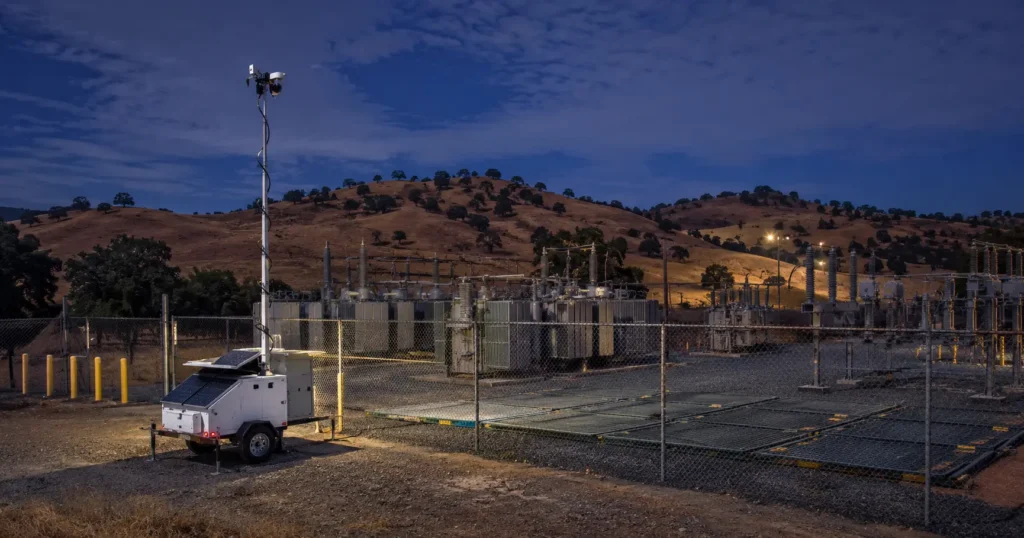
Quick answer: Construction site security in Fresno protects the equipment, materials, and unfinished structures that stay exposed on active jobsites after hours. Because fencing, access points, and work zones change from week to week, fixed cameras and a single overnight guard rarely cover a whole site. The most effective approach layers mobile surveillance trailers, professional remote monitoring, controlled access, fencing, and lighting so coverage moves with the project. Solar surveillance trailers deploy in hours, need no permanent utilities, and can be repositioned as phases shift, giving contractors elevated views of equipment yards, staging areas, and perimeter gaps. Hawk Surveillance Systems deploys these trailers across Fresno and Northern California to deter copper wire, tool, and heavy equipment theft while keeping construction moving.
Construction projects are constantly changing environments where fencing, access points, equipment locations, and work zones evolve from week to week. Effective construction site security in Fresno requires more than a single camera or overnight guard. The most practical approach combines mobile surveillance, professional remote monitoring, controlled site access, and layered security that adapts as the project progresses. Mobile surveillance trailers serve as the active outer layer of that strategy by covering large areas without permanent infrastructure, helping contractors monitor entrances, perimeter gaps, stored materials, and equipment throughout every phase of construction. Hawk Surveillance Systems deploys solar and compact surveillance trailers across Fresno and Northern California, with systems that can be set up in hours and repositioned as the jobsite changes.
What Fresno Jobsites Are Actually Losing
In brief: Construction sites are dynamic environments where valuable materials, equipment, and unfinished structures remain exposed after working hours. Security planning should focus on protecting these operational risks while allowing construction activities to continue without interruption.
Construction site security refers to the systems, procedures, and technologies used to protect workers, equipment, materials, and partially completed structures throughout every phase of a project. Unlike permanent facilities, construction sites continuously change as work progresses. Access points move, storage areas shift, utilities are installed gradually, and the overall footprint evolves from foundation work through project completion.
That changing environment creates several common security challenges.
Copper wire and building materials
Copper wiring often arrives before final installation, making it difficult to secure using traditional building security systems. Electrical conduit, plumbing materials, HVAC components, and other high-value construction supplies may also remain on-site between workdays.
Equipment theft is a costly, well-documented problem on construction sites: the National Insurance Crime Bureau tracks thousands of heavy equipment thefts each year and works with law enforcement to identify and recover stolen machinery (see the NICB Commercial Heavy Equipment Theft guide and its reporting on farm and construction equipment identification and recovery).
Instead of relying solely on locked storage containers, many contractors use elevated mobile surveillance to monitor material staging areas, delivery zones, and perimeter access simultaneously.
Tools and portable equipment
Power tools, generators, compressors, welders, and compact machinery move throughout a project as crews complete different phases. A camera fixed to one building corner may not provide meaningful coverage after the work shifts to another section of the site.
A surveillance trailer can be repositioned alongside the active work area without requiring new wiring or permanent installation.
Heavy equipment and fuel
Excavators, skid steers, loaders, lifts, and other equipment frequently remain on-site overnight. Fuel tanks and service vehicles also require monitoring, particularly on larger commercial projects where equipment is distributed across multiple work zones.
Rather than focusing on a single entrance, contractors benefit from elevated views that monitor equipment yards, staging areas, and travel routes across the property.
Vandalism and unauthorized access
Even when theft is not the primary concern, unauthorized visitors can create delays by damaging temporary structures, fencing, signage, or partially completed work. Trespassing also creates liability concerns because unfinished construction sites contain hazards that are not present in occupied buildings.
Early detection allows contractors to respond before minor incidents become larger operational problems.
Why changing jobsites require flexible security
Unlike warehouses or office buildings, construction projects rarely look the same from one month to the next.
Foundation work becomes framing.
Framing becomes roofing.
Equipment locations move.
Temporary offices relocate.
Power availability changes.
Because of that, security systems that remain permanently fixed in one location often lose effectiveness as construction progresses.
Mobile surveillance trailers solve this challenge by allowing contractors to relocate cameras whenever the project layout changes, keeping coverage focused on the highest-risk areas without rebuilding the security system.
Why Guards and Fixed Cameras Leave Gaps at a Fresno Jobsite
In brief: Guards, fixed cameras, and mobile surveillance each solve different problems. The strongest construction security plans combine these tools instead of expecting one solution to protect every part of a changing jobsite.
Every construction project has different operational requirements. Some need visitor management. Others need broad after-hours coverage. Some require both.
Understanding where each security option performs best helps contractors build a more effective protection strategy.
Physical security guards
Security guards remain valuable when a site requires face-to-face interaction.
They can:
- Verify deliveries.
- Check contractor credentials.
- Control gate access.
- Assist visitors.
- Observe safety issues.
- Respond to unusual activity.
These responsibilities make guards especially useful at projects with continuous vehicle traffic or customer-facing entrances.
However, construction projects often span multiple acres. A guard stationed at one gate cannot continuously observe every equipment yard, storage area, or perimeter fence at the same time.
That is where mobile surveillance fills an operational gap.
Instead of depending on one observation point, elevated cameras provide visibility across larger portions of the property while professional remote monitoring extends that coverage throughout the night.
Fixed surveillance cameras
Permanent security cameras remain an excellent solution for completed buildings, warehouses, offices, and facilities where infrastructure does not change.
They provide consistent coverage once power, networking, and camera locations have been finalized.
Construction sites present a different challenge.
Electrical service may not yet exist.
Internet connectivity may be temporary.
Camera mounting locations may disappear as work progresses.
Large portions of the site may remain outside the field of view after the project expands.
Relocating fixed cameras repeatedly can increase installation time while reducing flexibility during active construction.
Where mobile surveillance trailers fit
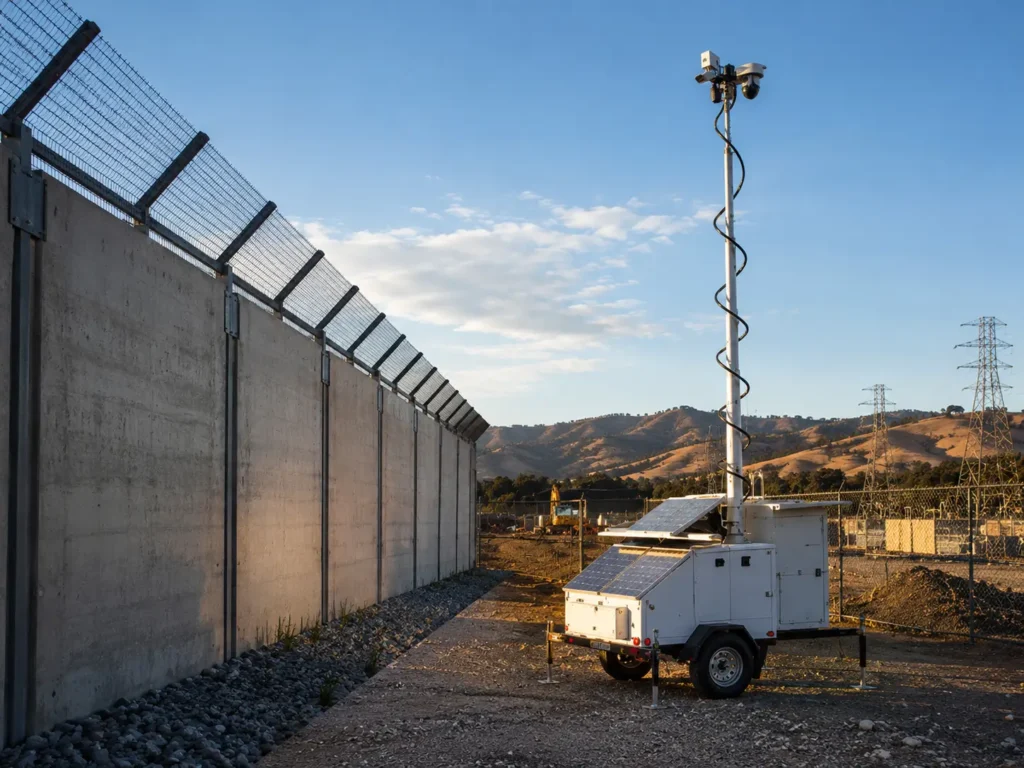
Mobile surveillance trailers bridge the gap between guards and permanent camera systems.
Rather than replacing every other security measure, they strengthen the overall security plan by providing:
- Elevated camera coverage across changing jobsites.
- Solar-powered operation for locations without permanent utilities.
- Rapid relocation as work zones move.
- Professional remote monitoring.
- Real-time audio and visual deterrence.
- Coverage of perimeter gaps, equipment yards, and temporary storage areas.
This layered approach aligns with Hawk Surveillance Systems’ concentric security philosophy, where each security measure complements the others instead of operating independently.
“Construction sites rarely stay the same for long. Security should move with the project, not force the project to work around fixed infrastructure. Mobile surveillance provides that flexibility while supporting guards, fencing, lighting, and controlled access as part of a complete security strategy.”
Hawk Surveillance Operations Team
Another advantage is deployment flexibility.
Unlike permanently installed camera systems, surveillance trailers can be repositioned throughout the project lifecycle. That makes them particularly effective for phased developments where active work areas shift from one section of the property to another.
The result is broader coverage without permanent installations, allowing contractors to adapt their security plan as quickly as construction schedules change.
How a Mobile Surveillance Trailer Protects a Fresno Jobsite
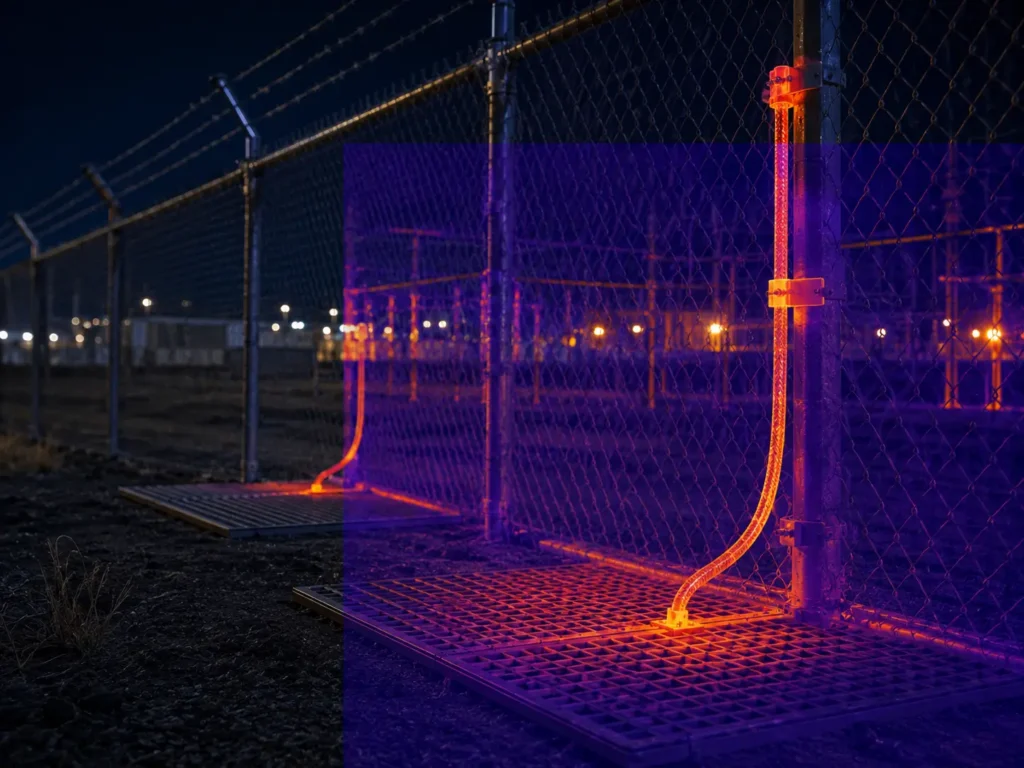
In brief: A mobile surveillance trailer provides flexible, elevated coverage that moves with the construction project. Unlike permanent camera systems, it operates without permanent installations and continues protecting changing work areas throughout the life of the project.
Construction sites change constantly. New structures appear, fencing moves, equipment is relocated, and temporary power shifts from one area to another. Security equipment needs to adapt just as quickly.
A mobile surveillance trailer is a self-contained security platform designed specifically for temporary or evolving sites. Rather than mounting cameras to unfinished buildings, the system is installed on a portable trailer that can be repositioned whenever the project layout changes.
For Fresno contractors managing commercial developments, public infrastructure projects, industrial facilities, or residential subdivisions, that flexibility helps maintain consistent coverage without reinstalling equipment throughout the project.
Elevated camera coverage
One of the biggest advantages of a surveillance trailer is its elevated viewing position.
Instead of monitoring only one entrance or building corner, cameras mounted on a telescoping mast provide wide visibility across equipment yards, staging areas, perimeter fencing, and vehicle entrances.
This elevated perspective reduces blind spots while allowing fewer systems to monitor larger portions of the property.
Solar-powered operation
Many construction projects begin long before permanent utilities are available.
Rather than waiting for electrical service or installing temporary wiring solely for security equipment, Hawk’s solar surveillance trailers operate independently using integrated solar panels and battery storage.
That allows contractors to begin protecting the site during the earliest stages of development.
It also reduces the need for trenching, conduit installation, or temporary electrical infrastructure dedicated to security.
Live professional monitoring
Video recording is valuable for documenting incidents after they occur.
Professional remote monitoring adds another layer by allowing trained operators to evaluate activity as it happens.
When unusual activity is detected after working hours, monitoring personnel can review the situation and determine the appropriate response based on established site protocols.
This proactive approach helps contractors respond more quickly while reducing unnecessary dispatches caused by wildlife, weather, or normal site conditions.
You can learn more about Hawk’s 24/7 remote monitoring through the company’s monitoring solutions.
Audio and visual deterrence
Modern surveillance trailers do more than record video.
Integrated speakers and high-visibility warning lights allow monitoring personnel to communicate directly with individuals on-site when appropriate.
Many situations can be resolved through verbal communication before additional action becomes necessary.
Combined with visible cameras and lighting, these features create an active security presence rather than passive recording alone.
Built for changing projects
Every phase of construction presents different priorities.
Early site work may focus on perimeter protection.
Structural work shifts attention toward equipment and materials.
Finishing work may require monitoring temporary access points and deliveries.
Because the trailer can be relocated throughout the project, contractors maintain coverage where it provides the greatest operational value rather than where cameras happened to be installed months earlier.
This mobility supports Hawk’s broader approach to construction jobsite security, where multiple layers of protection work together instead of relying on a single solution.
Which Hawk Trailer Fits Your Fresno Project?
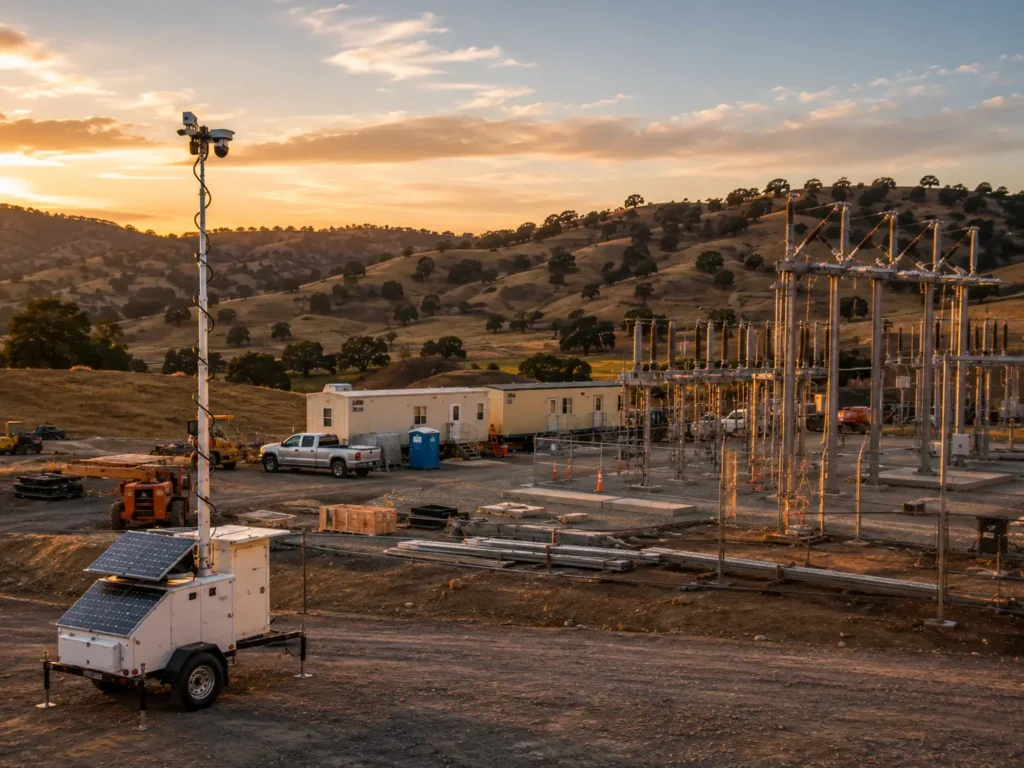
In brief: The right surveillance trailer depends primarily on site size, available space, and access to utilities. Hawk offers solutions for both expansive construction projects and compact urban developments.
No two construction sites operate exactly alike.
Some projects span several acres with limited infrastructure.
Others occupy small downtown parcels surrounded by neighboring businesses and active streets.
Hawk offers trailer configurations designed for both environments.
Solar Surveillance Trailer
The solar surveillance trailer is designed for larger projects where flexibility and off-grid operation are priorities.
Typical applications include:
- Commercial developments
- Industrial construction
- Highway projects
- Utility infrastructure
- Renewable energy sites
- Large residential developments
Because the trailer operates independently from permanent utilities, it remains effective during early site preparation and throughout changing construction phases.
Its elevated mast provides broad visibility across staging areas, perimeter fencing, entrances, and equipment storage.
This makes it especially useful when project layouts change over time.
Compact Urban Surveillance Trailer
Some Fresno construction projects have very different requirements.
Downtown redevelopment, infill construction, utility upgrades, and smaller commercial sites often have limited space available for equipment.
The compact urban surveillance trailer is designed specifically for these environments.
Its smaller footprint allows placement where larger trailers may not be practical while still delivering elevated camera coverage and professional remote monitoring.
Contractors working in tighter urban environments gain many of the same operational advantages without sacrificing valuable workspace.
Choosing between the two systems generally depends on:
- Overall project size
- Available staging space
- Equipment layout
- Perimeter length
- Duration of construction
- Site accessibility
Rather than recommending a one-size-fits-all solution, Hawk evaluates each project individually to determine the most effective deployment strategy.
Trailer vs. Guard vs. Fixed Cameras: Cost and Coverage
In brief: Guards, fixed cameras, and mobile surveillance each serve different operational roles. Mobile surveillance trailers provide a practical middle ground by combining broad site visibility with professional monitoring while remaining flexible enough for changing construction environments.
Feature | Mobile Surveillance Trailer | Security Guard | Fixed Camera System |
Coverage Area | Wide elevated coverage across changing jobsites | Limited to the guard’s physical location | Limited to installed camera locations |
Deployment | Sets up in hours with minimal site preparation | Immediate once scheduled | Requires installation and infrastructure |
Power Requirements | Solar powered, no permanent utilities required | Not applicable | Permanent power and networking typically required |
Mobility | Easily relocated throughout construction | Mobile but limited to one location at a time | Difficult to relocate once installed |
After-hours Monitoring | Professional remote monitoring available | Depends on staffing schedule | Video recording unless actively monitored |
Best For | Active construction sites, phased projects, temporary locations | Visitor management, gate control, customer interaction | Completed buildings, permanent facilities, long-term infrastructure |
Each option has situations where it performs well.
Security guards remain the preferred choice when continuous visitor interaction, access verification, or customer service responsibilities are required.
Fixed camera systems are ideal for completed facilities where infrastructure is permanent and camera locations rarely change.
Mobile surveillance trailers provide the greatest value during active construction because they move with the project instead of remaining tied to permanent installations.
This flexibility is one reason many contractors choose mobile surveillance as the primary after-hours security layer while combining it with fencing, lighting, access control, and on-site personnel when operational needs require additional protection.
Another important difference is scalability.
As construction expands, additional trailers can be introduced or existing units repositioned without redesigning the site’s entire security infrastructure.
That flexibility allows security planning to evolve alongside construction rather than becoming another obstacle for project managers.
Compared with national providers such as WCCTV, LVT, and similar mobile surveillance vendors, Hawk focuses on Northern California deployment, localized support, and security strategies tailored to regional construction projects. The emphasis is not simply supplying equipment, but helping contractors combine mobile surveillance, professional monitoring, and layered site protection into a practical operational plan.
Deployment and Monitoring
In brief: Effective construction site security depends on placing surveillance equipment where it can adapt to changing site conditions. Proper placement, professional monitoring, and flexible deployment create stronger coverage throughout the project lifecycle.
A surveillance trailer is most effective when it is positioned as part of a broader security strategy rather than treated as a standalone device.
Before deployment, Hawk works with contractors to understand how the site operates, where materials are stored, how vehicles enter and exit, and which areas require the greatest visibility after working hours.
Typical placement considerations include:
- Primary vehicle entrances
- Equipment storage yards
- Material laydown areas
- Temporary office locations
- Perimeter gaps
- Areas with limited natural visibility
As construction progresses, those priorities often change.
Instead of leaving cameras fixed in one location, the trailer can be repositioned to maintain visibility over the most active parts of the project.
Professional remote monitoring
Technology alone cannot determine whether activity on a construction site is routine or requires attention.
Professional monitoring provides an additional layer by allowing trained personnel to review alerts before deciding on the appropriate response.
Depending on site protocols, monitoring personnel may:
- Verify activity through live video.
- Distinguish authorized personnel from unexpected visitors.
- Issue live audio announcements through integrated speakers.
- Activate visual warning features when appropriate.
- Contact designated site representatives.
- Coordinate with emergency services when necessary.
This process helps reduce unnecessary responses while ensuring that meaningful events receive prompt attention.
Unlike systems that simply record footage for later review, live monitoring supports faster decision-making during after-hours operations.
For projects that require continuous oversight, Hawk’s mobile surveillance trailer rental solutions can be combined with professional monitoring to create a flexible security program that evolves with the jobsite.
Frequently Asked Questions
How do construction jobsites stop copper wire, tools, and heavy equipment theft plus after-hours vandalism and trespassing in Fresno?
The most effective approach combines multiple layers of security rather than relying on a single measure. Mobile surveillance trailers, professional remote monitoring, perimeter fencing, controlled site access, and good lighting work together to protect equipment, materials, and unfinished structures. Because construction sites constantly change, mobile surveillance provides flexibility that permanent camera systems often cannot match.
Is a surveillance trailer cheaper than hiring security guards for a Fresno jobsite?
The right solution depends on the project’s operational requirements. Guards remain valuable for visitor management, gate control, and customer interaction. Mobile surveillance trailers are often selected when contractors need broad after-hours visibility across changing worksites without maintaining permanent on-site staffing. Many projects use both solutions together because they address different security needs.
Can one mobile trailer cover a Fresno jobsite?
In many cases, one trailer can provide excellent visibility across a significant portion of a construction site because cameras are mounted on an elevated telescoping mast. Larger developments or projects with multiple entrances may benefit from additional trailers positioned around the property to eliminate blind spots and maintain consistent coverage.
Do surveillance trailers actually deter copper wire theft?
Visible surveillance equipment, elevated cameras, professional monitoring, warning lights, and live audio communication create an active security presence rather than passive video recording. While no security solution can eliminate every risk, mobile surveillance can discourage unauthorized activity and allow earlier intervention when unusual activity is detected.
How fast can Hawk deploy a trailer in Fresno?
Hawk surveillance trailers are designed to set up in hours rather than requiring permanent construction or extensive infrastructure. Because they operate without permanent installations, contractors can begin protecting a project quickly and relocate the system whenever the site layout changes during construction.
Trailer or fixed cameras for a Fresno jobsite: which is better?
Neither solution is universally better because they solve different problems. Fixed cameras are an excellent choice for completed buildings and permanent facilities where infrastructure rarely changes. Mobile surveillance trailers are better suited to active construction projects because they can be relocated, operate without permanent utilities, and continue providing coverage as the project evolves.
Learn more about Fresno surveillance trailer rental, explore Hawk’s mobile surveillance trailer rental solutions, or contact the team to discuss your upcoming project and receive Fresno construction site security pricing.
Get Fresno Construction Site Security Pricing
Every construction project presents different operational challenges.
Some sites require wide perimeter coverage.
Others need focused monitoring around equipment yards, staging areas, or temporary access points.
Hawk Surveillance Systems works with contractors throughout Fresno and Northern California to develop practical security plans based on project size, layout, and construction schedule.
Whether you’re managing a commercial development, infrastructure project, industrial expansion, or residential community, the goal is the same: provide flexible security that moves with the project instead of slowing it down.