
Last updated: June 2026
Copper wire theft is the largest single security threat to NorCal solar farms in 2026, followed by solar-inverter and combiner-box vandalism. The practical answer is not just more guards, and it is not a fixed-camera package that only works where power and network are already installed. The workable model is layered: mobile solar surveillance trailers, active monitoring, targeted patrols where needed, and a placement plan built around risk areas. For solar developers, EPCs, and asset managers, the goal is simple: cover perimeter gaps, inverter rows, laydown yards, substation pads, and after-hours access points without turning a remote project into a permanent guard post. Solar farm security in Northern California is really a coverage problem. The sites are large, the assets are spread out, and the highest-risk areas move as construction progresses. Hawk Surveillance supports high-tempo sites across Oakland, San Jose, Stockton, Concord, Hayward, Fresno, Sacramento, and San Francisco with surveillance trailer rental programs designed for temporary and long-duration deployments.- 01Why NorCal solar farms are getting hit harder in 2026
- 02The four security models that actually work
- 03How to stop copper theft on a NorCal solar farm
- 04Wildfire season: when security and fire watch overlap
- 05What deployment actually looks like
- 06NorCal solar security: quick-reference cost guide
- 07Frequently asked questions
Why Northern California solar farms are getting hit harder in 2026
- Copper conductor wire and grounding material
- Inverters, combiner boxes, and balance-of-system equipment
- Vandalism, trespass, and fire-season exposure around access roads and dry vegetation
The four security models: what actually works at solar farm scale
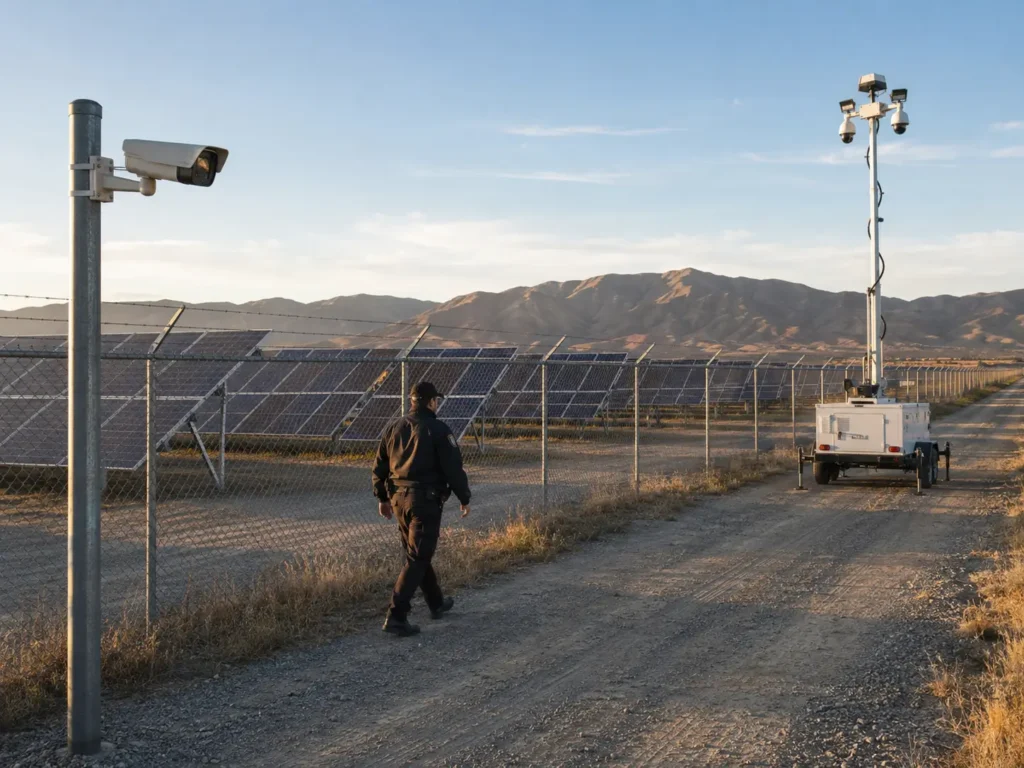
In brief: Solar farm security works best when fixed infrastructure, mobile trailers, monitoring, and selective guard coverage are matched to the site phase. The mistake is treating one model as the whole program.
A solar farm security model is the operating structure used to detect, deter, document, and respond to unwanted activity across a solar site. At solar-farm scale, the model has to account for acreage, access roads, laydown yards, inverter rows, substation pads, and changing construction zones. The right model is not just the one with the most equipment, it is the one that keeps visibility aligned with where the risk actually is.
Model | What it covers | Where it falls short | When to use it |
Fixed cameras only | Discrete entry points, gates, O&M buildings, permanent equipment pads | No coverage where there is no trenched power, vulnerable to single-point failure, limited value when the project layout changes | Small grid-tied sites with existing infrastructure |
Roaming security guards | Perimeter patrols, access control, fire watch duties, visible presence | One person can only be in one place at a time, expensive to scale across acreage, gaps between patrol passes | Construction phase, controlled access, and required fire-watch coverage |
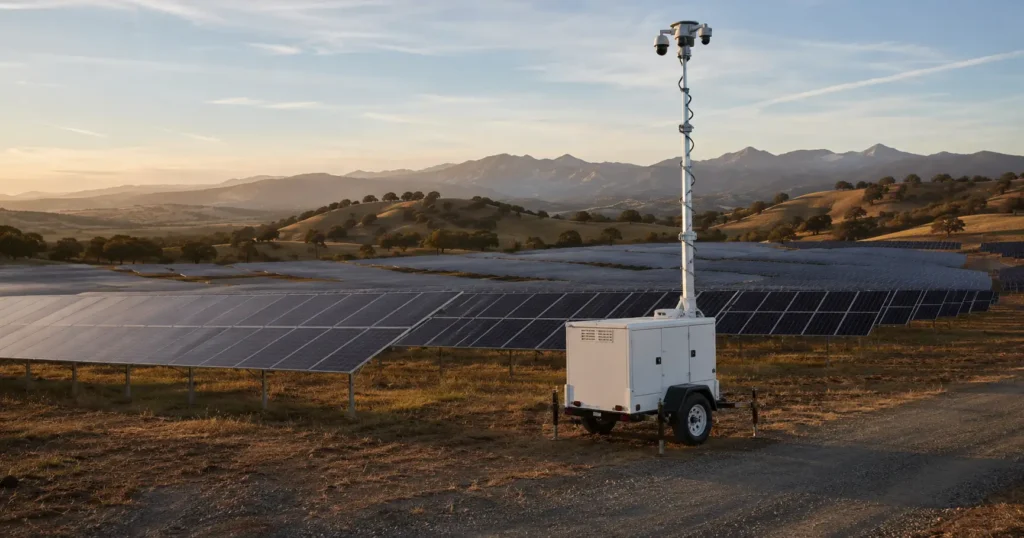
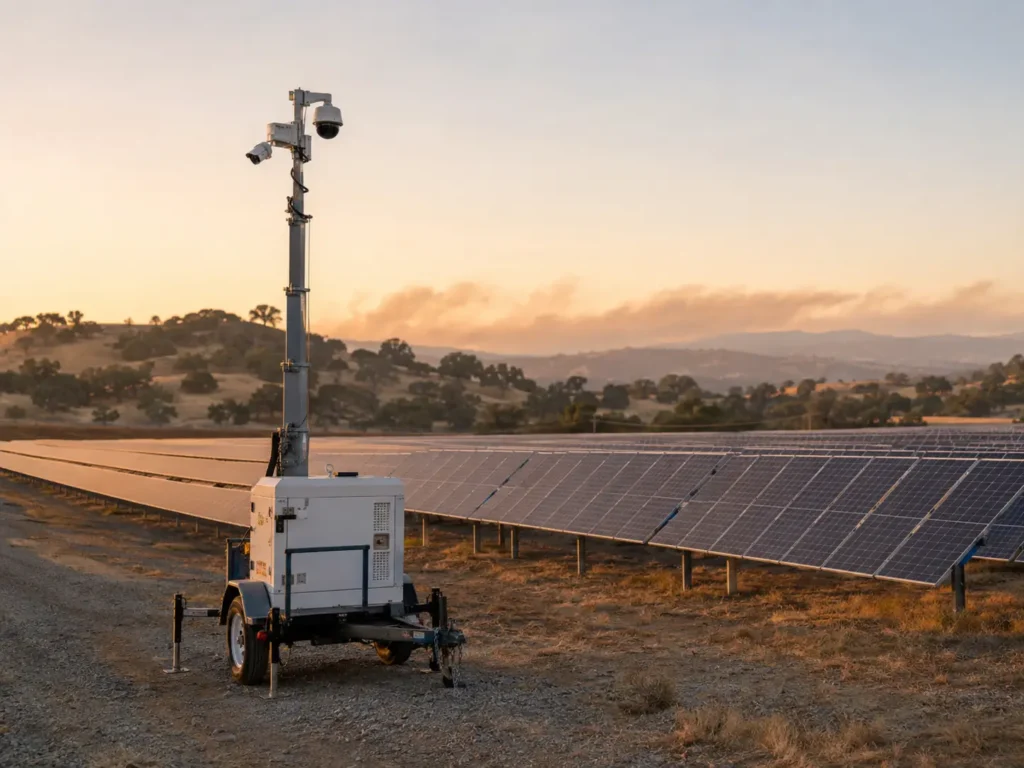
Mobile surveillance trailers, off-grid solar | Wide-area visibility, repositionable coverage, no trenching, no permanent install, monitored alerts | Requires placement planning and site access coordination | Most utility-scale and community-solar sites in NorCal |
Hybrid: trailers, targeted guards, and remote monitoring | Gates, inverter rows, substation pads, blind spots, access roads, after-hours alerts | Higher coordination requirement and more moving parts | Highest-value sites, repeat incident corridors, and active construction phases |
“On a 50-acre solar site, one mobile surveillance trailer can cover more perimeter than Across these counties, the California Energy Commission and CAISO track a growing pipeline of operating and in-development utility-scale solar projects, and each new site adds perimeter, conductor runs, and after-hours access points that have to be secured. roaming guards, and it continues recording after the patrol leaves.”
Fixed cameras have a place. They make sense at permanent gates, O&M buildings, and hardened equipment pads. They fall short when the site is still changing, when trenching is not approved, or when the blind spot is a temporary laydown area half a mile from the service entrance.
Guards also have a place. They can control access, verify work crews, manage hot-work fire watch, and provide human judgment when a site needs it. But guard-only coverage becomes expensive when the problem is acreage. A guard walking a fence line cannot watch the inverter pad, the back access road, and the material storage area at the same time.
This is where Hawk’s wedge is different from national camera vendors and guard-heavy providers. WCCTV, Pelco, SentraCam, and Joint Power Security all represent familiar categories in the market, but a NorCal solar operator usually needs the practical middle ground: flexible trailers that move with risk areas, plus monitoring that keeps after-hours activity from sitting unseen until morning.
How to stop copper theft on a NorCal solar farm
In brief: The best way to stop copper theft on a NorCal solar farm is to put monitored, off-grid visibility directly on the copper risk areas, not just at the front gate.
Theft prevention starts by mapping the copper path: where conductor is stored, where it is installed, where it is exposed during buildout, and where vehicle access makes removal easier. The highest-value areas are usually not the most convenient camera locations. They are substation pads, inverter rows, combiner-box corridors, reel storage, and service roads that stay quiet after-hours.
A practical copper-theft plan should include:
- Solar-powered trailers at substation pads, inverter rows, and conductor laydown areas
- Monitored cameras covering back roads, fence gaps, and work-zone transitions
- Clear escalation rules for voice-down, site contact, guard dispatch, or law enforcement
- Conductor tagging, locking, or sensor systems where the economics justify them
- Coordination with PG&E contacts, EPC leadership, and the local sheriff’s office where applicable
An off-grid solar surveillance trailer gives operators the ability to place visibility at the risk point without waiting for poles, trenching, or utility power. Hawk rental units are designed around solar and battery power, elevated cameras, low-light capability, and optional monitoring workflows. Hawk’s rental page describes solar and battery power for off-grid deployments, LTE or 5G connectivity, fixed and PTZ camera configurations, and optional monitored service. (Hawk Surveillance Systems)
For after-hours work, 24/7 remote monitoring changes the role of the trailer. It is not just recording evidence. It becomes an alerting point. Operators can review detections, issue voice-down warnings where configured, and follow an agreed escalation list. That escalation list matters because solar farms are often far from the nearest responding party.
COP-R-LOCK is worth knowing because it is now part of the solar theft conversation. Solar Power World describes it as a copper-theft detection system using Farmblox’s remote automation and monitoring platform to detect wire tampering, fence breaches, and suspicious activity. That type of conductor-focused sensor can be useful, but it is not a full site-security program. It detects a specific mode of tampering. Mobile trailers cover the broader picture: vehicles, people, tools, access points, inverter pads, and the incident path. (Solar Power World Online)
For broader context on how copper-theft risk shows up on active jobsites, see Hawk’s guide to construction-site copper theft.
Wildfire season overlap: when solar security and fire watch become the same job
In brief: During fire season, solar security is not only about theft. It is also about documenting after-hours activity, watching hot-work exposure, and keeping visibility online when grid power is unreliable.
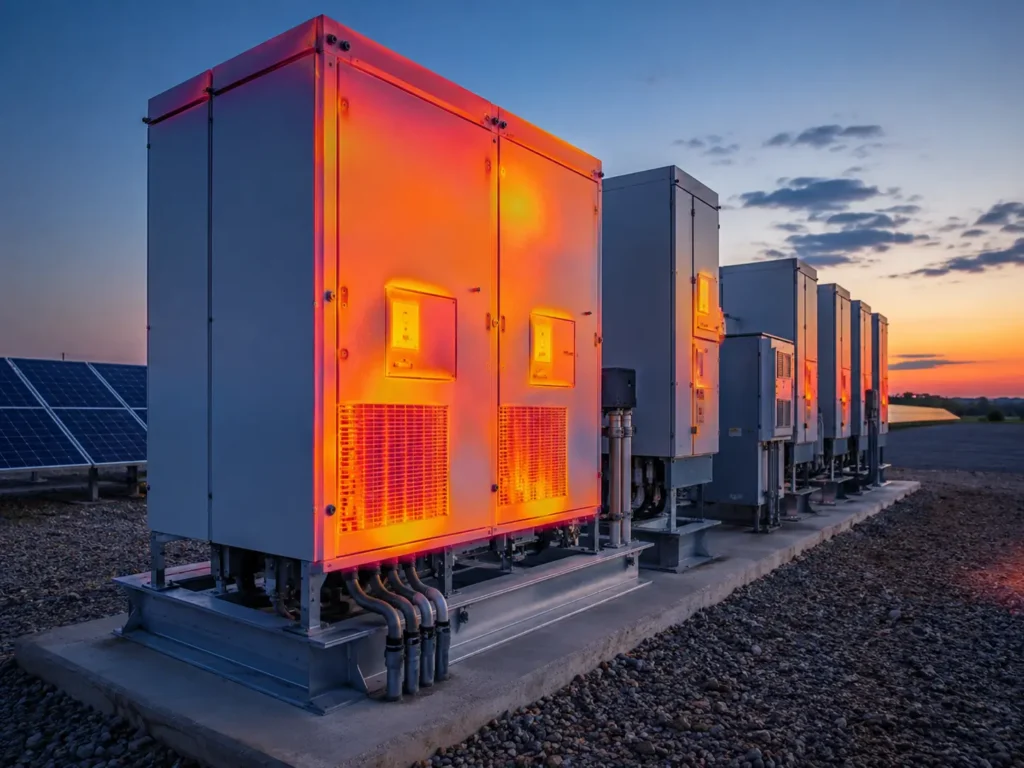
A monitored solar trailer with thermal capability can support both intrusion detection and heat-anomaly awareness, but it does not replace a required human fire watch where regulations call for one. That distinction matters. Security technology can extend visibility. Compliance duties still need to be mapped to the applicable rule, contract, and site safety plan.
California Title 8 fire-watch language requires assigned fire-watch employees to have a clear view of the hot-work area, communicate with exposed workers, stop work if needed, and remain in the hot-work area for at least 30 minutes after completion unless the area is surveyed and found to present no further fire hazard. That is a job-duty rule, not a camera-only rule. (Cal OSHA)
So where do trailers help? They help around the edges of the fire-watch job:
- Monitoring laydown yards and access roads after crews leave
- Watching inverter pads, combiner-box areas, and hot-work-adjacent zones
- Detecting unusual heat signatures where thermal cameras are deployed
- Keeping cameras online during utility outages or remote off-grid periods
- Documenting site activity before and after a reportable event
Public Safety Power Shutoffs are part of the NorCal planning environment. The California Public Utilities Commission explains that utilities may temporarily turn off power to specific areas to reduce fire risk from electric infrastructure, and CPUC identifies that action as a PSPS. For a solar site relying on grid-tied security gear, that is a vulnerability. For a solar-powered trailer with battery storage, it is a planning reason to keep security power independent. (California Public Utilities Commission)
CAL FIRE’s Fire Hazard Severity Zone program classifies State Responsibility Area lands into moderate, high, and very high hazard categories using a model that considers fire history, vegetation fuel, terrain, flame length, embers, and fire weather. Solar security planning in fire-exposed areas should treat vegetation, access, and response routes as part of the same operating picture as theft and vandalism. (osfm.fire.ca.gov)
What deployment actually looks like, in plain English
In brief: A good trailer deployment starts with a site walk, not a hardware list. The goal is to place cameras where risk is likely to move, then adjust as the build changes.
A typical Hawk deployment follows a field-first sequence: assess the site, identify risk areas, design the trailer mix, deliver and position the units, confirm camera views and connectivity, then adjust coverage as the project changes. Hawk’s process page describes this as a repeatable workflow covering assessment, solution design, scheduling, delivery, monitoring, response, and coverage adjustment as the site changes. (Hawk Surveillance Systems)
For a solar project, the first conversation should cover:
- Site location and access rules
- Acreage, fence lines, gates, and service roads
- Construction phase and expected schedule
- Existing guards, fixed cameras, lighting, and fencing
- Copper storage and installed conductor exposure
- Inverter rows, combiner boxes, substation pads, and laydown yards
- Cellular signal, terrain, dust, wind, and trailer access routes
From there, the placement plan usually starts with the highest-value risk areas, not the prettiest camera angle. One trailer may face the main gate and laydown yard. Another may watch the inverter row and back perimeter. A third may sit near a substation pad or material storage area. For large projects, trailer locations may change as the site moves from civil work to racking, electrical installation, commissioning, and O&M handoff. Utility-scale solar builds in California typically move through several phases: civil work, racking, electrical installation, commissioning, and O&M handoff, and the highest-risk areas shift with each phase.
Hawk’s how we deploy process is built for those changes. The point is not to drop equipment and hope the site stays the same. The point is to keep the camera plan aligned with the work plan.
NorCal solar site security: quick-reference cost guide
In brief: The cost question is best answered by coverage design, not a flat price per acre. A 50-acre solar site with monitored after-hours coverage requires a site-specific quote because trailer count, placement, monitoring, fire-watch needs, and access complexity change the number.
Security pricing varies widely by site, so the practical range is set by coverage design (trailer count, monitoring level, and access complexity) rather than a single per-acre or per-MW figure. Hawk should not publish a universal solar-farm security price because the wrong number can mislead buyers and create quoting problems. Solar sites vary too much by acreage, fence line, terrain, access, schedule, connectivity, and monitoring scope.
The right cost conversation starts with variables:
- Site size in acres and megawatts
- Perimeter shape, gates, back roads, and blind spots
- Number of inverter pads, combiner-box areas, and laydown yards
- Whether trailers are self-monitored, professionally monitored, or fed into the customer’s SOC
- Whether guards are needed for access control or fire watch
- Whether the project is in construction, commissioning, or O&M
- Whether insurance, utility, EPC, or AHJ rules affect placement
For example, a 50-acre site seeking 24/7 coverage for a 30-day rental needs more than a one-line price. It needs a risk map. If the main concern is after-hours entry at one gate, the program may be small. If the concern is copper removal across multiple inverter rows and a remote substation pad, the trailer count and monitoring workflow change. If fire-watch staffing is also required during hot work, guards and trailers should be scoped together instead of quoted as competing line items.
Placement can also be shaped by site-specific permit conditions, insurer requirements, and utility or AHJ rules, so trailer positions should be confirmed against the project’s own documentation.
The clean way to budget is to ask for an order-of-magnitude proposal after a site layout review. Hawk can price the trailer model, rental term, monitoring level, delivery, setup, and any add-ons after the risk areas are visible. That keeps the quote tied to the site instead of to a generic per-acre number.
Frequently asked questions
What is the biggest security threat to solar farms in Northern California?
Copper wire theft is the largest single security threat to NorCal solar farms in 2026, followed by solar-inverter and combiner-box vandalism. Remote location, high copper content per acre, and unstaffed nights make these sites high-value targets. Mobile surveillance with 24/7 monitoring is the most practical response when the site has no permanent power or fixed camera infrastructure.
Are security guards enough to protect a remote solar farm?
No, guards alone are not enough to protect a remote solar farm because one roaming guard can only observe one part of a large site at a time. Combining mobile surveillance trailers with selective guard presence and remote monitoring gives wider after-hours visibility while reserving guards for access control, fire watch, and incident response duties.
How do off-grid solar surveillance trailers work?
Off-grid surveillance trailers work by carrying their own solar panel and battery system, so they do not require grid connection or trenching. They use elevated camera masts, low-light or thermal cameras where specified, and cellular or radio connectivity to send alerts or video to a monitoring center or customer security team.
Can a mobile surveillance trailer detect early-stage fire on a solar site?
Yes, a mobile surveillance trailer can support early-stage fire awareness when it is equipped with thermal cameras and monitored by trained operators. Thermal cameras can identify heat anomalies, while standard video helps confirm visible conditions, access activity, and smoke. This is useful during NorCal fire season, but it does not replace required fire-watch staffing during regulated hot work.
How fast can a mobile surveillance trailer be deployed on a NorCal solar farm?
A mobile surveillance trailer can often be deployed quickly once site access, trailer availability, placement, and monitoring scope are confirmed. Multi-trailer solar rollouts should be planned around access roads, grading, energized work areas, and construction sequencing so coverage is safe and useful from day one.
Do mobile surveillance trailers replace permanent security infrastructure?
No, mobile surveillance trailers complement permanent security infrastructure instead of replacing it. Permanent gate cameras and access systems still make sense at stable entry points. Mobile trailers fill gaps where permanent infrastructure is impractical, including changing construction zones, remote inverter rows, temporary laydown yards, perimeter blind spots, and substation pads without nearby power.
Solar farm security in Northern California should be built around the way the site actually operates: remote access, changing work phases, exposed electrical assets, fire-season constraints, and after-hours perimeter gaps. Guards, fixed cameras, and mobile trailers all have a role, but the budget works better when each tool is used where it fits. Hawk Surveillance helps NorCal solar operators design flexible trailer-based coverage without permanent installs, then adjust the plan as risk areas move.
Protect Your Solar Farm Before the Next Copper Theft Hits
Get a site-specific coverage plan with off-grid surveillance trailers, 24/7 monitoring, and fire-season support, with no trenching, no permanent install.