

Last updated: September 2026
Temporary security combines people, cameras, barriers and lighting for a defined period, such as a construction phase or a gap between tenants. Choose each part around the entrances, assets and hours that need attention, then plan its removal or relocation. At Hawk, we provide mobile surveillance rentals in Northern California, with professional monitoring available through our monitoring partner, for sites whose security needs change with the work.
What counts as temporary security
Temporary security is a coverage plan with a defined start, a reason for being there and an expected end. Use it for a construction phase, a vacant property between uses, an outage, an emergency, a staging yard or a short event on a private site.
Build the plan around people, cameras, barriers and light. A guard has an assigned post or patrol. Temporary security cameras provide views of selected areas. Fencing defines the perimeter, while gates control the intended entrances. Lighting supports visibility. Access procedures connect those physical measures to daily operations.
Start with a site sketch. Mark what needs protection, who should enter and when the site becomes quiet. For temporary construction site security, add the dates when storage areas or entrances will move. The same questions guide construction jobsite security through changing phases.
Temporary security guards: what hiring one involves
In California, a security guard must complete power-to-arrest training before registration, 32 hours of security officer training within the first six months, and 8 hours of continuing training every year, according to the Bureau of Security and Investigative Services. Confirm current requirements with the provider.
The BSIS security guard fact sheet supports those requirements. Its summary is not a complete checklist: the current training outline also includes appropriate use of force and earlier deadlines for portions of skills training. Ask the provider to confirm compliance with the current requirements.
For a contracted guard service, use a licensed Private Patrol Operator. BSIS describes a PPO as a business protecting people or property or preventing theft. The regulator also recognizes guards employed by private security employers, so the contracted-company route is not the only employment arrangement.
A temporary security guard can provide a visible presence, check authorized entry and observe and report incidents under the assigned instructions. Specify the gate, patrol area, shift handoff and response contacts. One person cannot staff a gate and a separated storage area simultaneously. Decide which assignment takes priority and how the other area will be covered.
Mobile surveillance for weeks, not years
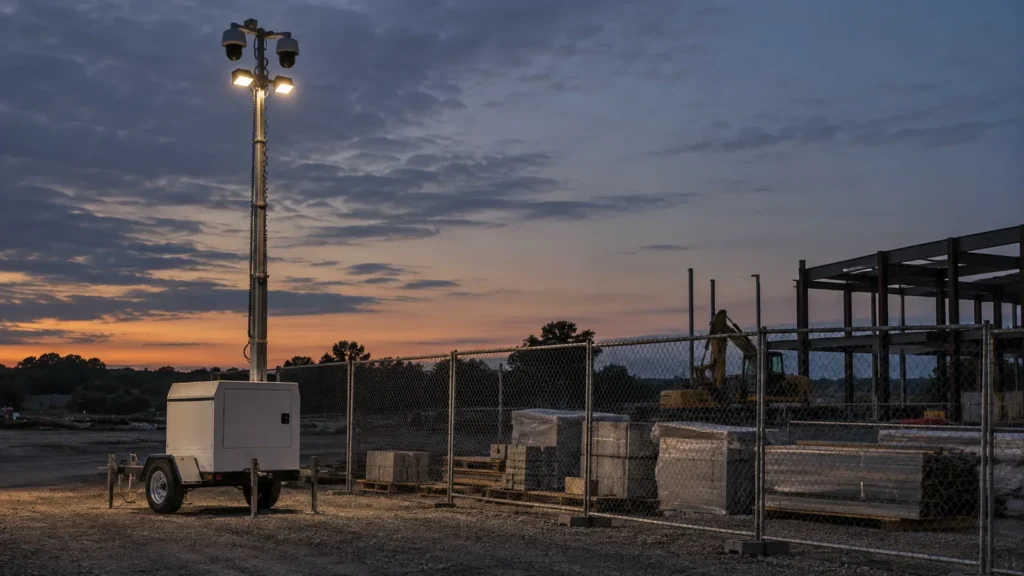
Mobile surveillance puts elevated cameras and lighting at selected risk points for a temporary deployment. Add professional monitoring through a monitoring partner when someone needs to review alerts and follow a response plan. Where equipped, audio warnings add a deterrence option; the trailer can be redeployed when the phase ends.
Specify the views you need: the entrance, material stacks, equipment parking or a rear approach. Review them against the actual layout. Do not assume that an elevated camera sees behind every container or through every obstruction. Ask which lighting and audio functions are included in the proposed configuration.
For a standard rental from our Northern California fleet, deployment is within 24 to 48 hours in most cases. Units configured or built to a site’s requirements are scheduled at survey. Rentals are available in Northern California only. Explore mobile surveillance trailer rental in Northern California and confirm availability against your start date.
Fencing, lighting and access control
Use temporary fencing to establish the boundary, lighting to improve visibility and access procedures to manage entry. These measures belong in the same plan as guards and cameras. Have fencing arranged with your site or fencing contractor, and assign responsibility for gates, locks and daily perimeter checks.
Walk the proposed fence line with the contractor. Identify the delivery opening, pedestrian entrance and areas that need to remain accessible. Ask how damaged panels, gaps or a gate left open will be reported and corrected. Treat the condition of the boundary as an ongoing responsibility.
Review dark corners and gate lighting after sunset. Check the camera views at the same time. For access control, use an approved visitor list or sign-in process suited to the site. Name the person who authorizes an unexpected delivery, holds the keys and checks that the gate is secured at closing.
Combining them for a short-term site
Choose the combination by the task that must be done, then check how each part supports the others. Use these situations as planning examples, not fixed packages. A staffed entrance, a monitored storage area and a maintained perimeter serve different purposes within the same temporary security plan.
| Situation | Main risk | Combination that usually fits |
|---|---|---|
| Active construction phase | Unauthorized entry and exposed materials | Fencing and controlled gates, cameras aimed at storage, lighting, and a guard where entry checks need staffing. |
| Vacant building between tenants | Unnoticed entry at doors or rear approaches | Secured access points, exterior lighting, monitored camera views and an agreed contact for site attendance. |
| Staging or laydown yard | Unapproved vehicle movements or removal of materials | Locked perimeter access, a delivery check-in procedure and monitored views of gates and storage rows. |
| Outage or emergency cover | A temporary gap in normal security arrangements | Confirm available power and communications, then combine suitable mobile cameras, temporary barriers and guard coverage where needed. |
Source: Editorial planning examples informed by BSIS guidance on guard responsibilities and Hawk’s rental and monitoring service descriptions. Confirm the combination during the site review.
Write the handoffs down. If a monitoring operator reports activity at a gate, who takes the call? If the guard leaves that gate to check something, who manages arrivals? Resolve these questions before the first shift rather than during an incident.
How we set up temporary coverage
We start with the site’s dates, layout and risk areas, then use a site walk to plan trailer placement and camera views. Where selected, monitoring runs through our monitoring partner under agreed instructions. Plan removal or relocation around the phase ending, and review coverage when the layout changes.
At Hawk, we use that review to match the mobile surveillance setup to the job. Bring a site plan, access restrictions and the names of the people responsible for after-hours calls. Confirm power, connectivity, views and alert handling during setup. Our 24/7 remote video monitoring page explains the monitoring option; see how we plan site coverage for the deployment process.
Before closeout, confirm the pickup date and any remaining security need. If materials stay behind or the next tenant is delayed, discuss revised coverage before equipment is removed. Treat a move to another part of the property as a placement review, with updated views and response instructions.
Frequently asked questions
Plan short term site security around responsibilities as well as equipment. Before booking, confirm who supplies each part, which hours need coverage and who acts when something happens. These answers address the main choices; the site review should turn them into specific assignments and dates.
What is temporary security?
Temporary security is protection arranged for a defined period or changing site condition. It can combine guards, mobile cameras, fencing, lighting and access procedures. Examples include a construction phase, a building awaiting a tenant or a staging yard used during a project. Set the start date, review points and removal plan together so the coverage follows the work and remaining assets.
How do I hire a temporary security guard in California?
For a contracted guard service in California, start with a licensed Private Patrol Operator and check the company and assigned guard through the Bureau of Security and Investigative Services (BSIS). Ask the provider to confirm current registration and training compliance. Then agree on the post, duties, coverage hours, handoffs and incident reporting. Specify whether the assignment is gate access, patrol or another task, and name the person who can authorize changes.
Can surveillance cameras replace a security guard on a temporary site?
Cameras can cover selected areas continuously during the agreed monitoring period, but they do not perform every guard duty. A camera layout may cover separated areas while a guard provides physical presence and entry checks at an assigned post. Consider combining them when both tasks matter. Confirm the actual views, monitoring hours and response contacts before deciding that either option can meet the site’s needs alone.
How quickly can temporary security be set up?
For a standard rental from our Northern California fleet, deployment is within 24 to 48 hours in most cases. Units configured or built to a site’s requirements are scheduled at survey. Confirm the location, access and required coverage when requesting availability. That timing applies to the standard trailer rental, so arrange any separately supplied guard coverage, fencing or other site work against its own confirmed schedule.
What does temporary site security usually include?
A temporary site security plan usually brings together selected physical measures and clear operating instructions. Consider perimeter fencing, gates and locks, lighting, cameras and guard duties where needed. Arrange fencing with your site or fencing contractor and guard services with an appropriate licensed provider. Put the authorized-entry procedure, monitoring hours, escalation contacts and end-of-project arrangements in writing so everyone knows their assignment.
Is temporary security available outside Northern California?
Hawk’s temporary surveillance trailer rentals are available in Northern California only. For a site elsewhere, contact Hawk to discuss the location and clarify the available options; do not assume that a rental can be supplied outside the service area. Share the address, site type and expected duration when you call or email using the contact details below, so the conversation starts with the right scope.
Need cover for a short-term site?
Tell us where the site is, when coverage needs to start and what will remain there after hours. We can discuss mobile surveillance for your Northern California project, including placement and monitoring through our monitoring partner. Bring the expected end date and any planned changes to the layout.
Call (530) 593-4295, email sales@hawksurveillancesystem.com or contact Hawk.
This article is general information, not legal advice. Direct guard licensing and training questions to BSIS.