

By Noah Williams | Last updated: August 10, 2026 | About 9 minutes
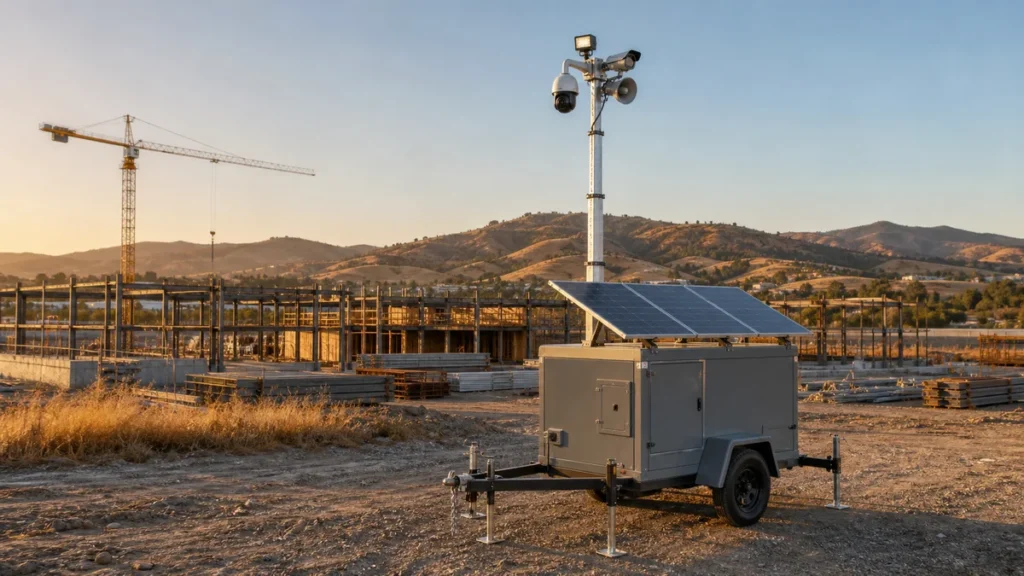
TL;DR: For an active construction site, the most practical jobsite security cameras to rent are usually a solar-powered, LTE-connected trailer or compact pole unit with live monitoring. It can cover a changing 6-18 month project without waiting for grid power, trenching, or a permanent installation. Fixed CCTV becomes more useful in the final phase, when the building has stable power, network cabling, and permanent camera locations. Guards remain the better choice for customer-facing access control and physical intervention. Public trailer rates are not consistently published in a comparable monthly format, so use a site-specific quote rather than an unsupported national average. Hawk rents and monitors mobile units across Northern California, sets up in hours, and can reposition the active outer layer as the build changes. Talk to a Security Specialist for a same-day, site-specific quote.
What jobsite theft actually costs (and why cameras pay for themselves)
In brief:
Heavy equipment theft alone creates hundreds of millions of dollars in direct annual losses, while individual builders risk theft claims that can reach five figures, so cameras earn their place when they help a team detect, document, and respond to activity before a loss also creates replacement work, schedule disruption, and insurance paperwork.
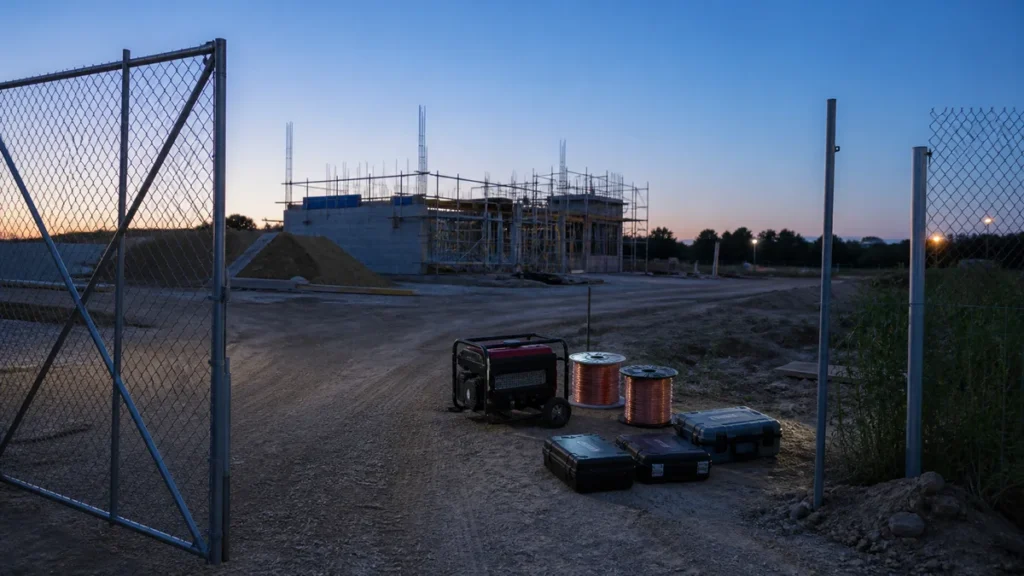
The 2014 National Equipment Register and National Insurance Crime Bureau report said annual equipment theft estimates varied from about $300 million to $1 billion. It also warned that those estimates excluded tools, building materials, property damage, rentals, delay penalties, and wasted labor. A December 2025 IRMI analysis of ISO data from 2018 through 2023 reported average theft claim sizes of $26,000 on apartment projects and $21,000 on office projects. Those are insured claim averages for two project types, not a universal loss figure.
Recovery is also limited. NICB reported that 23 percent of heavy equipment stolen in 2014 was recovered, and small tools are widely considered even harder to trace once they leave the site. For a deeper prevention checklist, see Hawk’s guide to construction equipment and tool theft prevention.
Your five camera options for a jobsite
In brief:
Choose the camera around the site’s current phase, power, sight lines, and response plan: mobile trailers handle changing outer perimeters, compact solar units cover tight zones, fixed CCTV fits permanent infrastructure, time-lapse cameras document progress, and consumer cameras remain a limited point solution rather than a complete active-site security program.
| Option | Best for | Power needs | Monitoring | Deployment | Rental availability |
|---|---|---|---|---|---|
| Fixed CCTV | Permanent facilities and the final construction phase | Usually grid power and wired network | Self, central station, or record only | Designed, mounted, and cabled | Usually installed or financed, less often rented |
| Mobile surveillance trailer | Open, changing, off-grid jobsites | Solar, battery, and LTE | Live monitoring with strobe and speaker response | Sets up in hours and can be moved | Widely available by project term |
| Solar pole or compact unit | Tight sites, gates, and targeted perimeter gaps | Solar or 110V, depending on unit | Live or self-monitored | Fast, with a smaller footprint | Available from selected providers |
| Time-lapse camera | Progress documentation, owner updates, and marketing | Wired or solar options | Scheduled image capture, not active security by default | Pole or structure mount | Lease and subscription plans available |
| DIY consumer cameras | Small, powered areas with reliable internet | Outlet, battery, or local Wi-Fi | App alerts, usually handled by site staff | Quick at one point, difficult at full-site scale | Usually purchased, not rented |
A solar surveillance trailer is the full-site option when mast height and off-grid runtime matter. Hawk’s compact urban unit fits tighter infill sites. For the deeper technical trade-offs, read mobile surveillance trailers vs fixed cameras.
What jobsite camera rentals cost in 2026
In brief:
Trailer rental pricing is site-specific because the camera package, monitoring hours, analytics, cellular service, installation, term, and redeployment plan change the quote, while major vendors do not publish a consistent monthly trailer rate that supports a credible national average, so compare the same scope and ask each provider what the price excludes.
| Published example | What they publish | What the figure means |
|---|---|---|
| TrueLook | Published subscription tiers, per camera per month | Subscription tiers for construction camera service. Camera lease or purchase, installation, and optional monitoring can be separate. |
| OxBlue | Published plan range, per month | OxBlue says configuration, camera count, live video bandwidth, and cellular costs drive the range. This covers varied camera plans, not one standardized monitored trailer. |
| Hawk Surveillance Systems | Site-specific quote, usually the same day | Hawk rents only. The quote matches the trailer, monitoring, placement, term, and Northern California deployment plan to the site. |
WCCTV’s California rental page and LVT’s construction guidance both emphasize solar-powered, relocatable coverage, but neither provides a comparable published monthly construction trailer rate on those pages. Hawk’s difference is local Northern California deployment and concierge-level monitoring for the trailers it rents, without claiming that national providers are the wrong fit.
Rent or buy? The 6-to-18-month answer
In brief:
For one 6-18 month build, rental usually aligns better with a temporary site because service can bundle installation, connectivity, monitoring, maintenance, relocation, and pickup, while buying can make operational sense when a contractor has a dependable multi-project pipeline, but there is no defensible universal break-even month without actual quotes and ownership costs.
Use a simple total-cost comparison. Rental cost is the monthly quote multiplied by the project term, plus any delivery or relocation charges. Ownership cost includes hardware, financing, monitoring, cellular data, repairs, storage, towing, software, and the staff time needed to keep the unit ready between projects. Rental also makes it easier to change camera types as the build moves from open earthwork to vertical construction.
For an 18-month job, ask whether the equipment has a confirmed next assignment. If not, paying for availability only while the site needs it can be more practical than holding idle gear. Hawk’s model is rental only, so a project manager can focus on what to deploy rather than being pushed toward a hardware purchase.
Trailer vs guard vs fixed cameras on a jobsite
In brief:
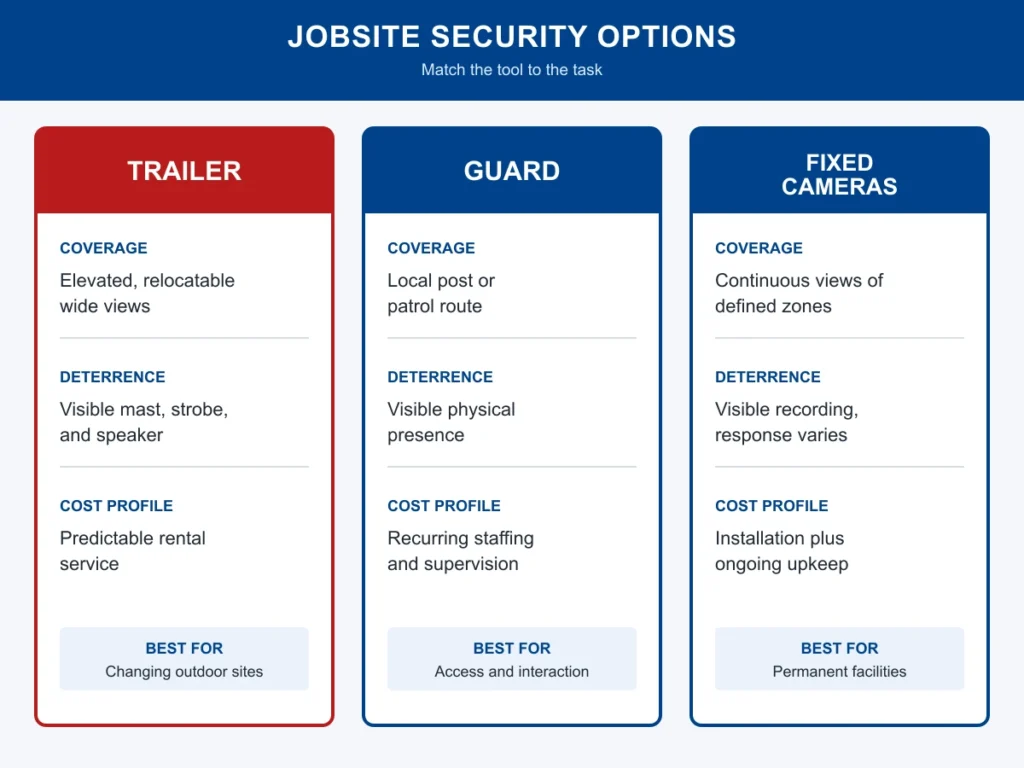
No single option wins every jobsite task because guards are strongest at visitor-facing gates and situations requiring physical interaction, fixed cameras are strongest at permanent buildings with finished infrastructure, and a monitored trailer is the redeployable middle path, providing elevated outer-layer coverage and active deterrence without a permanent camera installation.
| Decision factor | Monitored trailer | Physical guard | Fixed cameras |
|---|---|---|---|
| Coverage | Elevated views across multiple outdoor zones, subject to sight lines | Strong awareness at one post or along a patrol route | Continuous views of permanent, predefined zones |
| Deterrence | Visible mast plus monitored strobe and speaker response | Visible human presence and direct access control | Visible recording, with response depending on monitoring setup |
| Cost profile | Site-specific monthly service | Recurring staffing, supervision, and scheduling | Upfront installation plus maintenance and monitoring |
| Deployment | Sets up in hours and moves with the build | Requires staffing, post orders, and scheduling | Requires camera design, mounting, power, and network work |
| After-hours role | Operators verify alerts and follow the escalation plan | On-site observation and physical interaction | Recording or alerting, depending on configuration |
| Best fit | Changing, open, off-grid construction areas | Gates, visitors, escorts, and required physical presence | Permanent facilities and late-stage construction |
Think in concentric layers. Fencing and access rules form the boundary. The trailer acts as the mobile, active outer layer and moves as perimeter gaps change. A guard can own the customer-facing gate, while fixed cameras become the permanent inner layer once the building and utilities are ready.
Deployment and monitoring: what a rental actually includes
In brief:
A complete rental should cover more than hardware delivery because it starts with a site walk and placement plan, continues through setup, connectivity, camera tuning, and monitoring rules, includes service when the layout changes, and ends with a working response process rather than simply a camera that records an incident.
- Site walk and scope: Map entrances, equipment storage, material stacks, lighting, work hours, and perimeter gaps. Hawk’s construction jobsite security team uses those details to select the unit and camera package.
- Placement: Put elevated coverage where it can watch the active outer layer without blocking deliveries, fire access, or the construction sequence.
- Setup: The trailer arrives with solar power, battery storage, and LTE connectivity, so it needs no grid connection, network trench, or permanent mount. Standard deployments set up in hours.
- Monitoring plan: Define authorized activity, schedules, contacts, and escalation steps. With 24/7 concierge-level remote monitoring, operators verify alerts, use a strobe or speaker when appropriate, and contact site management or emergency services under the agreed protocol.
- Service and redeployment: Maintenance, camera adjustments, movement between phases, and end-of-term pickup should be written into the scope.
For project coverage in the region, see Hawk’s Sacramento and San Jose rental pages.
Frequently asked questions
In brief:
Most rental questions reduce to five variables: site size, project length, power, internet, and who responds to alerts, so the answers below separate public subscription prices from full trailer quotes, explain monitored service, and show how a project manager can choose a practical camera without assuming one system fits every phase.
How much does it cost to rent a security camera for a construction site?
Pricing is site-specific because hardware, monitoring, cellular service, installation, term, and relocation all affect the quote. TrueLook and OxBlue both publish camera service pricing, with hardware and extras potentially separate. Those figures are not a monitored trailer benchmark. Hawk provides a site-specific quote, usually the same day.
Do jobsite security cameras need Wi-Fi or power?
Not always. Solar trailer and compact rental units can use solar panels, battery storage, and LTE cellular service, so they do not depend on jobsite Wi-Fi, grid power, or network trenching. Fixed CCTV normally needs stable power and network cabling. Consumer cameras may need both an outlet and reliable Wi-Fi. Confirm solar exposure, cellular signal, battery capacity, and any backup power during the site walk.
Are rented security cameras worth it for a short project?
They can be, especially when the site has no permanent power or when the security need ends with the project. Rental converts the system into a defined project expense and can include setup, monitoring, maintenance, movement, and pickup. Compare that total with guard coverage, a fixed installation, and the operational cost of self-monitoring. The right answer depends on site exposure and response needs, not project length alone.
What is the difference between monitored and unmonitored jobsite cameras?
An unmonitored camera records video or sends alerts to someone on the project team, who must notice the alert and decide what to do. A monitored system sends qualified events to trained operators. They review the scene, use approved strobe or speaker deterrence, contact site managers, and escalate under written procedures. Monitoring adds an active response layer, while recording alone is mainly evidence and review.
Which camera is best for a construction site?
For a changing, off-grid site, a solar-powered LTE trailer or compact pole unit with live monitoring is usually the most practical rental. A trailer fits wider outdoor coverage, while a compact unit fits tight gates or infill sites. Fixed CCTV is better once permanent power and cabling exist. Time-lapse cameras are best for progress documentation. The final choice should follow a site walk and sight-line plan.
How fast can a surveillance trailer be deployed on a jobsite?
A standard surveillance trailer can set up in hours after delivery because the power, batteries, cameras, mast, and LTE connection travel as one system. Total lead time still depends on unit availability, site access, travel distance, scope approval, and any special configuration. Hawk plans Northern California placements around entrances, perimeter gaps, and changing work zones, then tests camera views and the escalation path before handoff.
Should I rent or buy cameras for an 18-month build?
Renting is often the cleaner choice for one 18-month build because the service can include maintenance, monitoring, connectivity, relocation, and removal when the project ends. Buying may make sense for a contractor with a confirmed sequence of future projects and staff to maintain and move the equipment. Compare full ownership cost with the rental total. Hawk rents only and does not sell camera trailers.
Pricing is site-specific because hardware, monitoring, cellular service, installation, term, and relocation all affect the quote. TrueLook and OxBlue both publish camera service pricing, with hardware and extras potentially separate. Those figures are not a monitored trailer benchmark. Hawk provides a site-specific quote, usually the same day.
Not always. Solar trailer and compact rental units can use solar panels, battery storage, and LTE cellular service, so they do not depend on jobsite Wi-Fi, grid power, or network trenching. Fixed CCTV normally needs stable power and network cabling. Consumer cameras may need both an outlet and reliable Wi-Fi. Confirm solar exposure, cellular signal, battery capacity, and any backup power during the site walk.
They can be, especially when the site has no permanent power or when the security need ends with the project. Rental converts the system into a defined project expense and can include setup, monitoring, maintenance, movement, and pickup. Compare that total with guard coverage, a fixed installation, and the operational cost of self-monitoring. The right answer depends on site exposure and response needs, not project length alone.
An unmonitored camera records video or sends alerts to someone on the project team, who must notice the alert and decide what to do. A monitored system sends qualified events to trained operators. They review the scene, use approved strobe or speaker deterrence, contact site managers, and escalate under written procedures. Monitoring adds an active response layer, while recording alone is mainly evidence and review.
For a changing, off-grid site, a solar-powered LTE trailer or compact pole unit with live monitoring is usually the most practical rental. A trailer fits wider outdoor coverage, while a compact unit fits tight gates or infill sites. Fixed CCTV is better once permanent power and cabling exist. Time-lapse cameras are best for progress documentation. The final choice should follow a site walk and sight-line plan.
A standard surveillance trailer can set up in hours after delivery because the power, batteries, cameras, mast, and LTE connection travel as one system. Total lead time still depends on unit availability, site access, travel distance, scope approval, and any special configuration. Hawk plans Northern California placements around entrances, perimeter gaps, and changing work zones, then tests camera views and the escalation path before handoff.
Renting is often the cleaner choice for one 18-month build because the service can include maintenance, monitoring, connectivity, relocation, and removal when the project ends. Buying may make sense for a contractor with a confirmed sequence of future projects and staff to maintain and move the equipment. Compare full ownership cost with the rental total. Hawk rents only and does not sell camera trailers.
Get Northern California rental pricing
In brief:
Send Hawk your site address, project dates, working hours, priority assets, power status, and a plan or aerial if available so a specialist can recommend the right trailer or compact unit, map the active outer layer, and return site-specific pricing without turning the conversation into a hardware sales pitch.
Talk to a Security Specialist or contact Hawk Surveillance Systems for a same-day Northern California rental quote.