

By Noah Williams | Last updated: August 21, 2026 | About 10 minutes
TL;DR: Securing a vacant property means matching each tool to the exposure, not choosing the biggest option. Barriers resist casual entry. Fencing defines the property line. Lighting improves visibility. Alarms report a breach. Patrols provide periodic presence, while guards provide continuous human presence at continuous cost. Monitored mobile surveillance watches defined site areas, supports live voice-down, and escalates events without requiring building power or a permanent installation. Insurance policies may restrict coverage after a building meets their vacancy definition, so read the policy before selecting controls. Because vacancy is temporary, most owners rent mobile coverage. Review Hawk’s rental option or talk to a Security Specialist.
What actually happens to a vacant property
In brief:
A vacant property concentrates ordinary asset, building, fire, and liability exposures in a place with fewer witnesses and slower discovery, so the practical job is to protect openings and equipment, control the boundary, detect activity early, document events, and maintain a clear response path.
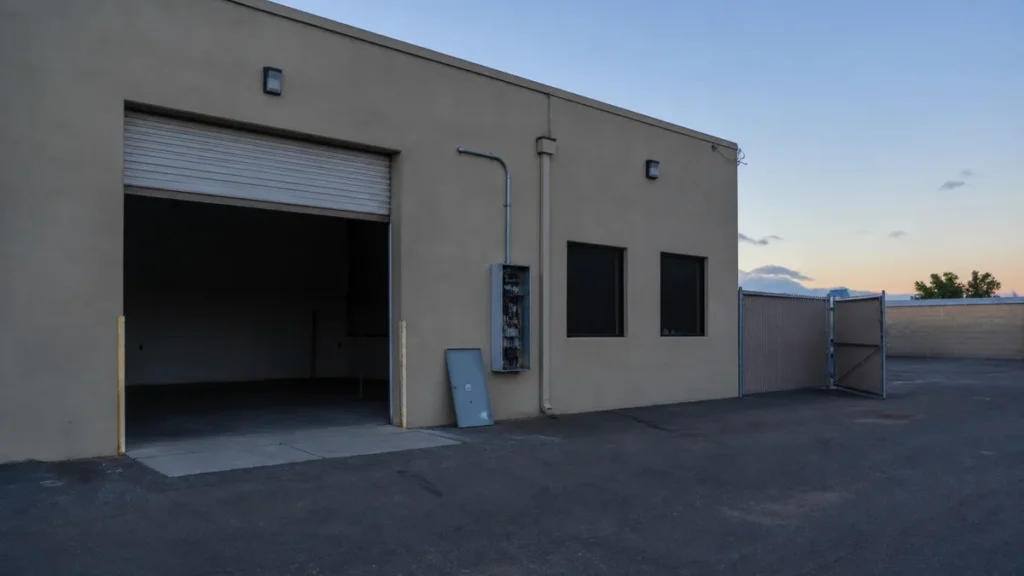
- Building systems: Copper wire, plumbing, HVAC components, and fixtures can be removed or damaged. An open bay, loose panel, or broken lock also creates a path for water and weather damage.
- Vehicles: Any car, truck, or fleet unit left on the lot adds a catalytic converter exposure. The National Insurance Crime Bureau reported 64,701 catalytic converter theft claims in 2022, a national claims count that provides context rather than a forecast for one property.
- Condition and occupancy: Vandalism, graffiti, unauthorized occupancy, and delayed maintenance can add repair, legal, and holding costs. If the property is occupied without authorization, possession is resolved through the courts and law enforcement, not confrontation or self-help.
- Fire and injury: Improvised cooking or heating and accumulated combustibles can raise ignition risk. An NFPA analysis estimated 30,200 vacant-property structure fires per year in 2011 through 2015. A person injured on the site can also trigger an incident investigation, claim, or lawsuit.
The vacant property security options ladder
In brief:
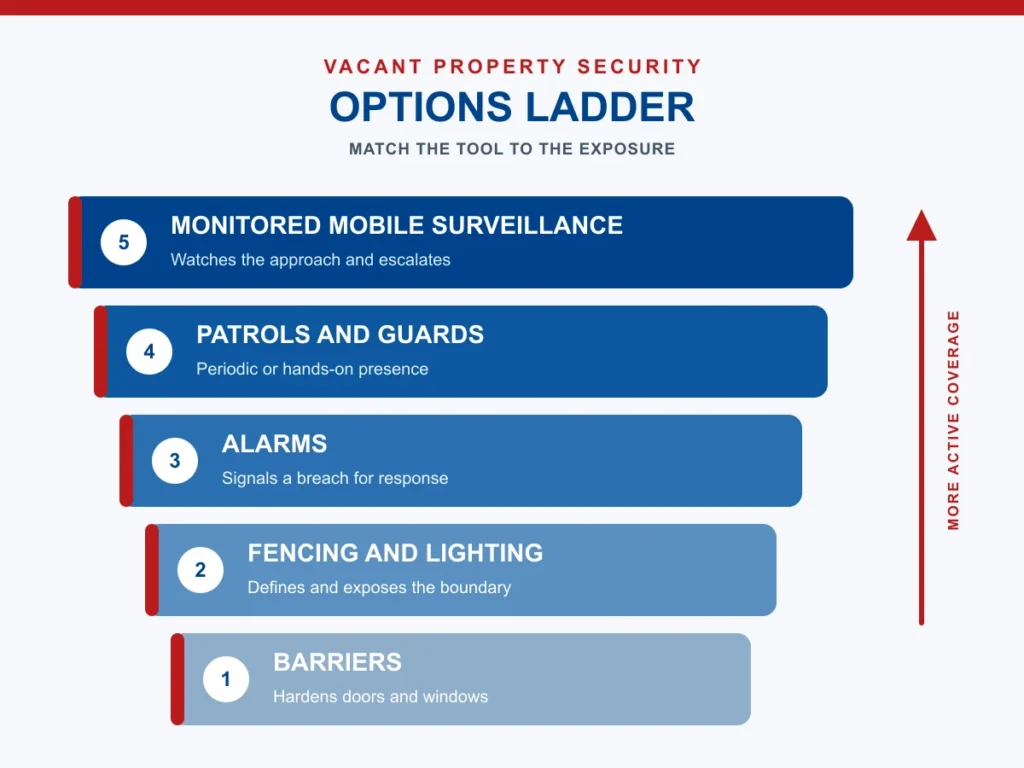
The useful ladder starts with physical hardening, then adds boundary control, visibility, detection, periodic or continuous presence, and finally monitored wide-area coverage, with each higher layer adding a job rather than making the lower layers unnecessary or automatically becoming the right choice for every site.
| Option | What it actually does | What it does not do | Cost profile | Best fit |
|---|---|---|---|---|
| Board-ups and window or door screens | Hardens openings. DAWGS is a known manufacturer and renter of steel door and window guards for vacant buildings. | Does not watch the lot, report an approach, or provide a response. | Low to moderate, by opening or project | Doors and windows that need immediate physical resistance |
| Fencing and gates | Defines the property line, channels access, and supports gate control. | Does not detect climbing, cutting, or an open gate by itself. | Moderate, installation or rental plus maintenance | Lots, yards, and sites with a clear perimeter |
| Lighting | Improves visibility and makes approaches easier to observe. | Does not verify activity or call anyone. | Low to moderate, equipment and power | Entrances, building edges, and camera scenes |
| Intrusion alarm with central station | Reports a sensor event for verification and escalation. | Usually detects entry at the building, not the approach across a lot. | Moderate, setup plus recurring per month | Buildings with secure openings, communications, and workable sensors |
| Periodic mobile patrol | Provides scheduled visits, visible presence, and documented checks. | Does not observe the property between visits. | Per visit or recurring route agreement | Routine property checks and smaller portfolios |
| On-site guard | Controls access, meets contractors, observes a post, and responds hands-on within policy. | One post does not automatically cover every perimeter or blind spot. | High, recurring per hour | Sites requiring human access control or direct assistance |
| Fixed camera system | Creates permanent views, recording, and optional alerting. | Needs suitable power, network, placement, maintenance, and a response workflow. | Moderate to high installation plus ongoing service | A building with utilities, a future occupant, and reusable infrastructure |
| Monitored mobile surveillance unit | Watches defined approaches and zones, supports live intervention, and escalates verified events. | Cannot physically restrain anyone or replace hard barriers and access control. | Moderate to high, recurring per month | Temporary, off-grid, changing, or uncertain-duration vacancy |
Apply the same logic to a closed retail property or an empty industrial building: layout and operating need determine the layers.
Barriers and cameras are not competitors
In brief:
A steel door or window guard resists entry at the wall, while a monitored camera unit watches the approach across a defined part of the lot and can activate a strobe, deliver a live voice message, and escalate before a person reaches that physical barrier.
Think in concentric layers. Fencing establishes the boundary. Lighting makes key areas observable. Board-ups or products such as DAWGS steel guards protect the building envelope. Those are static layers that keep doing their job without an operator.
Monitored mobile surveillance is the active outer layer. Operators can assess video and start the agreed response, but the system does not make the door stronger. A steel guard does not see the approach. Strong plans often use both.
What your insurer expects from a vacant building
In brief:
Commercial property policies can define vacancy by actual use rather than an owner’s everyday meaning, then exclude specified causes of loss or reduce payment after the policy’s stated period, so notify the insurer early and treat every security, inspection, fire-protection, and maintenance condition as a documented obligation.
IRMI’s 2026 review of ISO form CP 00 10 10 12 says an owner-insured building is vacant unless at least 31 percent of its total square footage is rented and used or used by the owner for customary operations. After more than 60 consecutive vacant days, that form provides no coverage for vandalism, specified water-related losses, glass breakage, theft, or attempted theft, and reduces payment for other covered causes by 15 percent.
Those are form terms, not universal rules. Definitions, endorsements, waiting periods, and security conditions vary. IRMI identifies vacancy endorsements and policies designed for vacant buildings as possible paths. Travelers’ risk guidance recommends securing doors and windows, activating a security system or considering a qualified guard service with recorded rounds, keeping automatic fire protection active, and notifying police. Read your own policy and confirm with your broker.
Local rules you may not know apply to your vacant building
In brief:
Northern California owners may face city or county registration, contact-posting, maintenance, security, inspection, and reporting duties that are separate from the insurance policy, and the trigger can depend on vacancy duration, a notice of default, code violations, or failure to maintain the property.
- San Francisco: The city’s current vacant commercial storefront packet requires annual registration and says owners must register within 30 days after a storefront becomes vacant or abandoned. It asks for owner and agent contacts, the security method, future plans, insurance information, a posted contact sign, and an annual maintenance report.
- Santa Rosa: The Vacant Buildings and Lots program applies registration after stated triggers, including an unresolved notice or recorded notice of default. Registered properties require monthly inspections, reports with date-stamped photographs, contact signage, maintenance, and security against unauthorized entry.
- Unincorporated Kern County: Chapter 8.45 establishes abandoned-property registration, maintenance, inspection, and contact-posting duties. It also allows the county to require added security measures based on property conditions.
Check the current jurisdiction page for every property, including portfolios in San Francisco and Oakland, and confirm legal duties with your own counsel.
Patrols, guards, or monitored cameras: what an empty site really needs
In brief:
Choose a patrol for periodic checks, a guard when a person must control access or respond on site, fixed cameras when permanent utilities and infrastructure make sense, and a monitored mobile unit when the site is temporary, off-grid, changing, or needs active video escalation after hours.
| Option | Coverage | Hours covered | Response | Cost profile | What it misses | Best fit |
|---|---|---|---|---|---|---|
| Mobile patrol | Specified route and checkpoints | Minutes during scheduled visits | Officer assesses what is present during the visit | Per visit or route agreement | Activity between visits and unchecked areas | Inspections, lock checks, and periodic presence |
| On-site guard | Assigned post and patrol route | Scheduled shift, including continuous coverage if fully staffed | Direct human assistance within training, policy, and authority | High recurring per hour | Blind spots outside the post or route | Access control, contractor arrivals, and hands-on needs |
| Fixed cameras | Designed views where cameras are installed | Continuous recording while power, network, and storage remain active | Depends on alerting and who monitors | Installation plus recurring service | No live intervention when passive or unmonitored | A powered building where the install serves the next occupant |
| Monitored mobile unit | Approaches and defined zones assigned to each unit | 24/7 or selected monitored windows | Operator verifies, uses configured deterrents, and escalates or dispatches | Recurring rental and monitoring per month | Cannot act physically or cover an unlimited site with one unit | Temporary, power-limited, or changing vacant sites |
What a monitored rental actually includes on a vacant site
In brief:
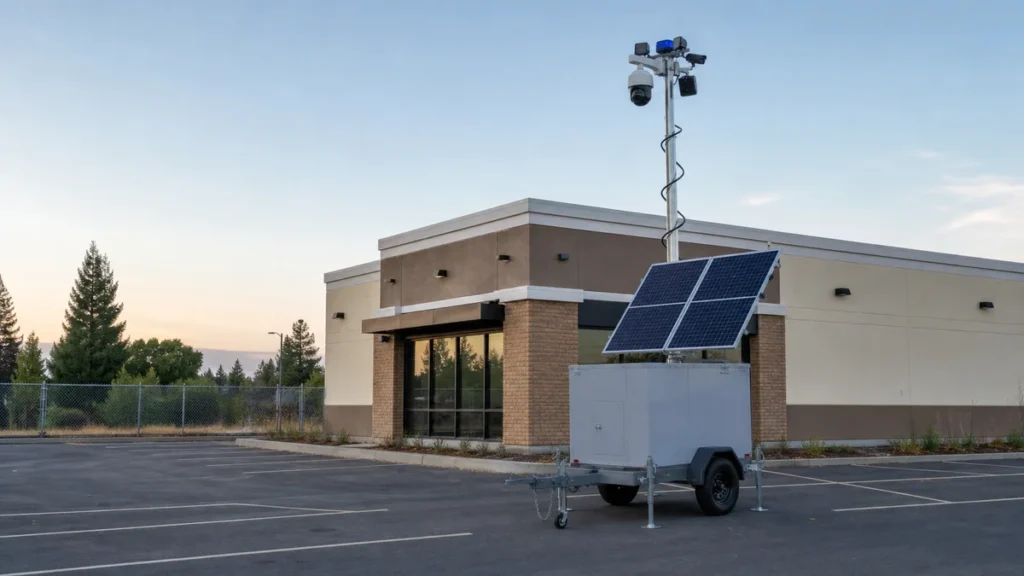
A monitored rental starts with a site walk and deliberate placement, then combines solar power, battery storage, LTE connectivity, elevated cameras, recording, operator review, configured lights or speaker intervention, and an escalation plan in a movable package that sets up in hours.
Placement comes first. The team identifies approaches, gates, accessible openings, exterior equipment, and known gaps. A single unit covers a defined area, not an unlimited radius. Large or irregular multi-acre sites usually need staggered units around distinct zones.
Hawk’s solar surveillance trailer uses solar and battery power with cellular connectivity, so a pulled meter does not require trenching or a building network. The compact urban unit fits tighter paved sites. With 24/7 remote monitoring, an operator can review alerts, activate a strobe or live voice-down where configured, notify contacts, and dispatch under the approved protocol. Time-stamped recordings can support claims, law enforcement reports, and counsel by establishing a timeline.
Audio recording deserves separate review. California Penal Code section 632 restricts recording confidential communications without all-party consent. Configure audio capture only after counsel reviews the site and use case. The trailer can be repositioned as access patterns and vacancy conditions change.
Frequently asked questions
In brief:
The practical questions are whether the building needs physical hardening, what the policy and local code require, whether a human response is necessary, how power and connectivity will be supplied, and how quickly the selected layers can be placed, monitored, documented, and changed.
How do you secure a vacant commercial property?
Does insurance require security on a vacant building?
It depends on the policy and any endorsement. Standard commercial forms can restrict coverage once the building meets their vacancy definition for the stated period. A carrier may also require specific maintenance, inspections, fire protection, boarding, fencing, lighting, alarms, or guard rounds. Notify your insurer when occupancy changes, ask for every condition in writing, keep inspection and service records, read your own policy, and confirm the plan with your broker.
Is a security guard or a camera system better for a vacant property?
A guard is better when someone must control access, meet contractors, inspect conditions in person, or provide hands-on assistance within an approved post order. Cameras are better for continuous observation, recording, and coverage of defined approaches. Fixed cameras fit a powered building with a future use. A monitored mobile unit fits temporary or off-grid vacancy. Many sites combine cameras with patrol or guard response instead of treating them as substitutes.
How much does vacant property security cost?
Do security cameras work on a property with no power or internet?
What can an owner do about people occupying a vacant building?
Treat possession as a legal matter handled through the courts and law enforcement, not a confrontation or self-help project. Do not attempt a lockout, utility shutoff, removal of belongings, or personal eviction. The California Courts Self-Help Guide says a landlord must use the court process and cannot use those measures against a tenant. The exact process depends on the facts. Time-stamped video can help establish a timeline for the owner, attorney, insurer, and authorities. Consult your own counsel promptly.
How long does it take to get surveillance on a vacant site?
Get coverage on your vacant site
In brief:
Hawk rents and monitors mobile surveillance trailers for Northern California commercial sites, with site-specific placement, off-grid power, LTE connectivity, recorded video, and an escalation plan matched to the property’s approaches, operating rules, vacancy timeline, and existing physical site security layers.
Review surveillance trailer rental, then Talk to a Security Specialist. Hawk provides a site-specific quote, usually the same day. No published package can replace the site walk because access, blind spots, monitoring hours, and response instructions differ by property.